Protests Echo Through Pitchfork Paris 2026: Five Sets That Mattered
Pitchfork Paris 2026 ran November 2-7 amid nationwide French strikes. DIIV opened at Badaboom, while Cutouts and PISS turned their sets into political statements.
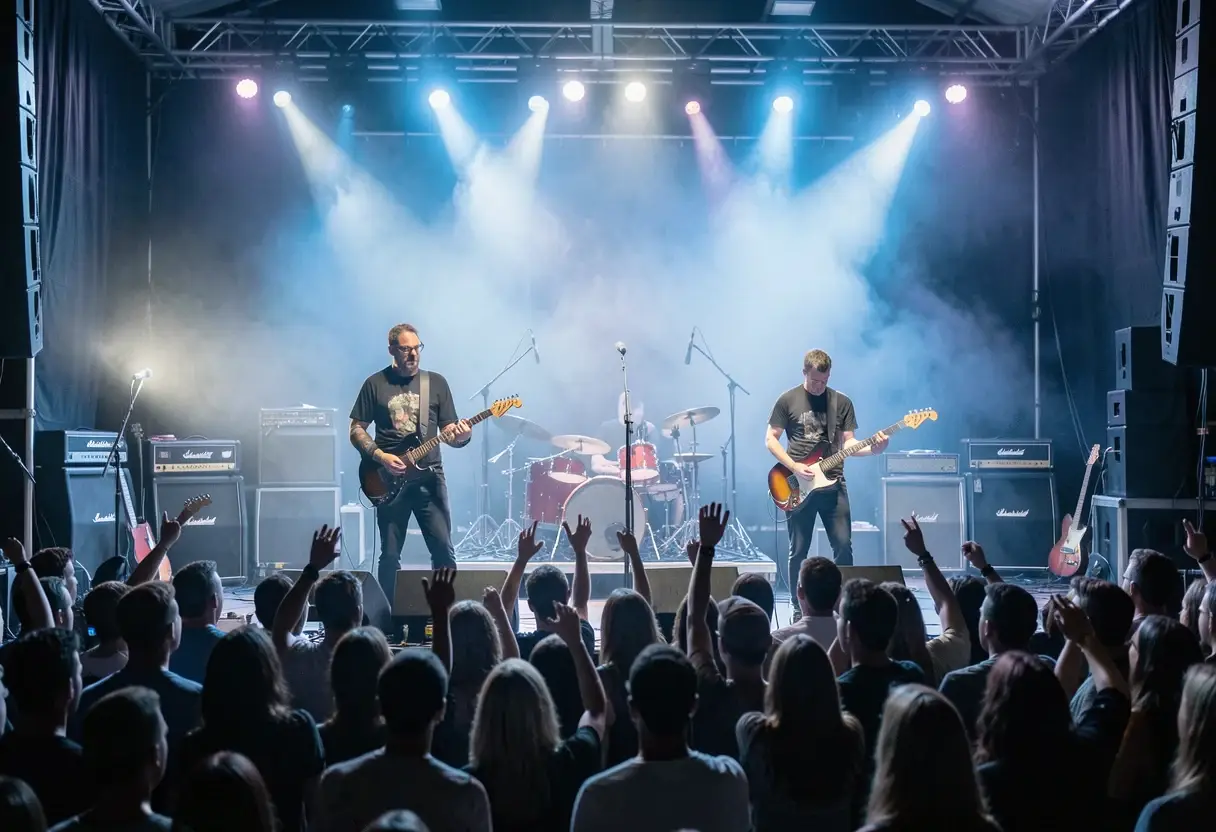
Programme
- Pitchfork Music Festival Paris 2026 ran November 2-7 amid nationwide French strikes over the cost of living.
- DIIV opened the festival on November 2 at Badaboom, drawing on their new album Zirp.
- Cutouts debuted an unreleased anti-ICE track, 'Bitch Boys,' at Popup! on November 5.
- PISS's Taylor Zantingh performed 'i wanted to be a singer' at Supersonic on November 7.
- Tokyo four-piece bed closed the weekend at La Mécanique Ondulatoire on November 7.
Pitchfork Music Festival Paris 2026 ran November 2-7 while France's streets filled with strikers, and the bands met the moment head-on. Student protests over crumbling infrastructure and overcrowded classrooms had rippled into nationwide labor action over the cost of living, with strikes last Thursday and protests again on Saturday — the weekly rhythm for weeks. Against that backdrop, several acts folded the political mood directly into their sets.
The lineup paired established names — Bassvictim, DIIV, ear — with the festival's annual Avant-Garde slate, a curated selection of emerging bands. Here are the five performances that stood out.
How did the festival open?
DIIV headlined the first night, Monday, November 2, at Badaboom, on a rainy evening in the French capital. The Brooklyn band played a steady, mellow set of woozy, taffy-ish shoegaze under warm lights. They opened with "Horsehead," ran through "Into the Sun," "Valentine," "Soul-net" and "Frog in Boiling Water," and closed with an encore of "Blankenship." Frontman Zachary Cole Smith stayed mostly banter-free, apart from a few onomatopoeic "Zirp!"s — the title of the band's recently released album, from which they played "Dare Me" and "The Fountain."
What happened at Popup! on November 5?
Cutouts' frontman Alex MacKay took the low stage at Popup! in all black, topped with a knit white bonnet knotted at the front. Over industrial/electro darkwave (a brooding, synth-driven offshoot of post-punk), he was a composed presence: vocals delivered with casual ease, one foot propped on an amp, an elbow resting on the mic stand. "You guys have an amazing protest culture," MacKay told the crowd. The set's peak was the band's politically infused "Bitch Boys" — an unreleased anti-ICE track that dresses down anyone who, in the song's words, "makes the decision to be a bootlicker."
The same night at Supersonic, the Bristol quartet My First Time broke through the timidity French audiences are known for. Frontman Isaac Stroud-Allen waded into the crowd and ordered everyone down — literally making the room crouch. For the final song he invited people onstage: "Let's make it safe… ish." No encore came, but fans kept chanting, shifting into a full-throated "Tout! Le monde! Déteste la police!" — "Every! One! Hates the Police!"
What closed the weekend?
Saturday, November 7, brought two of the festival's most physical sets. At La Mécanique Ondulatoire, Tokyo four-piece bed matched the city's freak, like something pent up had been released. Frontman Une crawled, jogged in place and arched his back like Neo dodging bullets in The Matrix; at one point he spoke into a landline telephone with a disconnected cord. The set's final songs quickened into a techno-tinged, post-punk fury, toggling between anarchic frenzy and danceability.
At Supersonic, Vancouver's PISS — a band combining music, sound collage and performance art — blurred the personal and political while explicitly addressing gender, violence and militancy. "I spent my life learning the right way to scream so people would listen," Taylor Zantingh screamed in "i wanted to be a singer." Her jagged, hyperventilating breath while pacing the stage felt more exorcism than performance, more war cry than song. A recording later announced, "The law isn't working," framing radical action as the only route to liberation. As Zantingh put it: "Some people only believe you when your knees are bleeding."
What does this change for the festival? Pitchfork Paris has long doubled as a political barometer, and this edition suggests the Avant-Garde slate is where that pressure finds its loudest outlet — a signal worth watching as France's protest cycle continues.
Source: pitchfork.com
More from Grace Kim
Show full bio
Correspondent covering technology and product news in arts in the broadest sense at Arts & Voices.
1,314 articles