RadicalMedia's New CEO Justin Barocas Bets on Ownership Over Work-for-Hire
Justin Barocas, co-founder of Anomaly, becomes CEO of RadicalMedia as the company behind 'Summer of Soul' and 'Hamilton' on Disney+ pushes to own stakes in the content it creates.
Programme
- Justin Barocas, an Anomaly founder, becomes CEO of RadicalMedia; Jon Kamen moves to executive chairman and Frank Scherma remains president.
- RadicalMedia's credits include 'Summer of Soul,' the Disney+ version of 'Hamilton' and Zach Galifianakis's 15-minute-episode Netflix series.
- Barocas wants RadicalMedia to retain backend rights, co-finance projects and hold underlying rights in stage adaptations and branded work.
- In 2006, Crispin Porter + Bogusky took a minority stake in Haggar — a precedent for agencies owning part of client businesses.
- Geico is developing a holiday special using its ad characters; Under Armour has launched an internal content studio.
Justin Barocas, a founder of the agency Anomaly, has taken over as CEO of RadicalMedia, and he wants the production company to own more of what it makes. The leadership change, announced as Radical shifts strategy, moves co-founder Jon Kamen to executive chairman; co-founder Frank Scherma stays on as president.
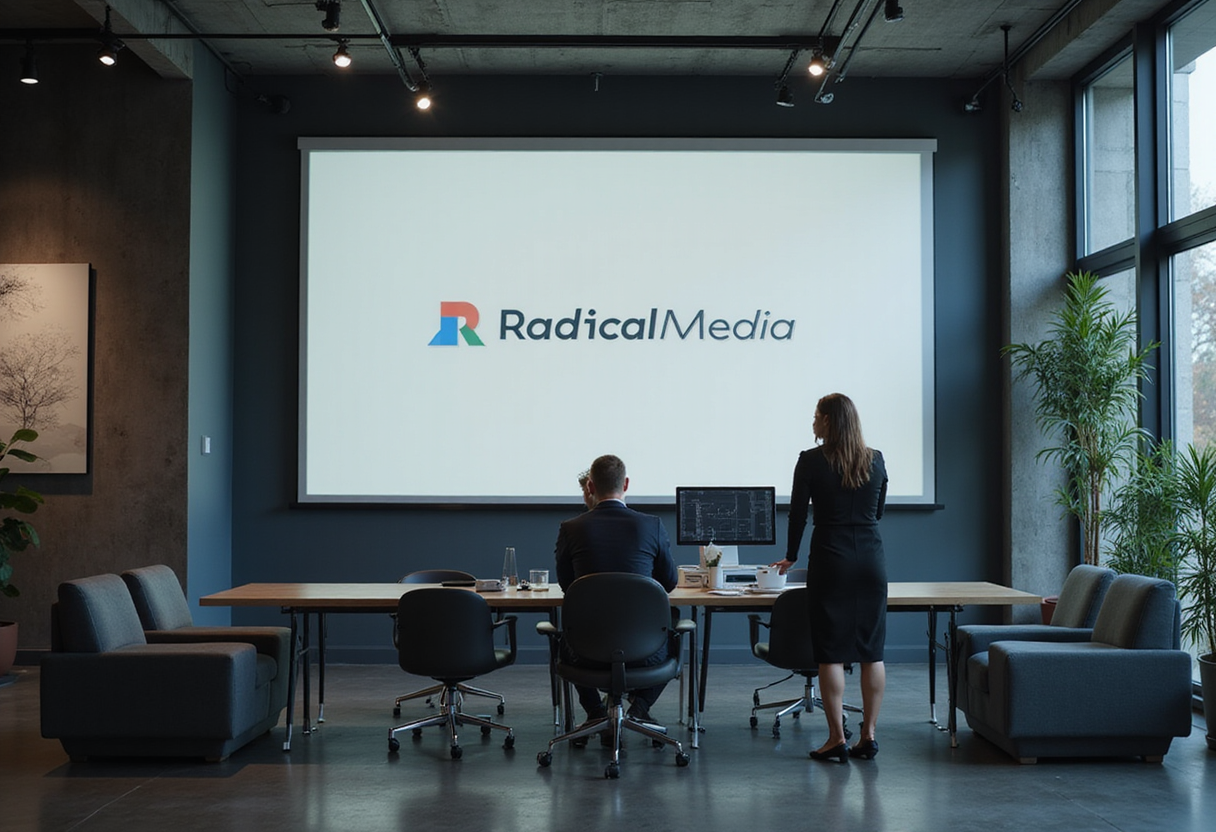
Barocas laid out the plan in an interview at Radical's downtown Manhattan offices. The company will pursue co-financing deals, retain backend rights, develop proprietary formats and hold underlying rights in stage adaptations and branded projects. It also aims to move more theatrical properties from Broadway to screens.
What changes under the new CEO?
RadicalMedia built its reputation as a go-to house for music documentaries, branded entertainment and long-form content. Its credits include Questlove's musical documentary "Summer of Soul," the streaming version of "Hamilton" released on Disney+, and "This Is a Gardening Show," Zach Galifianakis's offbeat Netflix series built from 15-minute episodes.
"It's not very different from what we see in the marketplace now where the work-for-hire and the services business is changing," Barocas said. "Being able to commercialize it in very different ways is one of the key areas."
In plain words: RadicalMedia wants to stop selling services alone and start owning pieces of the work.
Why does ownership matter in advertising?
Across the advertising ecosystem, agencies have long failed to profit from intellectual property they helped create. Ad concepts routinely become popular culture — spurring memes and merchandise — but agencies that once relied on steady commissions never benefited from ancillary uses of that IP.
Some have tried. In 2006, the agency then known as Crispin Porter + Bogusky took a minority stake in the Haggar clothing company as part of its arrangement with the manufacturer. Today, many media agencies pursue "principal media" — buying commercial inventory from media companies and reselling it to advertisers rather than simply negotiating prices and placements.
Who else is driving the shift?
RadicalMedia is testing these models as advertisers build content operations of their own. Geico is developing a holiday-themed special expected to use the ad characters it has created over the years. Under Armour has set up an internal studio to handle its content needs as marketers chase consumer attention across more media outlets.
"The idea of being able to use entertainment to solve brand challenges and really commercialize our strengths is where I think what we're working on in terms of the future," Barocas said, calling Radical "the destination for music storytelling, whether it's theater adapting to streaming or television, whether it's artists who want to tell their story in a different way." Commercializing that strength, he said, will give RadicalMedia an incentive "to be true partners" with advertisers, artists and media companies.
What is RadicalMedia's track record with brands?
Kamen frames the new strategy as continuity, not reinvention. The "constant disruption" of the media and marketing industries "has been going on forever," he said, adding that he and Scherma wanted Radical "to have an attitude of embracing whatever those changes will be." He added: "We've sometimes been ahead of the curve."
The record backs him up. RadicalMedia produced the MTV dating series "Gamekillers" with the advertising agency BBH, backed by sponsorship from Unilever's Axe deodorant, and some personality types in the show also appeared in Axe commercials. Radical also maintained a long relationship with Wieden + Kennedy, whose work for Nike took the brand well beyond the standard 30-second spot.
Brand-funded content has since moved into streaming. Advertisers can now back documentaries or series that sit alongside traditional programming on Amazon's Prime Video and NBCUniversal's Peacock. "There's no question that brand dollars are going to continue to play a role, even in this streaming universe," Kamen said. He posed the open questions: "How do you do that effectively? How do you do that tastefully? How do you do that while embracing an audience and making sure that you're appreciated for having brought something?"
What stays the same?
The current leadership team remains in place. Chris Kim, Dave Sirulnick and Jim Bouvet, who head the studio, entertainment and commercials divisions respectively, are expected to continue in their roles.
Barocas's appointment is a return rather than an arrival. He worked alongside Radical's team during his years at Wieden, and Kamen gave Barocas and his partners space to develop Anomaly inside Radical's offices. Barocas says he intends to keep sharpening the company's ability to bring advertisers "something incredibly different" than its competitors.
In an industry remade by new technology, the test now is whether RadicalMedia can convert a reputation for innovation into an ownership stake in its own output.
Original: wsj.com
More from Elena Vasquez
Show full bio
Senior reporter covering technology and product news in arts in the broadest sense at Arts & Voices.
532 articles