Radie Peat’s No Human Tongue Can Tell puts her voice first
Radie Peat’s solo debut foregrounds her arresting contralto, her near-total instrumental self-reliance and adventurous folk arrangements, sharply contrasting with Lankum’s communal 2023 sound.
Programme
- No Human Tongue Can Tell is Radie Peat’s debut solo album.
- Its opening song, “Hares on the Mountain,” introduces her voice one beat before the Rhodes piano.
- Peat plays nearly every instrument and cites Mike Oldfield’s Tubular Bells and Enya as inspirations.
- Lankum’s 2023 album False Lankum opens with “Go Dig My Grave” and gives Peat a full unaccompanied minute.
- John “Spud” Murphy produced No Human Tongue Can Tell.
Daniel Okafor
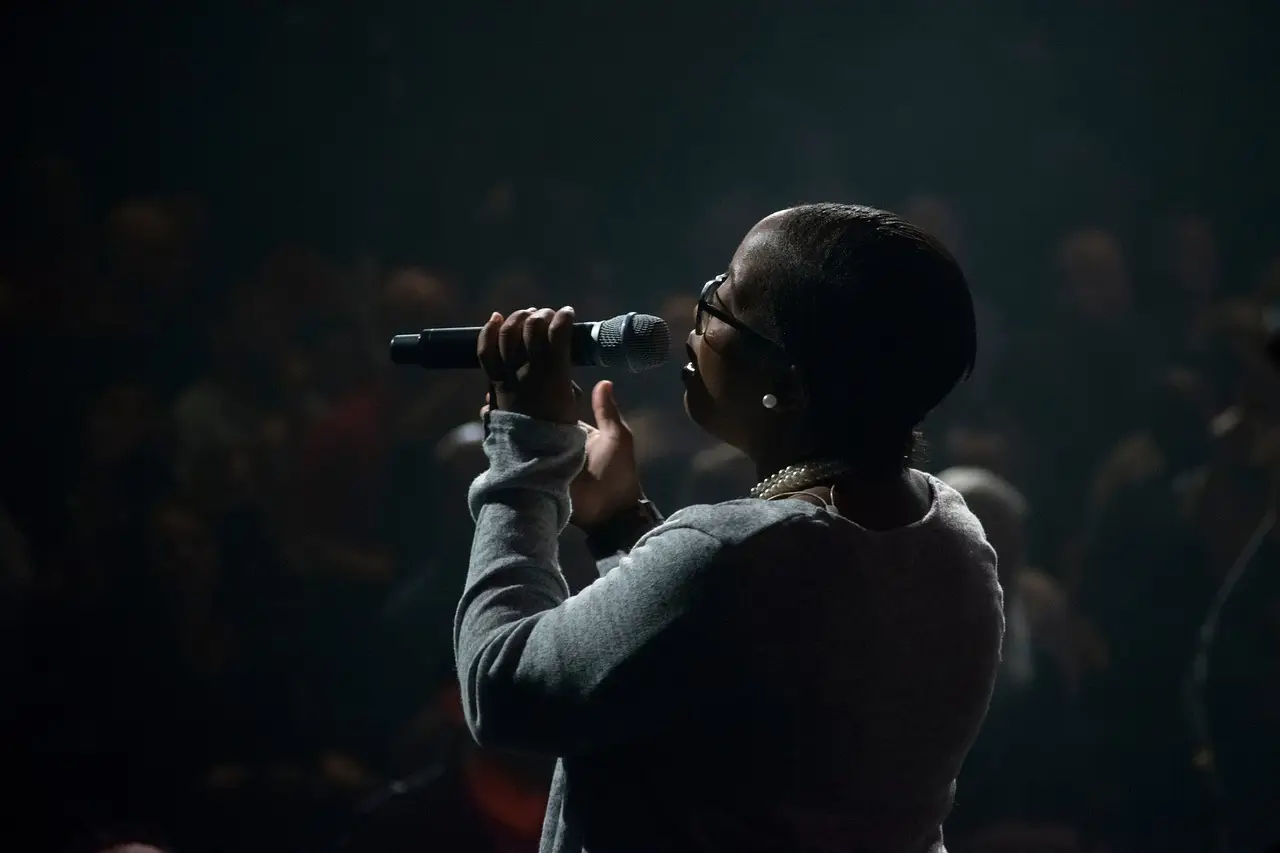
Irish folk singer Radie Peat’s debut solo album, No Human Tongue Can Tell, opens with a stark rendition of the traditional “Hares on the Mountain.” Her first syllable arrives a beat before a Rhodes piano (an electric piano) joins the accompaniment, establishing the record’s hierarchy without fuss.
What makes the solo debut different?
Peat plays nearly every instrument on the album and builds its lush choruses from layers of her own vocals. She says Mike Oldfield’s Tubular Bells inspired her instrumental choices, while Enya inspired the vocal layering. This makes the debut distinct from Lankum’s communal work.
Peat remains the album’s fixed center, while John “Spud” Murphy supplies rich, detailed production around her. The arrangements are adventurous and frequently surprising, but they support rather than smother the voice.
Peat’s contralto (a low female singing voice) supplies the record’s authority. Her voice is “an arresting contralto with the resonance of a bagpipe played en plein air.” En plein air means outdoors. She commands rapt attention from the first note. That matters because the album’s sustained, ominous textures could become ornamental without a singer prepared to hold the center.
Peat may be the finest singer in an ongoing wave of forward-thinking folk artists drawn to doomy drones (sustained, ominous low tones).
Jim Ghedi, One Leg One Eye and Poor Creature mark that wave, alongside Peat’s own groups Lankum and ØXN. The broader context supports the case, but the record itself makes the more persuasive argument through voice, arrangement and the refusal to let atmosphere become a hiding place. Her sensibility remains stridently melodic, even where the arrangements turn droniest.
The pleasure lies in hearing that sensibility undiluted, without the band’s shared vocal focus.
How does Lankum sharpen the contrast?
Lankum’s 2023 album False Lankum also began with Peat’s vocals. On “Go Dig My Grave,” the opening track, she sang unaccompanied for a full minute. The song has since become Lankum’s signature and probably offers the clearest showcase for her voice across the group’s recorded work to date. That makes the solo record a controlled comparison, not a change of singer.
False Lankum soon becomes an egalitarian affair. All four members sing harmonies and contribute to the swelling instrumental clamor. No Human Tongue Can Tell does the opposite, keeping its focus squarely on Peat. Her melodic authority remains intact, even where the arrangements lean hardest into drone. The two records clarify what collaboration can widen and what solitude can sharpen.
Peat is a willing and prolific collaborator, yet here she both performs nearly every instrument and assembles the vocal architecture. Murphy’s production gives those choices depth and detail. The record therefore feels closely authored without becoming impersonal.
That distinction matters. A self-contained album can still welcome influence. Peat’s references to Oldfield and Enya function as practical guides, not decorative name-checks.
What does the debut establish?
The achievement is not simply that Peat can make a convincing record without Lankum. The album exposes the melodic logic inside her broader folk language, then lets that logic carry adventurous arrangements across a full solo release without surrendering their experimental edge. Traditional material, doomy textures and self-stacked harmonies coexist without becoming an exercise in atmosphere. That is a harder balance than choosing either folklore or experimentation.
Peat refuses to let sustained low tones dictate every phrase. Even when the production grows dense, her melody keeps the songs’ direction clear.
Her references to Tubular Bells and Enya explain the combination of instrumental experiment and layered vocal writing. They also show how an influence can become functional rather than merely decorative. Neither reference guarantees a second record, but both offer Peat a productive route beyond Lankum.
A second solo album would test whether she can preserve that balance without repeating it. The debut has made the case for her control; a sequel must now prove that control can grow.
Source: pitchfork.com
More from Daniel Okafor
Show full bio
News editor covering companies, deals and strategy in arts in the broadest sense at Arts & Voices.
1,541 articles