Rafael Ferrer, Puerto Rican Musician-Turned-Artist, Dies at 93
The jazz drummer turned Surrealist-influenced painter and installation maker, honored by El Museo del Barrio in a 2010 retrospective, has died at 93, the New York museum announced.
Programme
- Rafael Ferrer died at 93; El Museo del Barrio announced his death.
- A 1954 trip to Paris introduced Ferrer to Surrealism; he studied with Eugenio Fernández Granell at the University of Puerto Rico.
- El Museo del Barrio's 2010 show "Retro/Active: The Work of Rafael Ferrer" featured some 100 works and was called "almost criminally overdue" by Roberta Smith in the New York Times.
Rafael Ferrer, the Puerto Rican artist who began his creative life as a jazz drummer and went on to build one of the most restlessly varied practices in postwar American art, has died at 93. El Museo del Barrio in New York announced his death last night.
Ferrer was "a groundbreaking artist whose singular and influential practice challenged boundaries" across a vast range of mediums and disciplines, the museum stated.
Music came first. Ferrer discovered Surrealist artists and writers during a 1954 trip to Paris, a turning point that pulled him toward the visual arts. He went on to study painting with the exiled Spanish Surrealist artist Eugenio Fernández Granell at the University of Puerto Rico. Musical improvisation, however, never left his thinking. It remained a defining influence on a practice remarkable for its diversity of styles, mediums, and materials.
That diversity ran from conceptual installations to assemblage sculptures and paintings. Ferrer used paper bags and blackboards as canvases. He hung calabash gourds and garbage can lids in Dada-inspired sculptures. His installations could be made of straw, dried leaves, or ice.
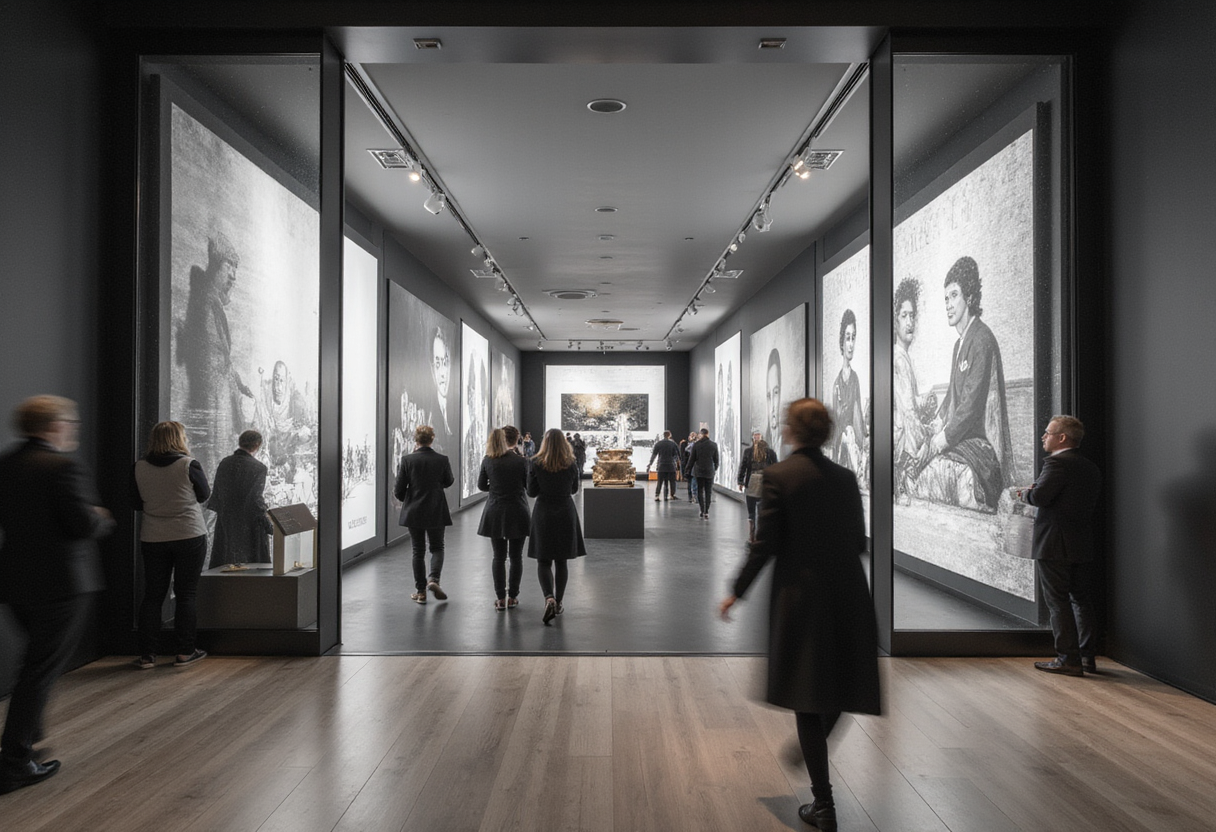
The very variety that defined his work also confused a critical art world and market that overlooked his career for years, particularly from the 1980s onward, when he returned to painting. El Museo del Barrio corrected that oversight belatedly in 2010 with a solo museum show, "Retro/Active: The Work of Rafael Ferrer," featuring some 100 works surveying five decades of his practice. Roberta Smith, reviewing the exhibition in the New York Times, called it "almost criminally overdue."
The show brought long-delayed attention to Ferrer's life's work and set off a succession of additional solo exhibitions, including at Guild Hall in East Hampton (2011), the Lancaster Museum of Art (2012), and the Museum of Contemporary Art Chicago (2015).
Ferrer understood exactly how the art world reacted to his shifts. In the 1960s and '70s, his conceptual and Process art installations had earned him a reputation as an avant-garde artist, particularly in Puerto Rico, and exhibitions at major institutions like the Whitney Museum of American Art. One breakthrough came in 1968, when Ferrer drove 87 bushels of fall leaves from Philadelphia to New York in a pickup truck and scattered them in front of art institutions in a guerrilla action.
When he experimented with new forms—as he did in the '80s with paintings in a faux naïve, modern expressionist style—his career quieted. Ferrer blamed the market's appetite for sameness. "The psychology of the art world and the art market are so ingrained with repetition, making a steady, absolutely, consistently identifiable product much like the auto industry," he told The Brooklyn Rail in 2013. "That has never been the impetus of my work. I have always believed that the doing is what is exciting."
He traced that attitude straight back to the bandstand. "My earlier life as a musician created in my psyche a sense that what you do is dictated by the needs of the moment, all within a repertoire," he said.
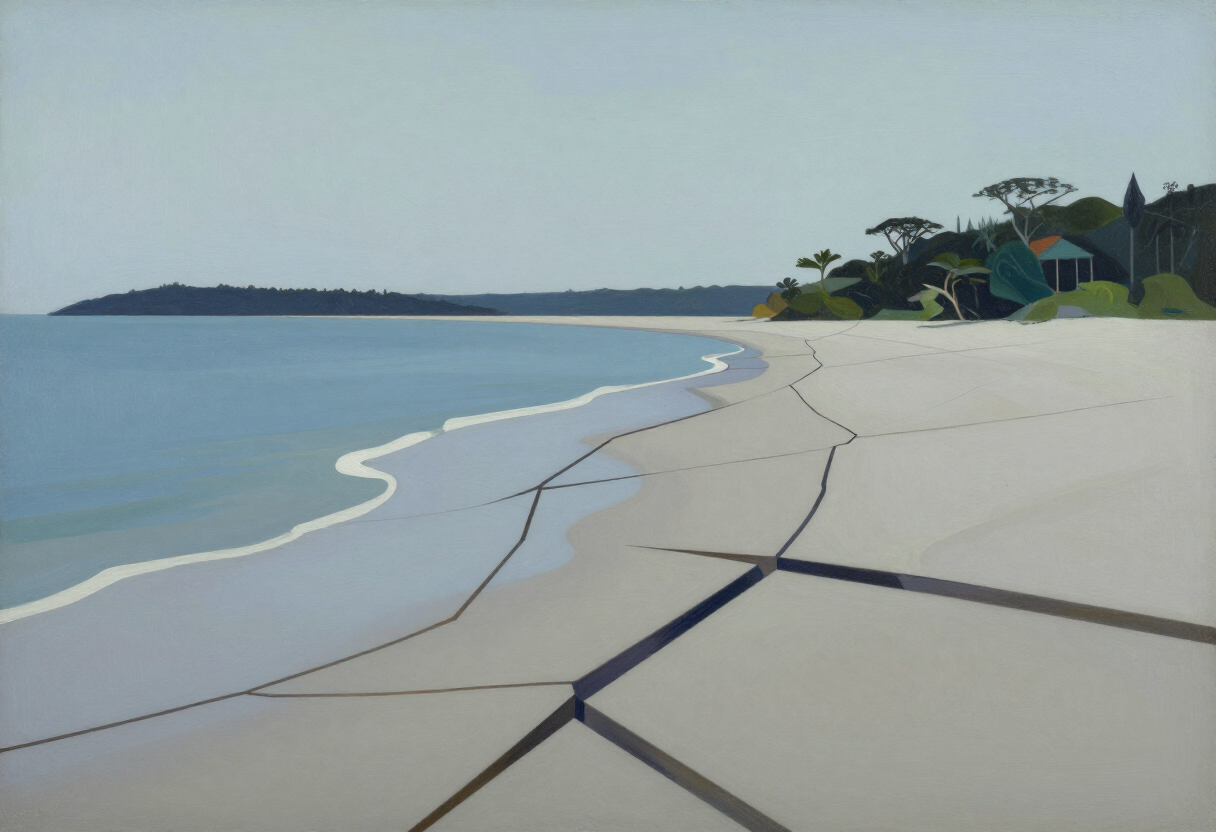
His works, in fact, carried a clear conceptual through-line, as Ferrer himself explained. "When I returned to painting, believe me, those paintings were all about spaces—my attraction to odd spaces with weird light and strange people," he said in the same interview. For his portraits of "strange people," whom he also called his neighbors, "there is a mutual curiosity expressed in conversation, a back and forth I have with them. The most problematic thing is familiarity. If I'm totally familiar with something, it's no longer interesting."
Art and music never grew too familiar. Ferrer painted his whole life while listening to music. "Curiously, when I look at art or when I listen to music, I never seem to exhaust the endless revelations that make both things a continual source of inspiration," he said.
A recipient of the Guggenheim Fellowship in 1975 and the Pew Fellowship in the Arts in 1993, Ferrer is represented in major museum collections around the world—works whose full recognition, as the 2010 El Museo del Barrio retrospective made clear, arrived decades after it should have.
Original: instagram.com
More from Tom Whitfield
Show full bio
Market editor covering industry trends and analytics at Arts & Voices.
244 articles