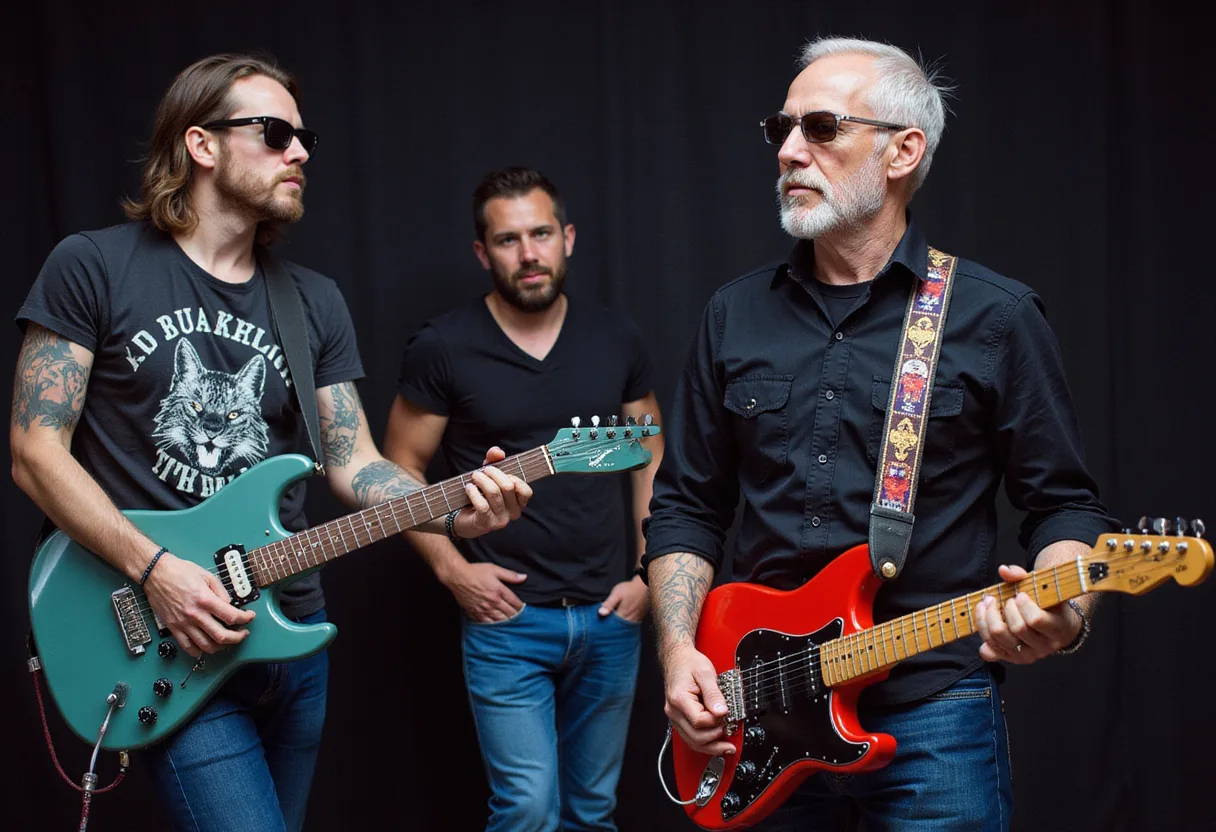
Ramones T-Shirts Outsell Memory: How Classic Rock Merch Became Fashion
The Ramones sold 1.5 million T-shirts between 1996 and 2008. Classic rock logos now anchor a licensing economy — Bravado alone reported €811 million for 2025 — that sells fashion to fans who may never buy the album.
Programme
- Billboard reported in 2009 that the Ramones sold roughly 1.5 million T-shirts between 1996 and 2008.
- Universal Music Group's Bravado reported €811 million in merchandising and other revenue for 2025.
- Average royalty rate for music-licensed merchandise in the US and Canada was 8.2 per cent in 2015.
- MIDiA reported expanded rights, including merchandising, grew 21.5 per cent in 2025.
- Target sells a Beatles 'Abbey Road' T-shirt for $15; Urban Outfitters Canada lists a 1973 Fleetwood Mac tour tee at CA$54.
The Ramones sold approximately 1.5 million T-shirts between 1996 and 2008 — without releasing a new album, and, in many cases, without the buyer ever hearing a note. Billboard reported that figure in 2009, citing a former merchandise manager, and it excluded all other merchandise and unauthorized products. That single number explains a quiet transformation in the music business: classic rock imagery has become a fashion property that lives, and sells, independently of the recordings behind it.
Walk into Urban Outfitters today and you can find a Fleetwood Mac T-shirt beside a Pink Floyd tour shirt, a Michael Jackson graphic tee and baggy jeans. Hot Topic still sells the Ramones' presidential-style seal nearly 50 years after the band's 1976 self-titled debut. The shopper often recognizes the artwork before the songs.
Which designs are doing the selling?
The Ramones' black T-shirt, created by the band's longtime artistic director Arturo Vega, replaced the arrows of the United States presidential seal with a baseball bat and set the members' names — Johnny, Joey, Dee Dee and Tommy — around its circular border. Hot Topic's online catalogue still lists the classic design, along with Ramones wall art, which turns a punk band's visual identity into home decoration.
Fleetwood Mac's name and 'Rumours'-era imagery appear on vintage-inspired shirts at Urban Outfitters Canada: a 1973 Tour graphic T-shirt at CA$54 and another tour-inspired design at CA$44, styled with denim and streetwear. Pink Floyd's prism from 'The Dark Side of the Moon' — created by design group Hipgnosis — has migrated from record sleeves to hoodies, posters and accessories; Urban Outfitters lists a 1994 Tour graphic tee at CA$54, and Rockabilia carries officially licensed Pink Floyd merchandise.
Target sells a Beatles 'Abbey Road' T-shirt for $15 in the United States, with the actual albums still on sale in the same vinyl department. Hot Topic carries Aerosmith's winged logo, including a comic-inspired shirt and an Aerosmith X YUNGBLUD collaboration. Primark has featured Fleetwood Mac in festival-fashion collections and built Britpop-themed promotions around vintage music styles.
What does this change for the business?
Behind every licensed shirt sits a chain: a rights holder authorizes a manufacturer to use the band's name, logo or artwork, a distributor supplies retailers, and royalties flow back — sometimes with an advance or minimum guarantee. A historical licensing-industry report put the average royalty rate for music-based licensed merchandise in the United States and Canada at 8.2 per cent in 2015, with wide variation between deals.
The arithmetic is simple. A $40 shirt at an illustrative eight per cent retail royalty yields $3.20. One hundred thousand shirts produce $320,000 in royalties before anyone divides the money. The rate changes if it is applied to wholesale rather than retail, and again when minimum payments and other product categories enter the contract.
The scale is corporate-sized. Universal Music Group's merchandising division, Bravado, reported €811 million in merchandising and other revenue for 2025. Its roster includes The Beatles, Aerosmith, Elton John, The Rolling Stones, Billie Eilish and Lady Gaga, across touring merchandise, wholesale retail, licensing and direct-to-consumer stores. One caveat follows the promise: those figures describe a major company's operation, not any individual band's earnings.
Research firm MIDiA adds two data points. Expanded rights — including labels' participation in merchandise and live-event revenue — grew 21.5 per cent in 2025. Its 2026 consumer research found younger buyers particularly interested in hoodies, posters, jewellery and accessories, confirming that music merchandise has moved well beyond the concert T-shirt.
The claim the numbers do not support
Here the story needs scrutiny. A popular T-shirt does not prove a band earns more from clothing than from recordings, publishing or touring. Individual merchandise figures are rarely disclosed, and the balance differs enormously between artists. What the evidence does show is narrower but still significant: classic rock imagery has built an independent commercial presence in fashion, generating audiences and revenue that persist between albums and tours.
For catalogue artists, the mechanism is durable. A viral song can push a teenager toward a Fleetwood Mac shirt; the shirt can pull the same teenager back toward "Dreams", "Go Your Own Way" and "The Chain". Fashion and streaming now work as complementary entry points into the same cultural history.
Somewhere, a teenager is buying a Ramones shirt because it looks good. Whether they ever reach "Blitzkrieg Bop" — the 1976 debut that made four musicians from Queens punk legends — is the question the licensing industry is quietly betting on.
Source: thatericalper.com
More from Tom Whitfield
Show full bio
Market editor covering people, launches and day-to-day practice in arts in the broadest sense at Arts & Voices.
1,179 articles