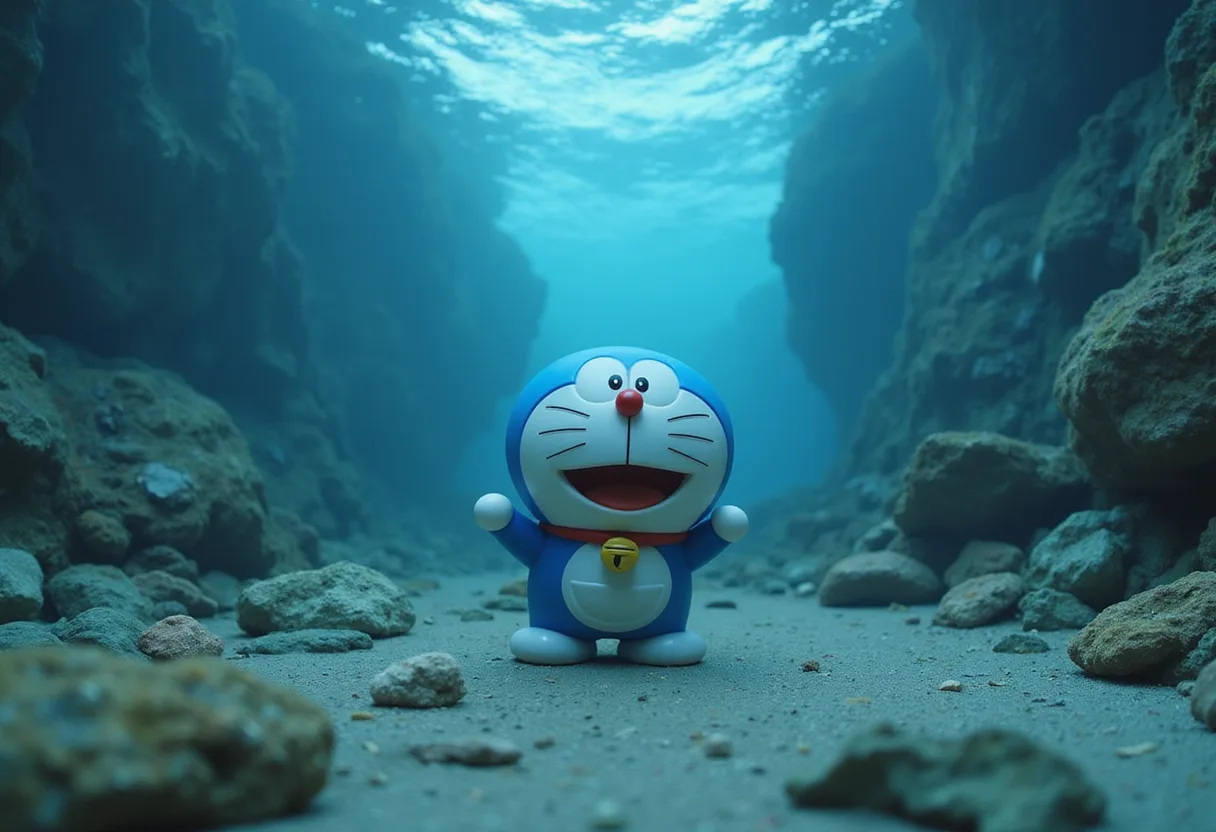
“Rex: A Dinosaur’s Story” Sets Its First U.S. Theatrical Release
Kani Releasing will give “Rex: A Dinosaur’s Story” its first U.S. theatrical release at Metrograph on December 11, bringing the 1993 Japanese hit to Chicago, Seattle, Austin and other markets.

Programme
- “Rex: A Dinosaur’s Story” opens its first U.S. theatrical release with a one-week Metrograph run starting December 11.
- The film opened in Japan on July 3, 1993.
- Its 2.2 billion yen Japanese gross ranked seventh among 1993 releases; the production budget was 2 billion yen.
- Haruki Kadokawa was convicted in 1994 and served a two-and-a-half-year sentence.
- Metrograph’s “Dinosauria” series runs through January 3.
Kani Releasing will open the first-ever U.S. theatrical release of “Rex: A Dinosaur’s Story” on December 11 at the independent Metrograph in New York. The 1993 Japanese family comedy will run for one week there, with openings in Chicago, Seattle, Austin and other markets to follow.
The Christmas-set comedy features animatronics (mechanically animated creatures) by Carlo Rambaldi. The Italian effects artist designed the character for “E.T. the Extra Terrestrial,” and his recruitment made the Japanese production’s blockbuster ambitions concrete.
Why was “Rex” built to compete with American blockbusters?
“Rex” opened in Japan on July 3, 1993. Heavy marketing positioned the release to contend with U.S. tentpoles (films built to draw wide audiences). Recruiting Rambaldi was the clearest evidence of that ambition.
Rambaldi began his career in the Italian film industry, working with filmmakers such as Dario Argento and Mario Bava. He then moved to Hollywood, where his credits include “Close Encounters of the Third Kind,” “Alien” and “Dune.”
The film also pursued the child-actor and animatronic two-hander (a story built around two central characters) format of “E.T.” Rambaldi’s design work on that film’s character made the approach possible. A Christmas story joins a child actor to a mechanical dinosaur, combining effects spectacle with a seasonal hook.
Why did the Japanese release end in a loss?
The film grossed 2.2 billion yen during its Japanese theatrical run, ranking as the seventh-highest-grossing release of 1993. Its production budget was 2 billion yen. The shortfall left this family film a money loser in theaters, despite its strong draw.
Kani Releasing describes original distributor Shochiku’s withdrawal of “Rex” from theaters after the film’s then-dominant director, Haruki Kadokawa, was accused of instructing an aide to smuggle cocaine from the United States. Kani Releasing also recounts that Kadokawa argued his innocence, was convicted in 1994 and served a two-and-a-half-year sentence.
Shortly afterward, Kadokawa directed the 1997 adaptation of Yasutaka Tsutsui’s science-fiction novel “The Girl Who Leapt Through Time.” That later credit places “Rex” within a continuing directing career after his prison sentence.
What changes for U.S. audiences?
Japan Society programmed a new remaster (a fresh transfer of an older film) during the 2026 edition of New York’s Japan Cuts festival in July. The North American release follows that festival screening.
Kani Releasing handles distribution, adding to its catalogue of repertory titles (older films shown in programmed runs) and rising directors from Asian film industries. The acquisition joins a Japanese box-office draw, a Hollywood effects designer and a production history that includes withdrawal from theaters.
“Rex” will open Metrograph’s “Dinosauria” series, which runs through January 3. The other titles are “Fantasia,” “Godzilla,” “Journey to the Beginning of Time,” “Jurassic Park,” “The Land Before Time” and “The Tree of Life.”
For audiences, the practical change is a theatrical run that places the film inside a dinosaur program, rather than a standalone booking. For Kani Releasing, the December run tests whether a Japanese theatrical hit can build a U.S. repertory audience.
Original: pmc.com
More from Grace Kim
Show full bio
Correspondent covering technology and product news in arts in the broadest sense at Arts & Voices.
822 articles