Richard Lloyd, Television Guitarist Who Helped Ignite CBGB Punk, Dies at 75
Richard Lloyd, whose volatile twin-guitar partnership with Tom Verlaine made Television and CBGB punk legends, died Saturday at 75 after a battle with cancer.
Programme
- Richard Lloyd died Saturday at 75 after a battle with cancer.
- Television released two studio albums in five years, including the 1977 classic Marquee Moon.
- Television began its CBGB residency in March 1974 and broke up in 1978.
- Drummer Billy Ficca is now the band's only surviving member; Fred Smith died in February and Tom Verlaine in 2023.
- Lloyd's memoir, Everything Is Combustible, was published in 2018.
Richard Lloyd, the guitarist whose fractious partnership with Tom Verlaine defined Television and helped launch the CBGB punk scene, died Saturday at 75 after a battle with cancer.
Television lasted barely five years and released only two 1970s studio albums. That was enough to reshape guitar music. The band never got American radio airplay, yet it inspired R.E.M., U2, Sonic Youth and Radiohead. Lloyd played many of their most dazzling solos — on "Elevation," "Guiding Light," "See No Evil" — and his lifetime's worth of rock magic lives in classics like "Marquee Moon," "Little Johnny Jewel" and "Days."
What made the Verlaine-Lloyd chemistry work?
Lloyd was always underrated — the George Harrison figure in the band, a couple of years younger than Verlaine and constantly rebelling against kid-brother status. He was Television's wild child: a chaotic rock & roll hellion with a choirboy's face. Verlaine avoided drugs and hated bars; Lloyd embraced both.
"I called myself a try-sexual at the time, because I would try anything a couple of times to see if I liked it," Lloyd wrote in his 2018 memoir, Everything Is Combustible. "For a while, I supported myself as a male prostitute, just like Dee Dee Ramone, around the corner of 53rd and 3rd."
The friction was real. "Every time we went into the studio, Tom would literally drive me nuts," Lloyd told Guitar World earlier this year. "He would act in such a way that I would end up in the mental hospital, or just the regular hospital."
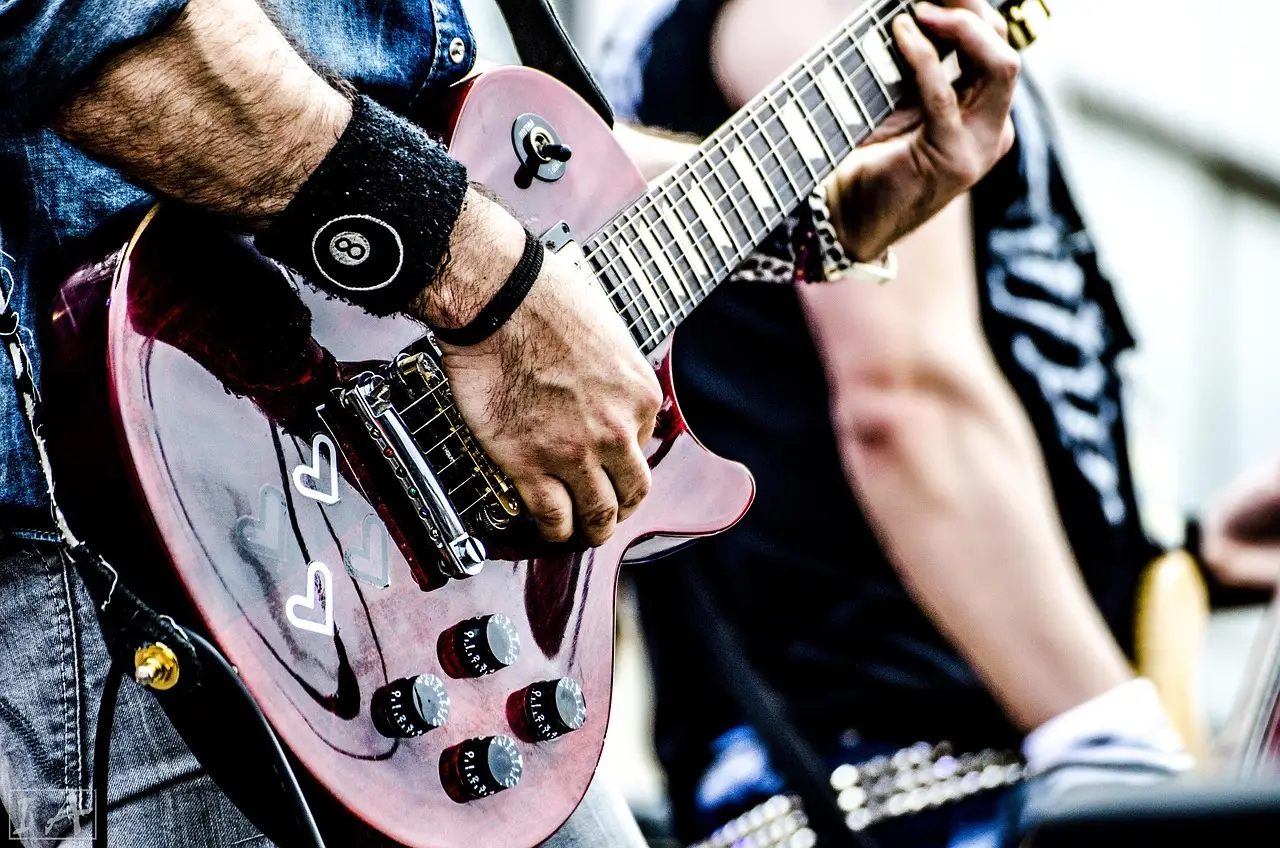
Still, with Lloyd on Stratocaster and Verlaine on Jazzmaster, backed by Fred Smith on bass and Billy Ficca on drums, the duo invented a new kind of psychedelic punk on the 1977 classic Marquee Moon. Lloyd compared their roles to Bob Weir and Jerry Garcia, or Carl Wilson and Brian Wilson. Smith died this past February, Verlaine in 2023 — leaving Ficca as the band's last surviving member.
How did Television put CBGB on the map?
Lloyd grew up in Greenwich Village and spent his teens prowling New York, facing mental health struggles that included institutionalization and chemical shock treatment. "I was a vagabond, but a pretty one," he recalled. He talked his way into the Fillmore East, and once walked barefoot some 120 blocks from Central Park to the World Trade Center, ending up in a jail cell on the 103rd floor and then Bellevue.
Back in New York in 1973, he met Terry Ork, an Andy Warhol cohort whose bookstore employed Verlaine, Richard Hell and Robert Quine. One night Ork took him to hear Verlaine play "Venus" solo; Lloyd knew they belonged in a band. In March 1974, Television found its home at a Bowery dive. As Lloyd recalled in Clinton Heylin's From the Velvets to the Voidoids: the owner planned to call it Country, Bluegrass, and Blues, "So we said, 'Yes, we play stuff like that.'" Hilly Kristal called their bluff, and CBGB had its first residency.
David Bowie declared them "the most original band I've seen in New York." Patti Smith, in her famous 1974 Rock Scene review, wrote: "Richard Lloyd plays emotional and highly sexually aware guitar. He's the pouty boyish one. The one most likely to get beat up in a parking lot." As Lloyd boasted in 2007: "CBGB is the most famous rock & roll club to have ever existed, and I fucking created it!"
What does his catalogue leave behind?
Marquee Moon is the acclaimed classic; Adventure, the underrated follow-up ("Marquee Moon for songs, Adventure for playing," as zine writer Byron Coley put it). The title track made the UK Top 30, and Adventure went UK Top 10, but Television broke up in 1978 at their peak, with Lloyd a "full-blown junkie" by his own account.
He moved on to solo albums like Alchemy (1979) and Field of Fire (1986), a 1992 Television reunion, a stint with Rocket from the Tombs, and a long partnership with Matthew Sweet — including the 1995 MTV hit "Sick of Myself." "I've been clinically dead a couple times, so what difference does it make to me? I like experience," he shrugged in his memoir. Remarkably, much of the band's greatest live work — the 12-minute "Little Johnny Jewel" from San Francisco, the 17-minute "Marquee Moon" from Portland — remains officially unreleased.
Source: rollingstone.com
More from Grace Kim
Show full bio
Correspondent covering technology and product news in arts in the broadest sense at Arts & Voices.
1,232 articles