San Sebastián 2024: Brad Pitt, AI Confessions and Spain's €5.68 Billion Boom
The 74th San Sebastián marks José Luis Rebordinos' final edition, with Brad Pitt, Spain's €5.68 billion production record, AI confessions from Maraval and Wachsberger, and a wave of deals.

Programme
- The 74th San Sebastián is the last under festival director José Luis Rebordinos, who has led the festival since 2011.
- Spanish film and TV production hit an all-time high of €5.68 billion ($6.6 billion) in 2025, per the Spain Film Commission.
- Vincent Maraval and Patrick Wachsberger said at the Creative Investors' Conference they would consider AI use in specific circumstances on films.
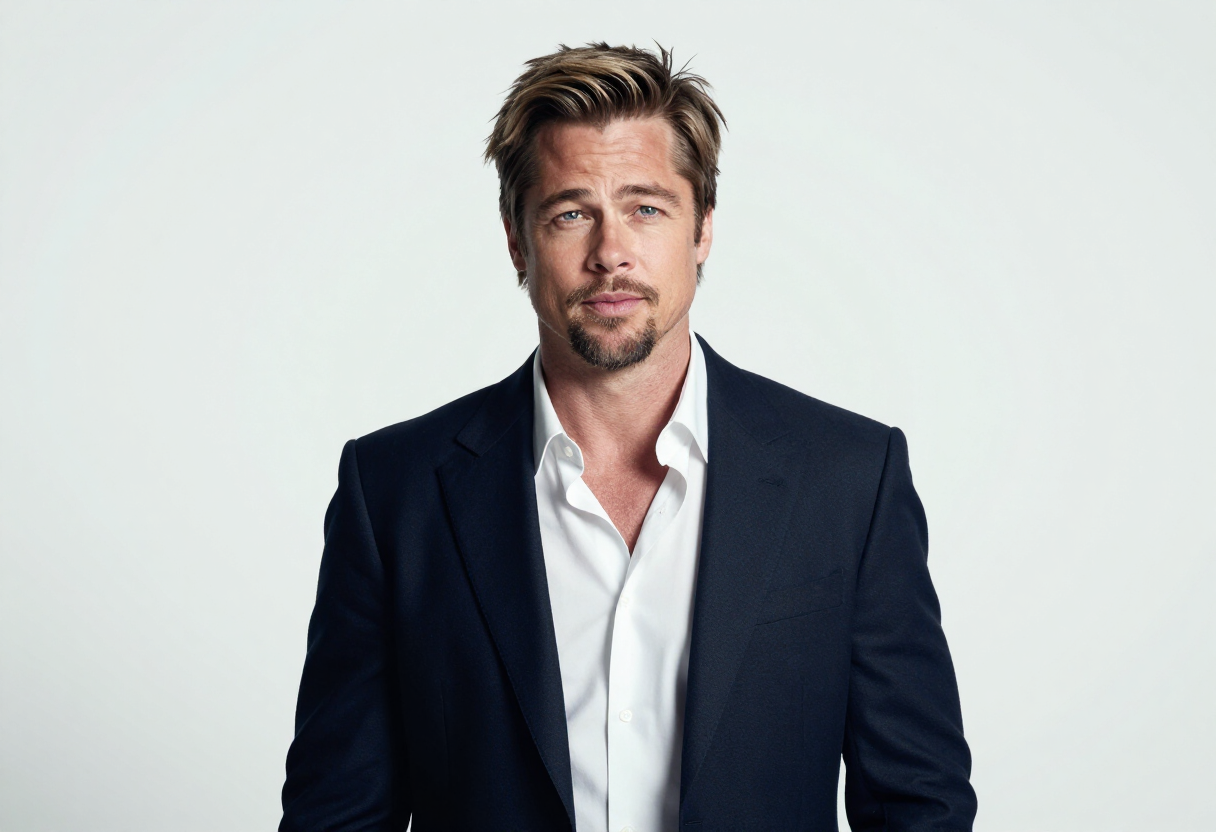
Brad Pitt spent 90 minutes signing autographs on the promenade of the 74th San Sebastián Festival, which also marked the final edition under festival director José Luis Rebordinos, in charge since 2011.
Pitt praised the performance of Uber, a dog, at his press conference for David Ayer's "The Heart of the Beast," produced by Plan B. The film proved one of the most popular at the festival with critics and audiences alike. Jesse Eisenberg, typically self-deprecating, said Jeremy Strong will be "amazing" playing Mark Zuckerberg in Aaron Sorkin's "The Social Network" sequel.
Los Javis, directors of "La Bola Negra," arrived fresh from the TIFF People's Choice Award, which has boosted their standing in the Oscars race. Thierry Frémaux presented them with a copy of their Cannes best director award so that both directors had a trophy.
Spain's industrial moment
The festival's defining story was the build of Spain's film and TV industry. Just before San Sebastián, the Spain Film Commission announced that Spanish film and TV production hit an all-time high of €5.68 billion ($6.6 billion) in 2025. During the festival, Spain scored five International Emmy nominations. According to the European Audiovisual Observatory, Spain produced 423 movies last year — more than any other European country, including the U.K. and France.
Movistar Plus, Spain's biggest pay TV/SVOD operator, presented its first slate under new management and reiterated its ambition to continue as a national champion. The company placed two Movistar Plus Originals in Cannes' main competition this year, "The Beloved" and "La Bola Negra," after "Sirāt" last year. The wider Spanish industry, one observer noted, is lighting a candle that the operator can execute on its stated support.
Buzz titles
International critics responded most strongly in the main competition to Yesim Ustaoglu's Turkish road movie "What Remains," novelist Maha Harada's debut feature "In My Father's Room," the Victoria Luengo starrer "Saints" and "Border." Mike Leigh's "Tender Loving Care" already tops the Spanish reviewers' poll in El Diario Vasco. Julianne Moore's "The Debut" also played well with local scribes after its Toronto buzz.
International headwinds
The festival coincided with a Variety report that France, the bastion of world arthouse cinema, is "in shambles" seven months before a presidential election with the far right leading polls. In Brazil, despite boffo box office for "I'm Still Here" and "The Secret Agent," "a lot of other Brazilian films make 10,000 admissions in theaters. And that kills the film." Heejeon Kim of Barunson C&C told the Creative Investors Conference that in South Korea "the number of films and revenues, everything's shrinking, financiers are really struggling to invest money."
With public funding stretched, European producers are courting private equity. The Marché du Film — Festival de Cannes partnered for the first time with San Sebastián's Creative Investors' Conference, bringing its Investors Circle and four investors for closed-door sessions. "There's for sure more demand on the investment side, and it's because it's getting harder and harder to finance films with public money, especially second, third and fourth features," said Alexandra Zakharchenko, the Marché's head of industry programs. She warned that too many investors confuse grants with equity: "Equity is not for every film. There has to be commercial viability and a clear path to recoupment." Her biggest lesson: "It became even more clear to me than ever how much it's a human-driven business. It's about trust."
Spain's biggest series now offer another model. "Sira," the sequel to "The Time in Between," produced by Buendía Estudios with Atresmedia and Netflix, bows on Atresplayer, moves to Antena 3 and goes international via Atresmedia Sales. "By combining different windows and territories across multiple licensees, the investment can be shared," said Buendía Estudios director general Ignacio Corrales. The real prize, he said, is ownership: "We retain ownership of the IP, which means we are not simply producing a title for a single buyer: we are building and retaining an asset of our own."
AI comes out of the closet
Senior independent figures including Vincent Maraval and Patrick Wachsberger said they were contemplating or would not object to the use of AI in specific circumstances. Maraval argued in conversation with CAA Media Finance's Roeg Sutherland that AI could be a make-or-break factor in getting a film made. Wachsberger agreed: "I'm not suggesting at all that you use AI for any of the actors, but if you want to do extension or whatever, something to give scope to the movie, I'm all for it."
Standout Spanish works
The most warmly applauded new Spanish fiction was arguably a series: "El Castillo," scripted by Isabel Peña in her first TV outing without Rodrigo Sorogoyen, partnering with Eduardo Villanueva. It chronicles how Spain's pimp trade transformed into neo-capitalist organized crime through a triple point of view: a Colombian single mother sex worker, the prostitution kingpin and the cop pursuing him.
The deals told their own story. M-Appeal swooped on Mikel Gurrea's "Saints"; "In My Father's Room" was pre-sold to France, Korea, Taiwan and Hong Kong before its world premiere and now heads to Busan; New Regency acquired international rights to "Genesi," which Netflix will release in Spain, Europe, Latin America and the U.S.; Mexico's Sula Films boarded Tatiana Huezo's "Galerna"; and Filmax picked up Javier Giner's "This Solitude," one of the buzziest feature debuts at the festival.
As Rebordinos bows out, the question facing his successor is whether Spain's production boom can keep compounding while the international arthouse market it sells into continues to shrink.
Source: Variety Film
More from Daniel Okafor
Show full bio
News editor covering consumer brands and retail at Arts & Voices.
104 articles