Seize the Summit Screened in London: Film Recasts Refugees as People
Arwa Damon's Seize the Summit, screened last week at an event organised by a Goldsmiths graduate, follows four refugees climbing Kilimanjaro — and challenges stock media narratives.
Programme
- Seize the Summit, by film-maker Arwa Damon, follows four refugees attempting to climb Kilimanjaro.
- The film was screened last week at an event organised by a recent Goldsmiths MA graduate, with a panel chaired by Guardian columnist Zoe Williams.
- Hanya, the graduate, said: "I think her purpose is to mainstream the idea of the refugee as a human being."
- Williams identifies four dominant refugee narratives: victim, criminal, retrospective hero, and refugees en masse.
- The Guardian's Year in Review 2026, featuring Williams, takes place on Tuesday 1 December.
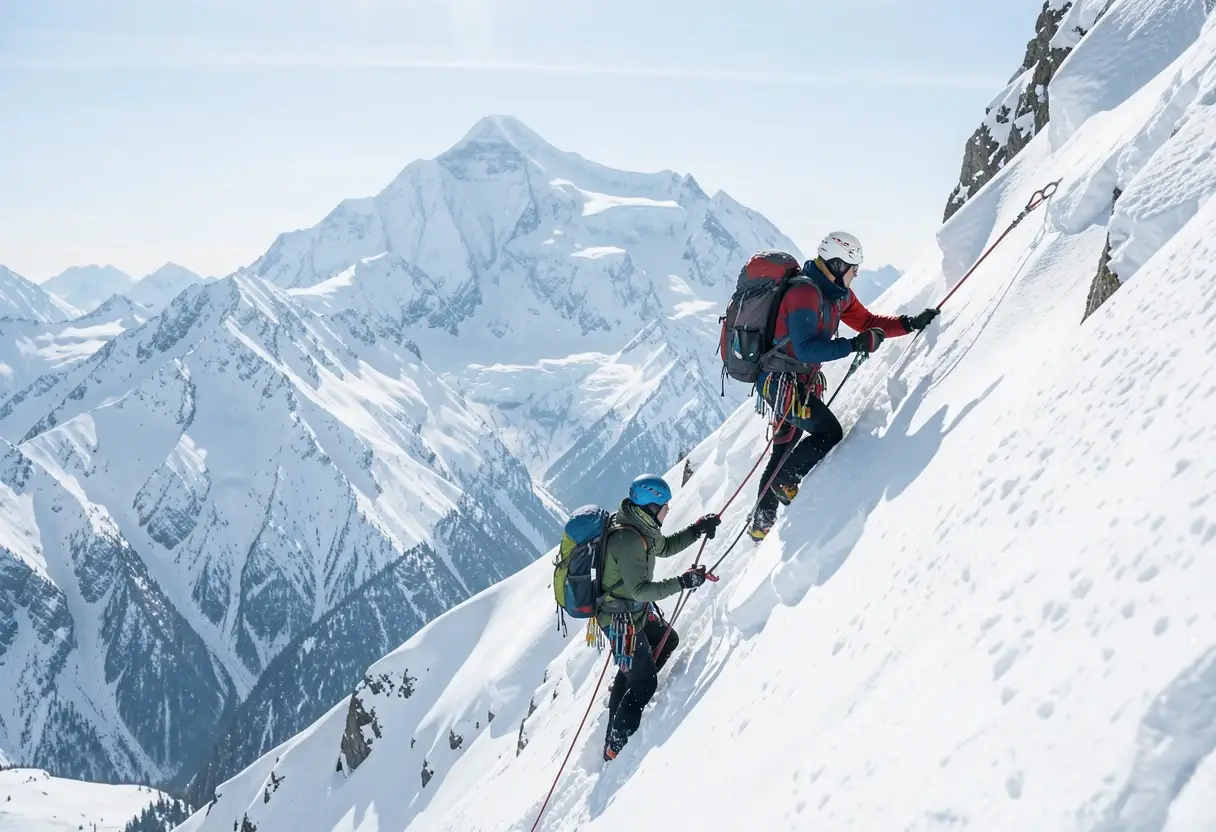
A screening last week of Seize the Summit, Arwa Damon's film following four refugees attempting to reach the top of Kilimanjaro, has put a pointed question back into circulation: why are refugees so rarely seen as fully human?
The screening was organised by a recent MA graduate from Goldsmiths, identified only as Hanya, who also sat on the post-screening panel. Guardian columnist Zoe Williams, who wrote about the event, was set to chair it. The evening's premise crystallised in a single exchange during the preparations.
"I think her purpose is to mainstream the idea of the refugee as a human being," Hanya said of the film-maker, Arwa Damon. Williams reports that the statement was so stark that the two of them started laughing — the kind of laughter that follows a truth so obvious it should not need saying.
What narratives dominate instead?
Williams identifies four recurring categories into which current-affairs storytelling sorts refugees. Each reduces the person to a function of the story being told.
- The desperate victim, defined entirely by suffering.
- The criminal, or criminal-waiting-to-happen, framed as a threat.
- The hero battling unimaginable odds — a narrative Williams notes is usually retrospective, told by second-generation members of a diaspora about their parents.
- Refugees en masse, stripped of individual traits altogether and discussed purely in terms of whether a host state can accommodate them, and for how long they should be allowed to stay in any given place.
The understanding of refugees as complex individuals — people motivated variously by wanting to build a new life and to return to what was theirs — has, in Williams's assessment, often been lost. The column's headline poses the choice starkly: hero, villain or victim.
Seize the Summit offers what Williams calls a different, truer perspective. The film's method is concrete rather than rhetorical: it follows four named individuals through the physical, measurable effort of climbing Africa's highest peak, a structure that keeps the camera on their agency rather than their circumstances.
Why the framing matters
The event's context matters. The screening and panel took place at a moment when, by Williams's account, public discussion of displacement has hardened into those four stock roles, none of which requires asking a refugee what they actually want — a question the film's subjects answer with their feet.
Hanya's formulation — mainstreaming the refugee as a human being — sets an unusually low bar for media culture. That the bar still needs setting is the column's implicit indictment.
Readers wanting to hear Williams take stock of the year's defining stories in person can attend The Guardian's Year in Review 2026 on Tuesday 1 December, hosted by comedian Suzi Ruffell with Lucy Mangan, Jonathan Liew, Heather Stewart, Pippa Crerar and John Crace; tickets are available via guardian.live. Whether films like Seize the Summit can shift the default categories of refugee storytelling will become clear as they reach wider audiences.
Source: theguardian.com
More from Elena Vasquez
Show full bio
Senior reporter covering technology and product news in arts in the broadest sense at Arts & Voices.
1,465 articles