Spain Courts Indian Filmmakers With Co-Production Deal and 500 Million Viewers
Spain, Country of Honor at IFFI, pitched Indian producers tax incentives, experienced crews and access to over 500 million Spanish speakers at WAVES Film Bazaar in Goa, Nov. 20-24.

Programme
- Spain pitched Indian filmmakers at WAVES Film Bazaar in Goa, running Nov. 20-24 alongside the 57th IFFI, where Spain is Country of Honor.
- India and Spain signed their audiovisual co-production agreement in 2012; updated guidelines are pending.
- Rodríguez framed Spain as access to a Spanish-speaking market of over 500 million people.
- Five Spanish projects seeking Indian partners were showcased, including 'The Dragon Letter,' based on a short that won gold at the 2026 Student Academy Awards.
Spain has offered Indian filmmakers a direct route to a Spanish-speaking audience of over 500 million people, in a pitch delivered at the WAVES Film Bazaar in Goa on November 20-24.
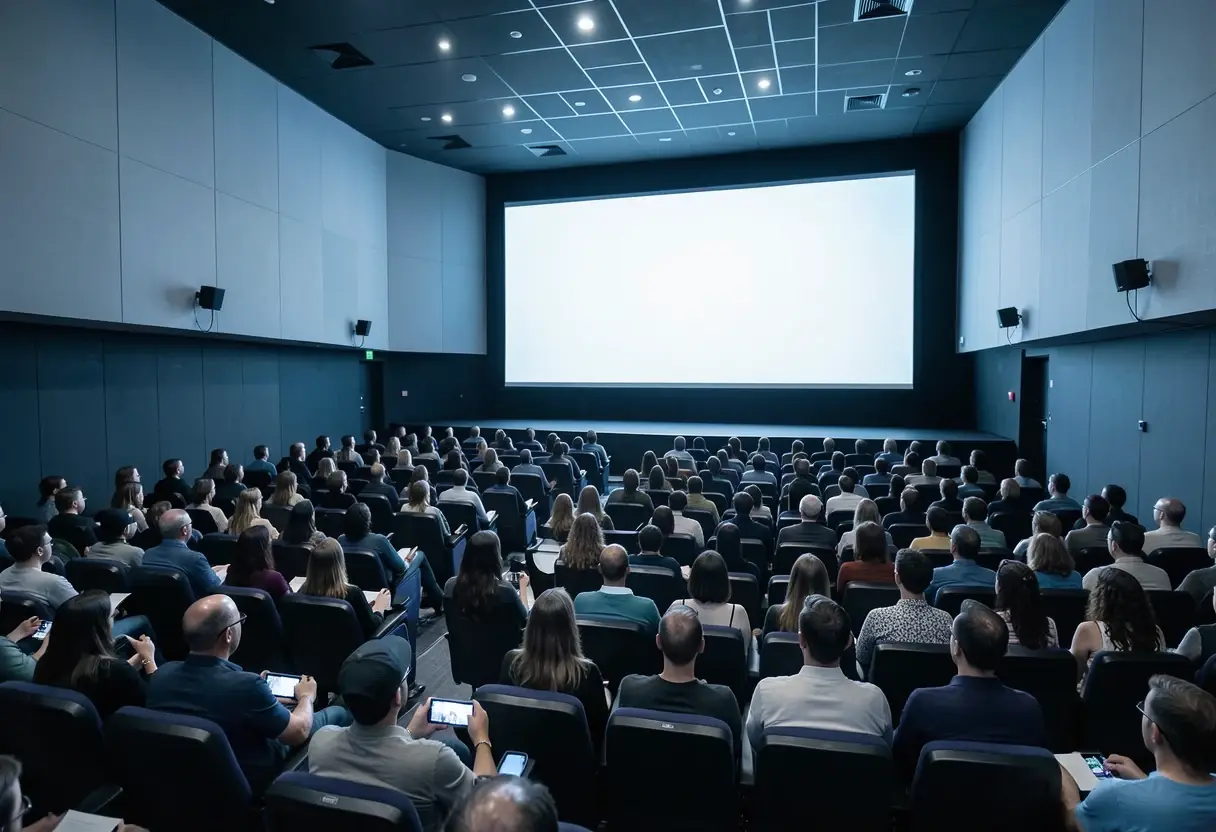
The panel, "Spain: Where Stories Find Their Stage – Incentives, Locations & Co-production Opportunities," ran as part of the Knowledge Series at the 20th edition of the market, held alongside the 57th International Film Festival of India (IFFI). Spain is this year's Country of Honor at the festival. Naman Ramachandran, Variety Asia editor, moderated the session.
"For us, co-production is a key instrument," said Camilo Vázquez, deputy director of the Institute of Cinematography and Audiovisual Arts (ICAA), the film agency of Spain's Ministry of Culture. Vázquez pointed to better financing, exchanges between technical and artistic teams, and stories that could connect with audiences in both countries. He described the timing as particularly favorable for India-Spain partnerships.
What does Spain offer Indian producers?
The offer extends beyond Spanish locations. Usha Jadhav, a National Award-winning actor and producer with Spanish company ACortes Films, highlighted the country's track record with international productions, its range of landscapes and architecture, and skilled crews experienced on both big-budget and independent films.
Jadhav also cited practical advantages: eight-hour shifts and quieter shooting environments, which matter particularly for sync-sound productions. She argued the relationship should not stop at service work, and made a case for collaborations that bring creative teams together across borders.
"Language is not a barrier, because cinema itself is a universal language," Jadhav said. "We need human stories."
Lara Molina, general coordinator of the Spain Film Commission, outlined the tax incentives available to international productions. Miguel Fabián Salazar, Spain's economic and commercial counselor in Mumbai for the trade and investment agency ICEX, set out what each side brings to the table:
- India offers production scale, a large consumer market, a global diaspora and strengths in VFX and animation.
- Spain offers experienced crews, creative talent and access to Europe and Latin America.
- Partnerships could run from co-production and financing to distribution, post-production and production services.
"These points somehow fit together. They are not exclusive. They all feed into each other," Salazar said. He noted that Spanish films and productions were traveling farther internationally while Indian productions and streaming services were growing fast.
ICEX's Mumbai office works with producers and distributors on market access, local partnerships, setting up businesses and regulatory requirements. It has also organized business missions involving Indian companies in animation, post-production and gaming.
How does the co-production treaty work?
India and Spain signed their audiovisual co-production agreement in 2012. Guillermo Rodríguez, director of the Valladolid-based cultural institution Casa de la India, said the scheme is being updated and that clear guidelines would be issued.
"The real roadmap is about building connections and building trust," Rodríguez said.
"If you plan to shoot in both countries or one of the countries, you have to make sure you follow those guidelines precisely. Under the co-production agreement, an Indian producer has to approach NFDC… and the Spanish co-producer has to go to ICAA," he said. NFDC is India's National Film Development Corporation.
Which Spanish projects are seeking Indian partners?
The session closed with a showcase of five Spanish projects looking for Indian collaborators:
- "My Parents Grand Bazaar," the feature debut of Andalusian filmmaker Rakesh Narwani
- "Serendipia," an India-Mexico-Spain romance
- "The Dragon Letter," from Ladakh-born director Stanzin Jigmet, based on his short of the same name, which won gold in the narrative category at the 2026 Student Academy Awards
- "Mumu," an animated project
- "Aana and Aai – The War to Become an Artist," a documentary
Rodríguez noted that the two countries have largely stuck to familiar markets, with Spain looking toward Europe and Latin America and India toward English-speaking territories.
"Imagine the global Indian industry working with the Spanish-speaking world," he said. "Because Spain is not just Spain. It's access to the entire Spanish-speaking world – over 500 million people. So if you can bring those two cultural superpowers together, imagine the potential."
With an updated co-production framework pending and five projects already shopping for Indian partners, the Goa session marks the most concrete step yet toward aligning two film industries that have rarely looked directly at each other.
Source: Variety Film
More from Marcus Bennett
Show full bio
Staff writer covering people, launches and day-to-day practice in arts in the broadest sense at Arts & Voices.
1,725 articles