Students Block Louvre Entrance, Forcing Full Closure
Students from the École du Louvre blocked the museum's main entrance on October 19, forcing the world's largest museum to close as education protests hit one month.
Programme
- Students blocked the Louvre's main entrance on October 19, preventing its 9 am opening.
- France's education protests began one month ago at a suburban Paris high school.
- Nearly 2,400 people arrested and about 1,000 police officers and firefighters injured, per the French Interior Ministry.
- Students from the National School of Fine Arts also joined the blockade, per the French Democratic Confederation of Labour.
- The museum's reopening date remains unconfirmed.
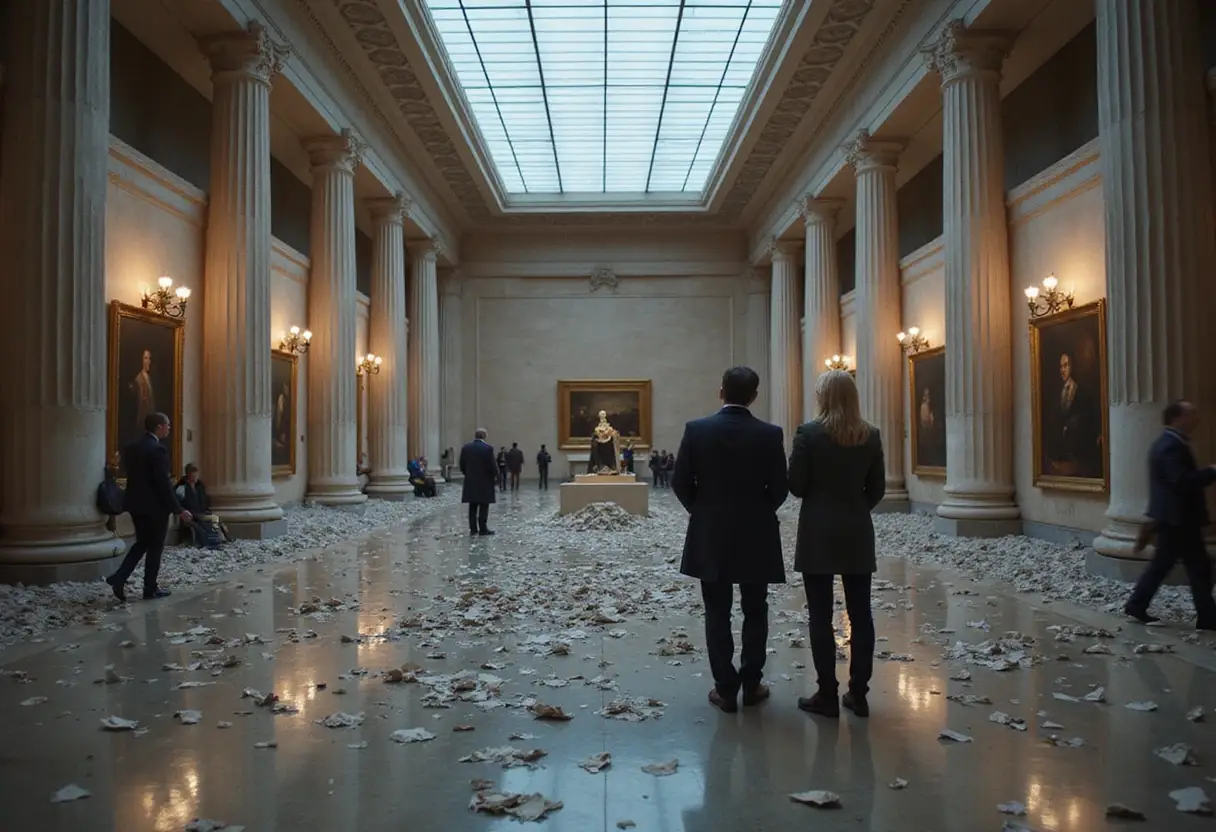
Students forced the Louvre to stay closed on October 19, blocking the museum's main entrance as France's education protests entered their second month.
Dozens of students from the École du Louvre — a grande école (elite French higher-education institution) that sits inside the Louvre Palace but operates independently of the museum — began the blockade before the 9 am opening. The museum never opened its doors.
Protesters played music, held up protest art, and handed leaflets to passersby. One leaflet read: "We are proud to announce that we are blocking the world's largest museum."
Members of the French Democratic Confederation of Labour trade union said students from the National School of Fine Arts have joined the demonstration, according to European outlets including Euronews. It remains unclear whether the museum will reopen tomorrow. The Louvre has not replied to Hyperallergic's request for comment.
How did the blockade start?
The action didn't come out of nowhere. Last month, a protest began at a single underdeveloped suburban high school outside Paris over crumbling infrastructure, grueling hours, and staffing cuts. It has since surged into nationwide strikes over what demonstrators call the diminished ability to study and work in France.
The museum blockade marks a sharp escalation: protesters have moved from targeting schools themselves to shutting down one of the country's most visible cultural institutions — and its biggest tourist draw.
What happened over the weekend?
Separate from the peaceful demonstrations, some individuals looted shops and set storefronts ablaze across Paris and other French cities. Riot police threw tear gas, fired water cannons, and beat protesters with batons, according to the BBC.
The numbers are stark. According to the French Interior Ministry, nearly 2,400 people have been arrested and about 1,000 police officers and firefighters injured. The government has not released figures on protester injuries.
What does the blockade change for visitors and the art world?
In the short term, uncertainty. The museum stayed dark on October 19, and no reopening date has been confirmed. For France's cultural sector, the protest sends a message that its flagship institutions aren't insulated from the education conflict — the Louvre sits physically inside the same system students say is failing them.
The leaflets make the students' framing explicit. One reads: "French students and workers are currently fighting their government and its anti-public-services politics. We thank you for your interest in French culture, and for standing with our fight to study, to work, and to live freely in good conditions."
Whether the blockade becomes a recurring tactic — or the government responds with concessions — will shape the coming weeks of a protest movement now one month old and still growing.
Original: euronews.com
More from Grace Kim
Show full bio
Correspondent covering technology and product news in arts in the broadest sense at Arts & Voices.
662 articles