Takeo Hisamatsu Returns to Lead Tokyo Film Festival Into Its 40th Year
Reappointed TIFF director Takeo Hisamatsu wants Japanese films pushed abroad, multi-year government funding, and better English education for filmmakers.
Programme
- Takeo Hisamatsu was reappointed TIFF director in April, after holding the post from 2017 to 2021.
- TIFF's 39th edition top prize went to 'Sister Brother Manhole Cover', a six-country co-production with no Japanese credit.
- Hisamatsu cited ten years of English education in Japan that still fails to produce speakers.
- TIFF sponsors include Rolex, Coca-Cola, Capcom, Bandai Namco and Morgan Stanley.
- The 40th-anniversary edition is planned as a bigger-than-usual celebration of Japanese cinema.
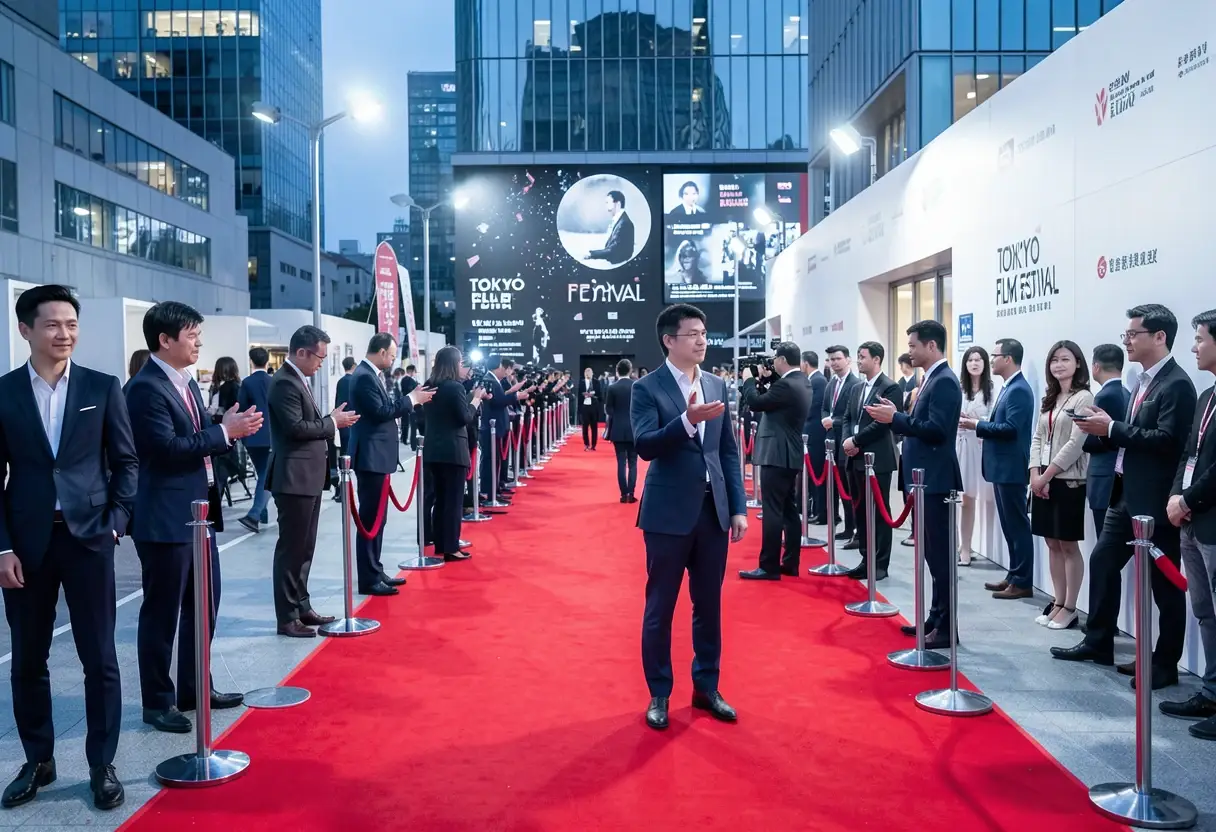
Takeo Hisamatsu was reappointed director of the Tokyo International Film Festival in April, resuming a title he held from 2017 to 2021. Inheriting a 39th edition and a 40th-anniversary edition to plan, he spoke candidly to journalists in Ginza's Midtown Hibiya about money, mission, and what keeps Japanese directors up at night. The answer, unexpectedly, is English.
Hisamatsu is also vice president of UniJapan, the industry promotion body, and a former executive at Warner Bros. Japan and Shochiku. That background shapes his view of where TIFF fits in a crowded festival calendar (the annual curated showcases at Cannes, Berlin, Venice and elsewhere).
What does Hisamatsu want TIFF to be?
The 39th edition continued TIFF's habit of programming world premieres and Asian features unlikely to reach American screens. But there's a tension: days after the conversation, the festival's top prize went to Sister Brother Manhole Cover, a co-production credited to six countries — none of them Japan. Programs like Asian Future deliberately define "Asian cinema" beyond Japan, Korea, China and Hong Kong.
Asked about the balance, Hisamatsu was blunt. "In terms of the balance, I look to put more emphasis on introducing Japanese films, or filmmakers, to the world," he said. "Because we are part of the film industry."
He dismissed the idea of chasing the same programming as Europe's majors: "I'm surprised that, this year, some international film festivals, they screen a lot of, you know, Korean films. They say 'we are global,' but you know, if we do the same thing — competing against Cannes or Berlin or Venice — I don't think that's the right way we should go."
How does the festival pay for itself?
TIFF's sponsor list reads well: Rolex, Coca-Cola, Capcom, Bandai Namco, Morgan Stanley, plus regional backers. Hisamatsu still says nothing is guaranteed, because government funding changes every year. His preferred fix: guaranteed amounts over two or three years, structured like athlete contracts.
Costs are rising across the board. He singled out airline tickets as a particular culprit, and noted that few sponsors loosen their wallets for art-in-hard-times arguments when deciding where cash actually goes.
He also argued festivals aren't festive enough. Music festivals deliver large gatherings at volume, in multiple senses; film festivals, he asked, can't they balance serious viewing in dark, quiet rooms with celebrating films and their makers nearby? Expect that logic to surface in the bigger-than-usual 40th-anniversary edition, for which multiple sources in Ginza hinted at an expanded celebration of Japanese cinema's history.
Community-building is part of the plan. Hisamatsu hosted a party that same evening for numerous Japanese filmmakers, partly to fix what he sees as a lack of proper socializing in local film circles.
Why does English matter so much?
Asked what most concerns local directors — at a moment when money and AI hang over the industry — Hisamatsu's answer was "English education."
"In this country, English class starts from junior high school," he said. "I spent three years, in high school three years, and in college four years. So: ten years we learned English. Still, we still can't speak English. That's a problem. We have to change our education system."
He framed the language gap as a structural handicap — Europeans, he noted, work from an alphabet closer to English — but declined self-pity: "But don't complain; do something. Right?"
The context is a closing gap between eastern and western industries. Festival programmer Kenji Ishizaka said as much a day earlier, and Academy CEO Bill Kramer made the same point on a TIFF panel. Directors Kiyoshi Kurosawa and Ryusuke Hamaguchi described recent work in France as a possible stepping stone to American debuts.
If those crossings happen, TIFF's support under Hisamatsu will likely be part of the story — with or without fluent English.
Source: The Film Stage
More from Daniel Okafor
Show full bio
News editor covering companies, deals and strategy in arts in the broadest sense at Arts & Voices.
1,002 articles