Tenor Ed Lyon Sings Nerone With Academy of Ancient Music on Nov. 17
Tenor Ed Lyon sings Nerone with the Academy of Ancient Music on Nov. 17 — with a conductor who won't conduct, a therapist's toolkit, and 30-year collaborations.

Programme
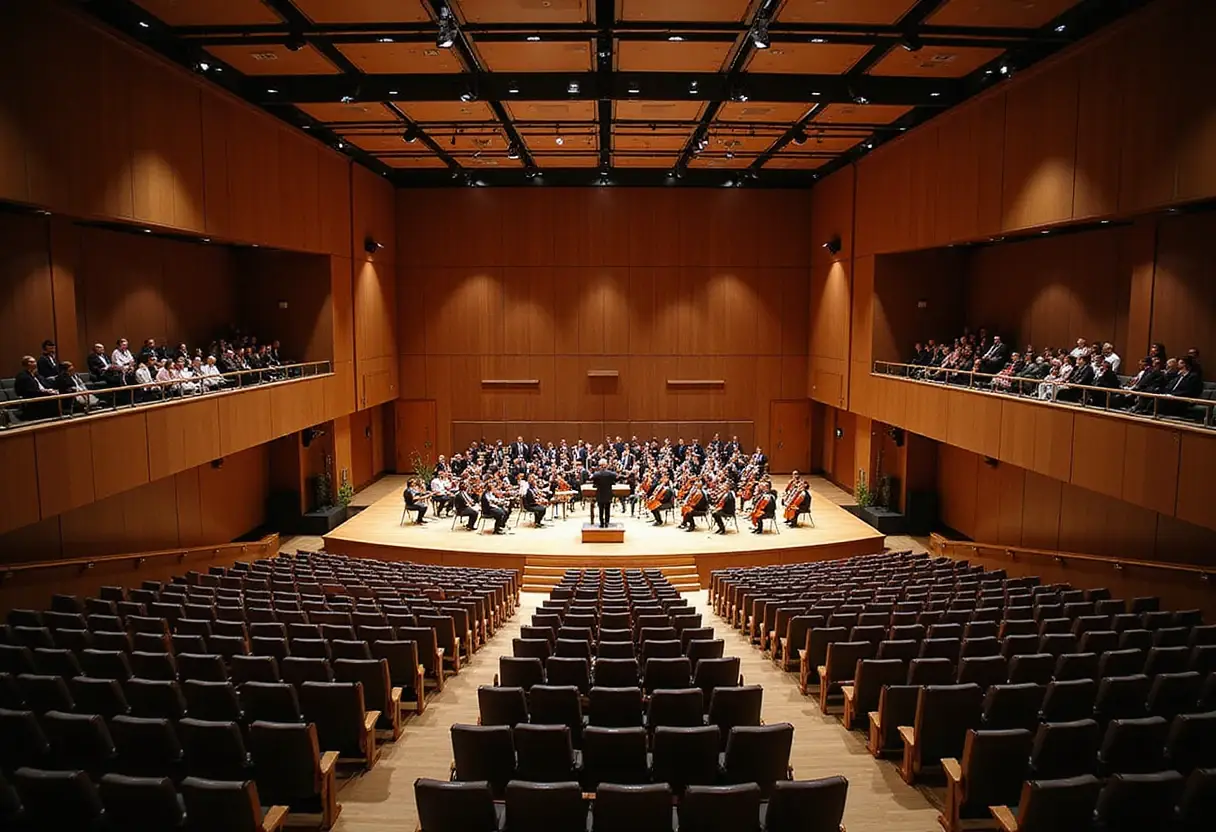
- Ed Lyon sings Nerone in 'L'Incoronazione di Poppea' with the Academy of Ancient Music on Nov. 17, conducted by Laurence Cummings at the Barbican.
- Lyon qualified as a psychotherapist in Cognitive Behavioral Hypnotherapy in 2020.
- He sang his first Ulisse at Garsington Opera this summer; a staged Poppea follows at Garsington in 2028.
- His Poppea is soprano Anna Dennis, a colleague of nearly 30 years from the Royal Academy of Music.
- A Wigmore Hall song recital — only his second — is set for next December.
Tenor Ed Lyon sings Nerone in Monteverdi's "L'Incoronazione di Poppea" with the Academy of Ancient Music on Nov. 17, conducted by Laurence Cummings — and Cummings, Lyon says, won't really conduct at all.
"He won't be conducting when we're at the Barbican," Lyon told OperaWire ahead of the performance. "Sometimes he'll nod to bring people in... But essentially, he feels that we all have to take responsibility for the tactus." Tactus is the shared Renaissance-era pulse that keeps singers and players together without a beat-waving maestro.
Lyon is known for baroque interpretations and has sung at the Royal Opera House, Opera di Roma, Garsington Opera, La Monnaie Brussels, the Salzburg Festival, Grand Théâtre de Genève and Oper Köln. In 2020 he also qualified as a psychotherapist in Cognitive Behavioral Hypnotherapy, later training in Mindfulness and Stress Reduction and Compassion Focused Therapy.
Why Monteverdi, and why now?
"What I love about Monteverdi is he is an extraordinary composer and he has the most brilliant relationship with text," Lyon said. Monteverdi wrote when the librettist was the star, discovering opera as a new art form. That gives singers what Lyon calls a "slightly improvisational quality" — rules everyone subscribes to, plus freedom inside the structure.
He contrasts that with later music. In Italian Bel Canto culture, he argues, "it's the sound that comes first and then the rest." And with a conductor dictating tempo, "I'm no longer interpreting, I'm following." With Monteverdi, "everybody gets to interpret all together all the time. No two performances are the same."
He loves the restricted harmonic palette of the period, too. Composers saved their chromatic effects for the moments that mattered — "you're just gasping at the invention of it," he said, where full-toolbox Strauss can leave him unsure what to listen for.
Lyon has a long history with "Poppea" — as a young man, but never as Nero. "That's not very accepted, to have a tenor sing Nero," he noted. He sang his first Ulisse at Garsington this summer, plus several Orfeos over the years.
What does playing Nerone change for him?
Plenty. His favorite moment is "an amazing duet for Nero and Lucano" — and he has sung Lucano a lot. A tenor Nerone means a two-tenor duet with the same dissonant excitement. Then there are the scenes with Poppea: "It's so sexy and so raunchy. She is a real piece of work and there is that erotic charge which I think is quite daring."
His Poppea is soprano Anna Dennis, a Royal Academy of Music contemporary he has known nearly 30 years — "another layer of complicity... that sense of trust." The Barbican performance precedes a staged "Poppea" at Garsington in 2028, again with Cummings, again largely unconducted.
On tactus, Lyon credits his 30-year friendship with Cummings, whom he has known since he was 16. Learn exactly what Monteverdi wrote first, then "you can stretch and you can decide where you want to go." During "Ulisse," he heard the harpist choosing different colors as the run progressed: "That's music making." Early music also lets singers whisper rather than shout — "we can invite the audience in to listen."
The therapist in the dressing room
Lyon works with singers on safety in the nervous system, since the voice is tied directly to our safety systems. "I've been in environments where conductors or directors have made me feel unsafe or not appreciated, or not wanted. And guess what, I don't sing as well," he said. Therapy has given him compassion for his own successes and failures, and conviction that principals set the tone: a title-role singer has "a duty" to make colleagues feel appreciated.
He sees a generational shift. Young singers know few will earn a living solely from singing, and they're sanguine — which taught him "I need to invest in more than my singing," against the single-minded advice many stars give.
Does early music specialization cost him? As a younger singer he felt pigeonholed, and he thinks opera houses still dismiss the repertoire as something for "cheap young singers," doing the music a disservice — experienced singers bring gravitas young ones can't. But specialization has its logic: countertenors stay sharp because they're always in their repertoire, and "if you're singing something you don't love, the audience will hear it and they'll not be moved."
It started in the 1990s with recordings by Christopher Hogwood, John Eliot Gardiner, William Christie, René Jacobs and Ton Koopman — "every week there was a new recording." A Wigmore Hall recital, only the second of his career, follows next December. Bach and Monteverdi, he says, remain his lifeblood.
Source: Opera Wire
More from Grace Kim
Show full bio
Correspondent covering technology and product news in arts in the broadest sense at Arts & Voices.
838 articles