“The Body” Trades a Murder Hook for Chronological Suspense
Caroline Darya Framke finds depth beneath the clichés in Quinn Shephard’s eight-episode Netflix drama, where a dance-team lie spreads from a Catholic school to an entire town.
Programme
- “The Body” is an eight-episode drama created by Quinn Shephard; Shephard directed the first episode.
- The series opens in chronological order in an early-2000s Catholic school, beginning with a dance-team tryout.
- Lisbeth and Anya witness how Grace’s Halloween ends and agree not to reveal the details.
- Framke calls the chemistry among the mostly little-known cast remarkable; reality TV star Gabby Windey makes her acting debut.
- The review compares the drama with “Mean Girls,” “Cruel Intentions,” “The Crucible” and “Yellowjackets.”
By Tom Whitfield
The eight-episode drama “The Body,” now streaming on Netflix, opens in chronological order with a Catholic-school dance-team tryout, not the murder implied by its title. Caroline Darya Framke, a television critic and host of the Watching newsletter at The New York Times, notes that creator Quinn Shephard also directed the first episode.
Framke starts with television’s attention problem: viewers have only minutes before they click elsewhere. She cites “Law and Order” and its decades-old habit of opening with an untimely death. “The Body” refuses that shortcut, she notes, and tells its story in chronological order.
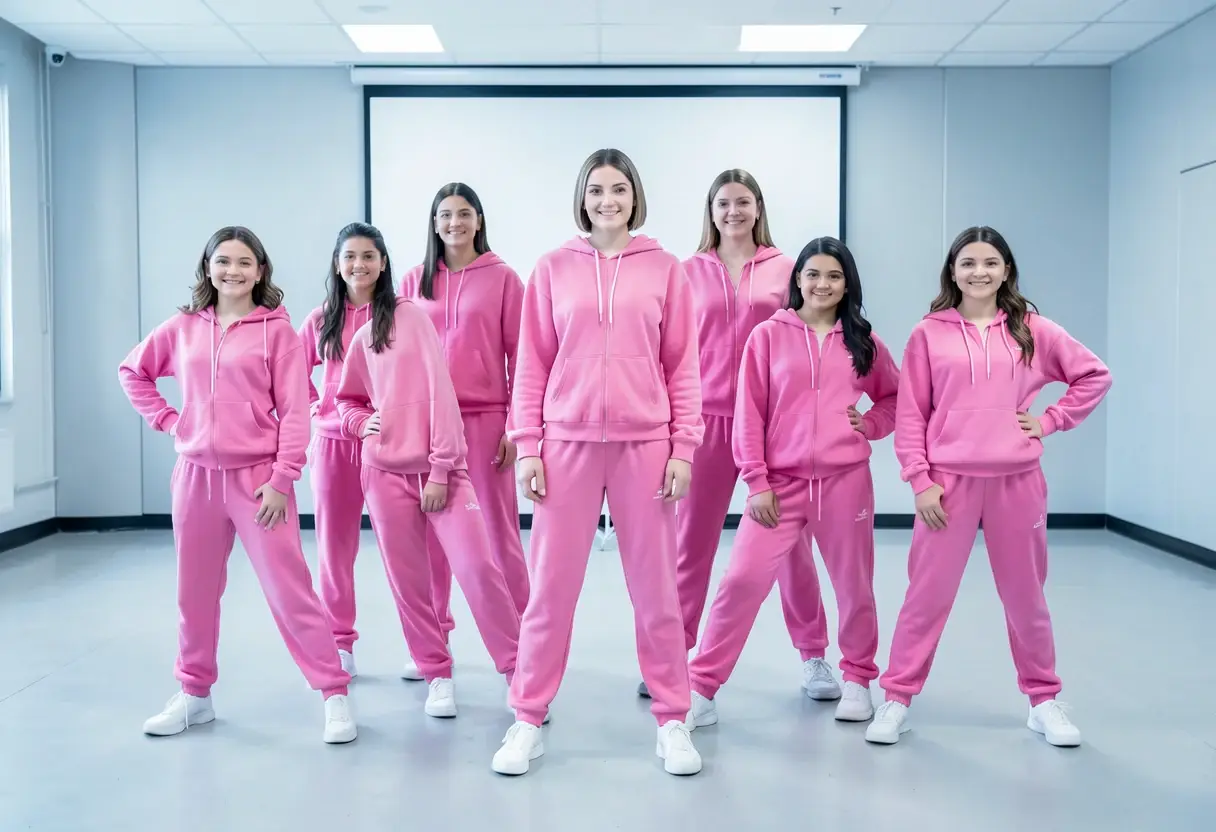
For Framke, the restraint applies to the plot, not the sexualized imagery. She describes languorous shots of Catholic schoolgirls helping one another stretch, eyeing one another hungrily and sinking into the splits. Matching pink sweatsuits and an early-2000s setting make them look ready for a Juicy Couture commercial. She calls this basic sex appeal a potentially cynical gambit.
Past the opening clichés, however, Framke finds Shephard “purposefully remixing the hypersexualized references of her millennial youth.” The visual language nods to “The Craft,” “Jennifer’s Body” and “Mean Girls,” while the girls’ world is shaped by t.A.T.u.’s “All the Things She Said” and Britney Spears’s “…Baby, One More Time.”
Framke’s reading is also skeptical about what the girls do with that inheritance. “They know what people assume about them, and are more inclined to embrace those perceptions than to examine their implications,” she writes. The result, in her account, is a show conscious of its own nostalgia and the clichés it borrows.
Framke’s synopsis of episode one begins with emergency tryouts for the high school dance team after a key member breaks her ankle. Lisbeth (Geena Meszaros), newly homeschooled, wants the team’s built-in circle of glamorous friends. Instead, the team chooses Grace (Sofia Wylie), whose dance skills outweigh her inconvenient piety.
Grace’s religious ties include her father, Father Franklin (Nnamdi Asomugha), the school’s head priest and principal. The co-captains are Anya (Kristina Bogic) and Elise (Sara Boustany). For their Halloween party, they turn initiation into a ritual that jokingly—or perhaps not—summons Satan.
Grace’s fate that night stumps almost everyone, though Framke withholds the specific outcome. Lisbeth and Anya alone witness how her Halloween ends and make a pact not to share the details. Anya can barely withstand the pressure of concealment; Lisbeth, hungry for connection and power, recognizes a weakness she can use.
At this stage, Framke says, “The Body” moves from “Cruel Intentions” toward “The Crucible.” Lisbeth, the daughter of a fire-and-brimstone preacher, guides others toward biblical explanations. With no solid answers, the team becomes more susceptible to her suggestions, or more willing to pretend belief so they will not be excluded.
Their attempts to spin plausible stories become lies they cannot control. Framke says the deception spreads into contagious hysteria across the team and then the town. Elise remains the stalwart skeptic because she knows Anya and loves her better than anyone.
Like “Yellowjackets,” the Showtime thriller about teen girl survivors of a plane crash, “The Body” teases supernatural possibilities while preserving ambiguity. Framke finds its strongest twists rooted in the characters’ reality. In her view, a suggestive supernatural reading cannot replace motive, pressure or consequence.
Lisbeth’s cold calculations can become inscrutable when they merely push the plot. Framke says they bite deeper when Lisbeth exploits true believers, including her trembling brother, Leo (Jackson Kelly), and Grace’s earnest friend, Maddie (Shirley Chen). Her manipulation becomes the story’s moral pressure.
Anya’s refusal to acknowledge the truth spreads through her life, Framke writes, with particular force in her relationship with Elise. Their friendship contains a deeper attraction, complicated by their increasingly conservative town. Bogic and Boustany generate the sparks that make the characters seem to consume each other whenever they appear together.
Framke finds the chemistry throughout the mostly little-known cast remarkable. Reality TV star Gabby Windey may be the most recognizable face, and the review notes that this is her acting debut. Framke says the performers share the same distinctive frequency that gives the drama its edge and lifts it beyond a simple echo of its influences.
What does “The Body” change for Netflix viewers?
The practical change for Netflix viewers is the bargain: no death-first hook, but a slower eight-part mystery whose payoff depends on motive and chemistry. Framke says the early-2000s imagery and supernatural suggestions can keep attention, yet her praise remains conditional on the lies, attraction and social pressure outperforming the retro framing.
Framke’s conclusion is conditional but usable: the early-2000s surface may draw viewers in, but Lisbeth and Anya’s choices must keep the eight-part mystery credible after the nostalgia and supernatural suggestions have made their first impression.
Original: youtube.com
More from Tom Whitfield
Show full bio
Market editor covering people, launches and day-to-day practice in arts in the broadest sense at Arts & Voices.
1,378 articles