‘To Be Ordinary’: Lee Yun Chan Returns to Features After 20 Years
Lee Yun Chan returns to features after 20 years with 'To Be Ordinary,' Taiwan's only Busan competition title, a Taipei family drama opening in Taiwan on Nov. 13.
Programme
- ‘To Be Ordinary’ is the only Taiwanese film in competition at the Busan International Film Festival.
- Director Lee Yun Chan's return to features comes 20 years after her 2005 debut ‘The Shoe Fairy’.
- The film was shot over 42 days after roughly 10 years of story development.
- After Busan, it screens at the Tokyo and Golden Horse film festivals, opening in Taiwan on Nov. 13.
Taiwanese director Lee Yun Chan has returned to feature filmmaking after two decades with “To Be Ordinary,” the only Taiwanese film in competition at this year's Busan International Film Festival.
Lee made her feature debut with 2005's “The Shoe Fairy” and more recently directed the Disney+ series “Women in Taipei.” Her new film's Mandarin title literally means “a useful person.”
“To make a film again after all this time, have it selected for competition and bring the cast to Busan – I feel really useful,” Lee told Variety.
What is the film about?
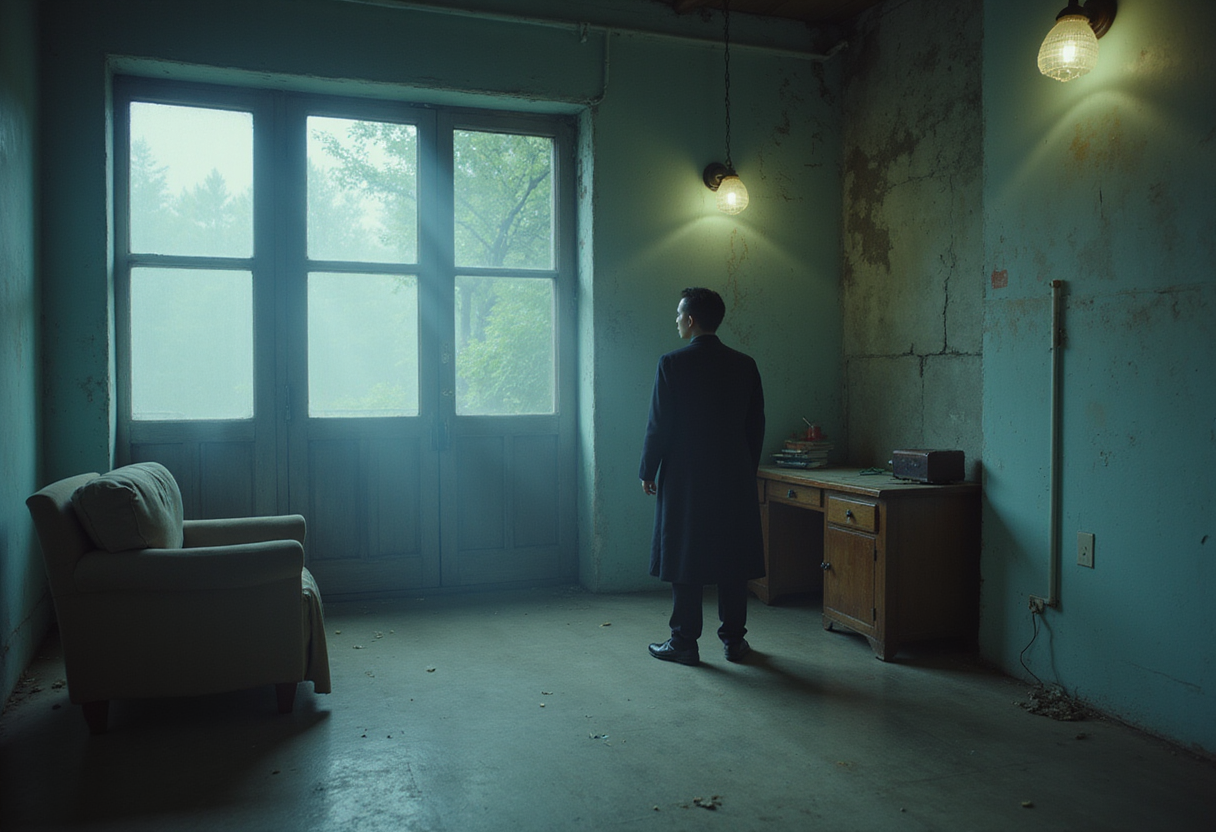
“To Be Ordinary” follows Yu Jie, a college student and web designer, whose motorcycle is hit by a car as he rides home one night from a part-time job. The elderly driver, consumed by guilt, signs his house over to Yu Jie and covers his medical and living costs each month. Yu Jie's family, close to breaking point financially and emotionally, slowly reconnects over shared dinners, while Yu Jie grows close to his physical therapist, Yi-han. The fragile happiness does not last.
Lee says the story began taking shape about 10 years ago, as she was raising her family. After the cast began training, the film was shot over 42 days.
For cast members Weber Yang, Chang Shih Ying and Junior Hsieh, Busan is a first festival appearance. Before filming, the actors playing the family spent time grocery shopping and cooking together, and even went hiking with a wheelchair, building the ease and affection Lee wanted to bring to the screen.
How did the director and cast build the story?
“I wanted to tell the story of an ordinary family in the city, trying to live their own small lives, and what happens when one of them has an accident,” Lee said. She grounded the film in the rhythms of everyday life in Taipei, from the familiar music of garbage trucks to the daily MRT commute. “These are things we encounter in our everyday lives,” she says.
Yang, who plays the taciturn father, unemployed for three years, says he first encountered the script while going through a midlife crisis. “I felt I had everything, but I was lost and anxious, unsure what came next,” he says. The role also showed him how universal some of the film's situations are, from a couple's difficulty communicating to the pressure of social expectations and the questions people ask themselves about their place in the world.
Chang, who plays the mother, says the role's emotional complexity gave her new ways to look at family, marriage and herself. “I'm lucky that every different role lets me live a different life,” she told Variety.
Hsieh, who plays a young man left disabled after a car accident, prepared by borrowing a wheelchair from his school and adjusting his eye level in daily life to better understand the world from a wheelchair user's perspective. The experience, he says, gave him a deeper understanding of acting. He hopes to take on a role with action or martial arts in the future.
Asked about the kinds of roles he hopes to play next, Yang says he would like to portray a homeless person, showing what it means to hit rock bottom and reflecting the realities of contemporary society.
Lee says she simply wanted to honestly document what happens when an ordinary family is hit by an accident. “Because it's an ordinary story, like the lives we all lead, I think it can move people,” she says.
Where can audiences see it?
Producer Inch Lin and Mandarin Vision world sales representative Desmond Yang say that while the film may not be aimed at mainstream audiences, its universal theme of repairing family relationships can help it find viewers.
After its Busan world premiere, the film is set to screen at the Tokyo International Film Festival and the Golden Horse Film Festival, before opening theatrically in Taiwan on Nov. 13.
Source: Variety Film
More from Marcus Bennett
Show full bio
Staff writer covering industry trends and analytics at Arts & Voices.
397 articles