Virginia Opera Opens 2026-27 Season with a 'Pagliacci' That Bites
Virginia Opera opened its 2026-27 season November 6 with Leoncavallo's 'Pagliacci': a debut-heavy cast, Adam Turner conducting the Virginia Symphony, and Canio alone in a single footlight.

Programme
- Virginia Opera opened its 2026-27 season on November 6 with Leoncavallo's 'Pagliacci'.
- Outside of Kidon Choi, the entire principal cast made role debuts.
- Adam Turner, Virginia Opera's Artistic Director, conducted the Virginia Symphony Orchestra.
- The production used a single static set with lighting design by Jonah Schnell.
- 'Pagliacci' premiered in 1892 as a landmark of the verismo style.
Virginia Opera opened its 2026-27 season on November 6 with Ruggero Leoncavallo's "Pagliacci" ("Clowns"), one of the world's most famous verismo operas (a style that put everyday, working-class life and its violence onstage). The production traced the action in near real time, from a commedia dell'arte troupe's afternoon arrival in a small Italian village to the performance that collapses into tragedy that same evening.
How the production works
The show's engine is the gap between performance and motive. To call "Pagliacci" layered, the original OperaWire review notes, would be like calling lasagna 'noodles.' Here the tension between the performative surface and what simmers beneath it never let up.
Baritone Kidon Choi set the frame. He carried three roles — his everyday self, his stage part, and the Prologue Leoncavallo wrote as an introduction to the opera, if not to verismo itself. His clear, effortless delivery held the house "as if in conversation," convincing the audience to open their hearts before he stepped behind the curtain and let the fourth wall go opaque again.
Outside of Choi, the entire principal cast made role debuts. Each singer leaned into full character depth: Canio, the "Great Pagliaccio," saved his enthusiasm for paying customers and free booze; Nedda, his wife, was exhausted by the men surrounding her; Beppe kept things light to hold the show together; Tonio, disfigured and soured by it, was in his way the most reliable of the lot.
Who sang what
Sarah Tucker's Nedda stood out as uniquely isolated, even in an art form that rarely shies from the transactional nature of women's lives. Her bright soprano was textured to catch a bleakly calculated life suddenly offering a ray of hope; left alone with her thoughts, this Nedda barely knew what to do with them.
Hunter Enoch's lyric bass-baritone established Silvio's romantic credentials as Nedda's lover, softening to expose his anxieties. Zach Borichevsky charted Canio's descent from irritable to jealous to murderous — his resonant sound expanded while staying under control even as Canio lost his grip, and his delivery of opera's most famous breaking point, "Ridi, Pagliaccio!," was "singular and deeply satisfying." Carlos Ahrens's bright, agile tenor fit Beppe, a utility player who just wanted the team to finish the season.
Brandon Eldredge coached the Virginia Opera chorus to a robust sound with crisp harmonies; Herndon Foundation Emerging Artists Douglas Culclasure and Joel Clemens took the solo lines.
What the orchestra and design add
The Virginia Symphony Orchestra under Artistic Director Adam Turner played Leoncavallo's shifting score — accompaniment, answer, counterpoint — with great nuance. Horns invoked the circus; strings led a lyrical, almost romantic surface that suggested what the characters might feel but don't.
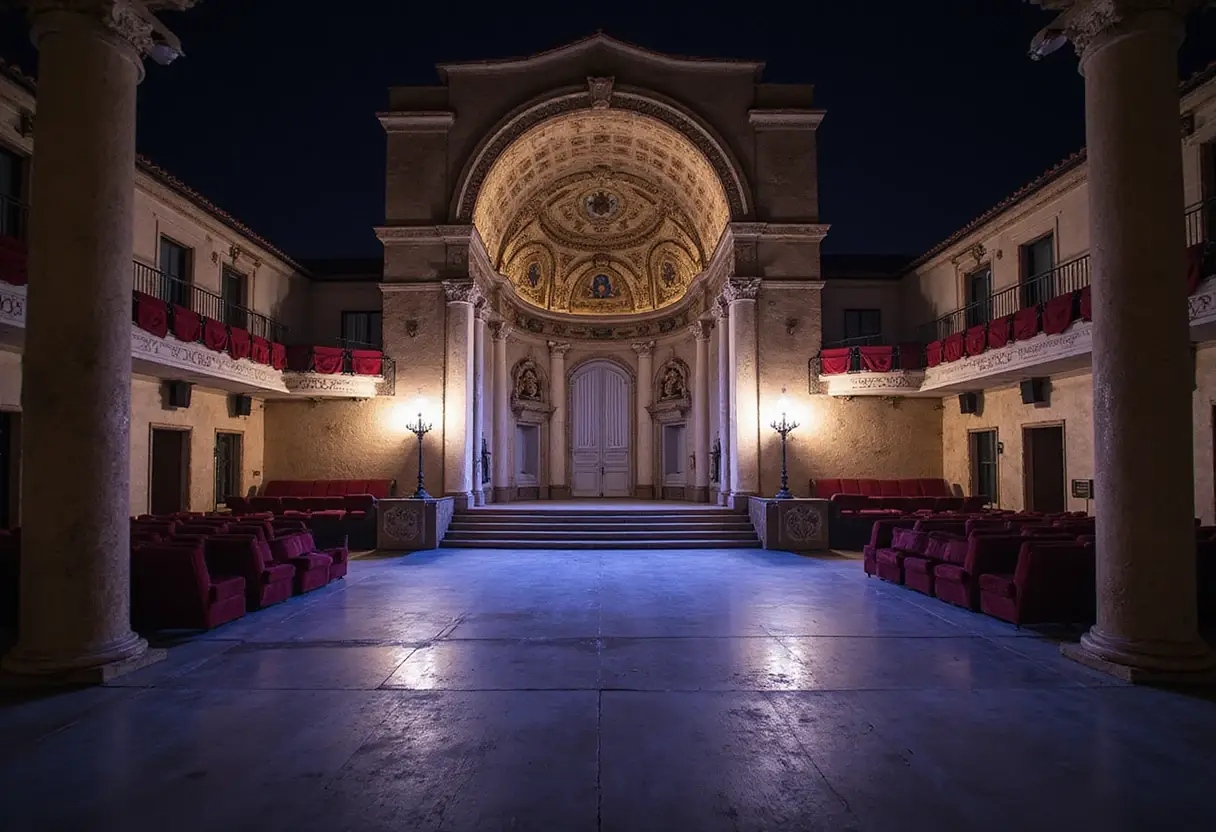
No set change is needed: the single set stays static, its varying levels and multiple routes supplying visual interest. Jonah Schnell's mood-driven lighting shifts to dramatic horizontal angles and monochromatic shades as tragedy nears. The peak image: Canio sits in the beam of a single footlight, applying makeup without breaking down, while the footlight casts an immense shadow of Pagliaccio on the wall behind him — letting the often-underappreciated intermezzo land as a revelation.
What does this change for the season?
For Virginia Opera, it's a strong statement of intent: a debut-heavy cast holding its own in repertoire that punishes shallow characterization, with a design team doing more with less. When the townsfolk onstage begin doubting Canio is still acting, the audience doubts along with them — and that bleed between stage and house is exactly what verismo, since its 1892 premiere, promised to deliver.
Source: Opera Wire
More from Grace Kim
Show full bio
Correspondent covering technology and product news in arts in the broadest sense at Arts & Voices.
1,436 articles