Walid Raad Turns Fact Into Fable at the Venice Biennale
Walid Raad's Arafat beds, birthday cakes and shrunk Atlas Group works anchor his Venice Biennale presence, built on a 30-year practice of documents that never existed.
Programme
- Walid Raad is a standout of the 2026 Venice Biennale with works on beds Yasser Arafat slept in, a search Raad says has lasted 30 years.
- Raad's fictional Atlas Group ran, by his account, from 1989 to 2004, though its work appears in the 2026 Biennale catalog marked 'printed 2023.'
- At Sfeir-Semler Gallery in 2008, Raad presented his shipped Atlas Group work shrunk to 1/100th of its original size.
- Raad's next show opens at Paula Cooper Gallery, New York, in spring, featuring a vintage VW Beetle referencing artillery shells fired on Beirut in the 1980s.
Walid Raad is a standout of this year's Venice Biennale, where his paintings, drawings and photographs of banal beds spring to life through a wall text claiming they were slept in by Yasser Arafat. The PLO leader, the text explains, survived more than 40 assassination attempts and "could not afford to throw caution to the wind… so he lived—and slept—on the move." Raad says he has spent 30 years searching for those beds, drafting paintings of mattresses and duvets he could never complete.
The Arafat paintings hang incomplete, bordered with tape and brushstrokes. Raad, whose career spans nearly 40 years and who holds a PhD and a MoMA retrospective, describes himself as "creating the documents I wished already existed."
How did the birthday cakes begin?
As a teenager, Raad walked war-torn Beirut with a camera, trying to make sense of the world. One day he photographed a birthday cake in a bakery window, decorated for someone named Hassan. Only later, developing film in his father's converted bathroom darkroom, did he register the date: the cake was for Hassan Nasrallah, then a rising militiaman. Raad briefly fantasized about poisoning it. "But I was 15," he said. "I was a coward."
Decades later he returned to that image in digitally fabricated birthday cakes addressed to political leaders difficult to celebrate—happy birthday to Ali, Kamal, Tony, Walid; joyeux anniversaire to Yasser, Elias, Nabih, Amine. Nasrallah had by then led Hezbollah; in 2024, an Israeli airstrike killed him. The cakes are cheerful and cold at once, Raad's trademark tragicomic blend of fiction and fact.
What does scholarship make of him?
The scholar Saidiya Hartman, singling out the Arafat pictures in Venice, called his "belief in the imaginative and the speculative" "critical." Harvard art historian Carrie Lambert-Beatty describes his work as an exemplar of "parafiction"—art that makes viewers experience a scenario as having been true. Art historian Claire Bishop, in her recent book on artistic research, notes that Raad offers synthesis in the form of narrative where most research-based art merely reproduces information overload.
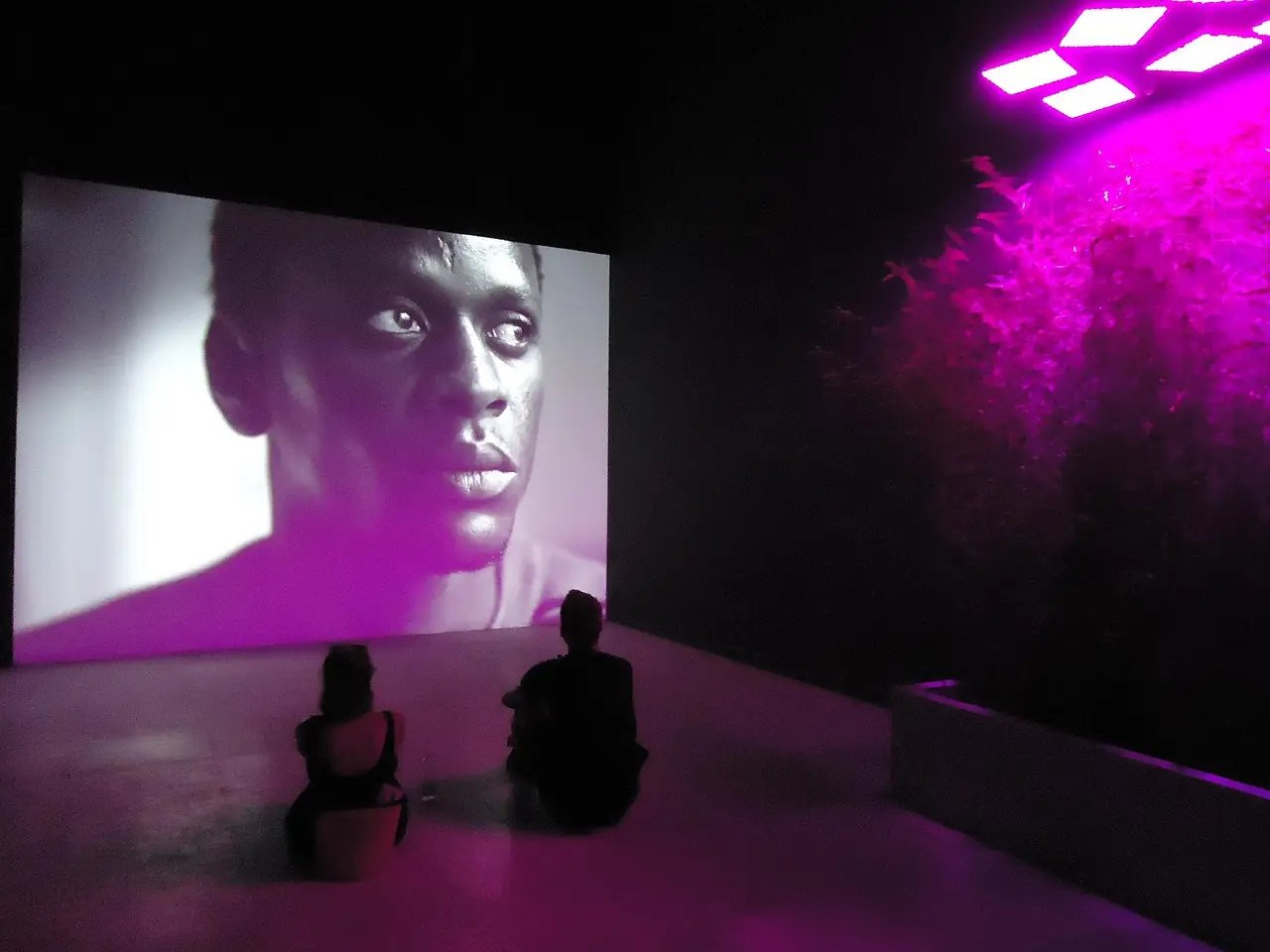
Raad is best known for the Atlas Group, a fictional collective he says ran from 1989 to 2004. Its video Hostage: The Bachar tapes (#17 and #31), attributed to the year 2000, features Souheil Bachar narrating a decade of captivity in Lebanon alongside five Western men—he the only Arab. The work reveals itself through green-screened footage of Ronald Reagan and, for Arabic speakers, contradictions between Bachar's words and the English translation. Dates themselves are Raad's medium: institutions list the Tate- and MoMA-acquired series "My Neck Is Thinner than a Hair: Engines" with different dates (2000–03 and 1996–2004), and an Atlas Group work appears in the 2026 Venice Biennale catalog marked "printed 2023," leaving the collective's supposed disbanding ambiguous.
What changed his work after 2005?
In the early 1990s Raad met the Lebanese writer and artist Jalal Toufic while working on a video about the occupation of South Lebanon. Reading Toufic's Forthcoming (2000), which includes a photographer who cannot stop making blurry pictures of Beirut, Raad instantly recognized himself. "I freaked out," he said. "It was as if he could hear my internal monologue."
Toufic's concept of "withdrawal"—the immaterial losses that follow cultural upheavals, when rituals and forms lose their potency—has informed almost everything Raad has made since. Toufic calls the return of a dead tradition a "resurrection" because it is not alive so much as undead; the artist's job is to make that absence present, "like the mirror in vampire films." More than one person has suspected Toufic is another of Raad's personas, a theory that would require a body double at public events.
The concept crystallized at Sfeir-Semler Gallery, the Arab world's first white cube, which opened in 2005. After Raad acquiesced in 2008, he found his shipped Atlas Group work shrunk to 1/100th of its original size. "There are conditions under which your own work is no longer available to you, and your only relation to it feels distorted," he said—not a symptom, not a metaphor, not quantum, but withdrawal.
What is on view now, and what comes next?
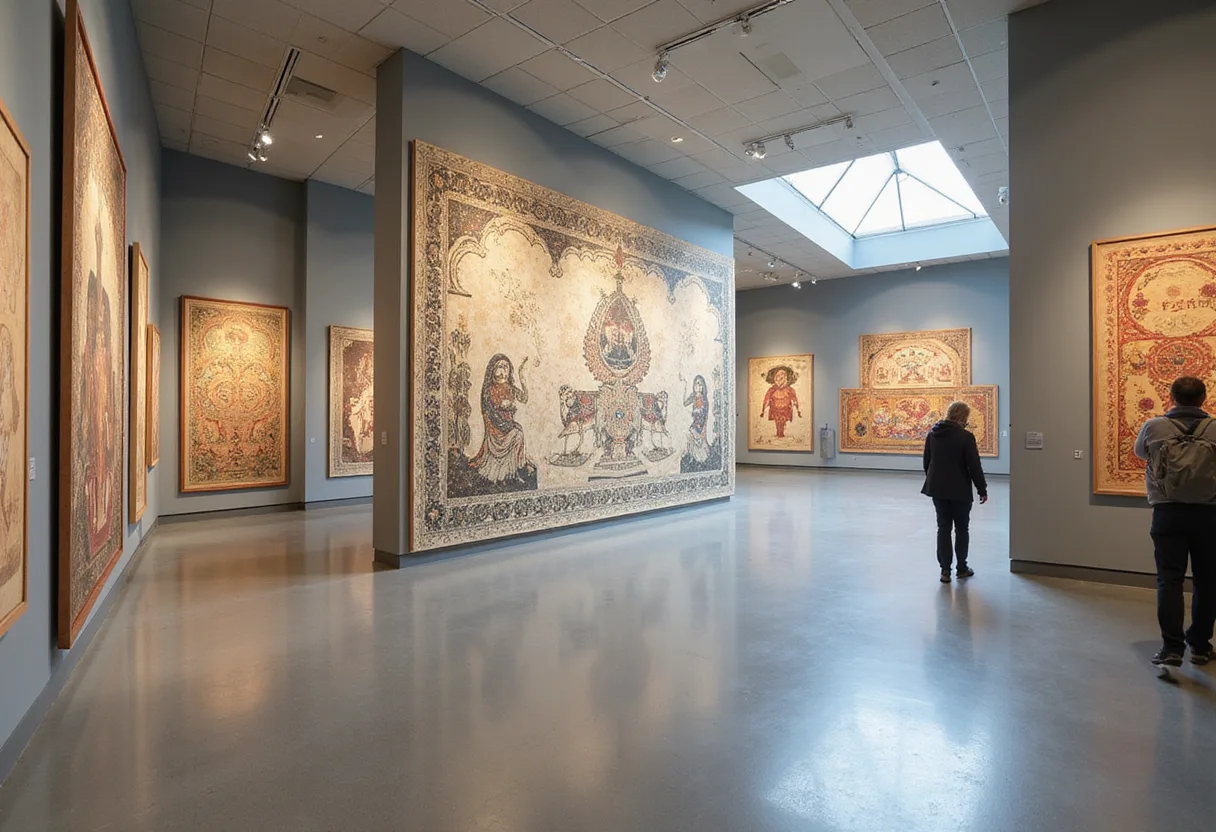
In Venice, alongside the Arafat pieces, copies of stolen Arab and Turkish artworks appear painted on the undersides of wooden pallets, said to have been found in Ljubljana at the Moderna Galerija—where Raad just closed a mid-career retrospective. A wall text notes that after the Lebanese Civil War ended in 1990, militias sold weapons that later fought in the Yugoslav Wars.
His 2025 collaboration with graphic designer Pierre Huyghebaert, I thought I'd escape my fate (again), shown at Mathaf in Doha, gathers statements from people involved in exhibitions canceled over solidarity with Palestine—printed, cut out and taped low along a baseboard, hard to read without crouching.
Next spring, at Paula Cooper Gallery in New York, Raad will place a vintage VW Beetle on its back like a dying bug—a reference to the "flying Volkswagens," as American soldiers called the artillery shells fired on Beirut in the 1980s. Around it will hang reproductions of soldiers' handwritten bomb notes, sourced from Reddit and exaggerated. There is not much fiction in this one. Sometimes the facts are strange enough.
Source: Art in America
More from Marcus Bennett
Show full bio
Staff writer covering people, launches and day-to-day practice in arts in the broadest sense at Arts & Voices.
700 articles