With Wittgenstein in a Gay Sauna: Czech Author Challenges Region's Image
Vratislav Maňák's With Wittgenstein in a Gay Sauna traces queer culture from Viennese baths to Prague cruising routes; English edition due 2027.
Programme
- The term 'homosexuality' was coined in the 1860s by Hungarian Karl Maria Kertbeny.
- Czechoslovakia and Hungary decriminalised male homosexual acts in 1961, earlier than the UK.
- Maňák came out in 2017; his book appeared in Czech and German in 2025.
- The DOX Centre for Contemporary Art, Prague, hosts the related exhibition Andros.
- Seagull Books will publish the English translation in 2027.
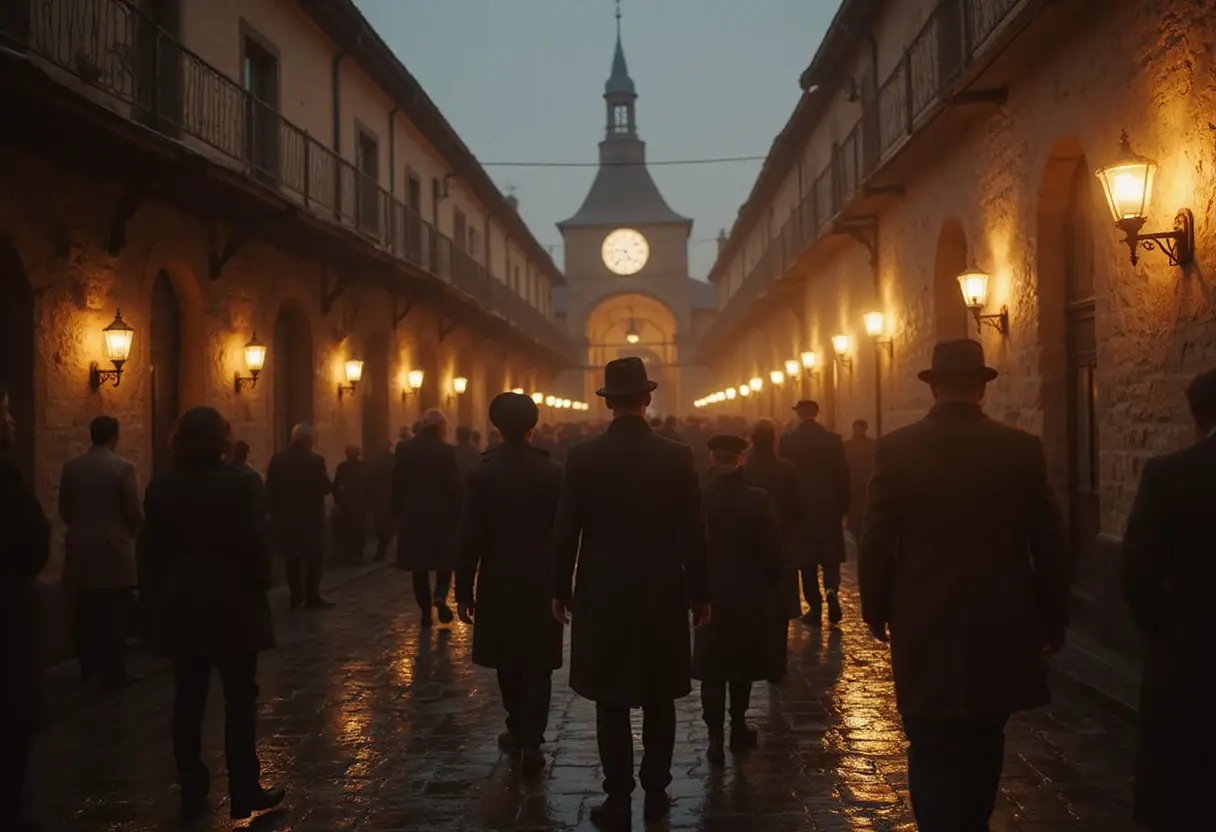
The word "homosexuality" was coined in the 1860s by a Hungarian, the translator and progressivist Karl Maria Kertbeny. That fact anchors Vratislav Maňák's book With Wittgenstein in a Gay Sauna, a travelogue that made a major splash in Czech and German earlier this year and will appear in English from Seagull Books in 2027.
Maňák, a 38-year-old Czech writer and literary scholar who teaches journalism at Charles University, Prague, fictionalises Ludwig Wittgenstein entering Kaiserbründl, a Viennese Herrensauna once hailed in newspapers as "the most stylish bathing establishment in the world". The Vienna-born philosopher, the most influential thinker to emerge from the Austro-Hungarian empire, had romantic relations with both men and women but never publicly acknowledged his homosexuality.
"To his left and right he sees moist male backs glistening in the water, upper bodies covered in thick hair and nipples hardened by the cold," Maňák writes. "Although Wittgenstein wanted to solve all the mysteries of philosophy, he overlooked the biggest part of human existence: the body."
Maňák came out in 2017, several years after establishing himself as an award-winning author of short stories. "Gay saunas are spaces where language dies," he says — a direct riposte to Wittgenstein's argument that reality is bound by the language we use to describe it.
What does the book change for central Europe's image?
It dismantles the notion, favoured by far-right populists in Hungary, Czechia and Slovakia, that queerness is a "decadent" western import that arrived with liberal democracy after 1989. Maňák instead finds deep queer subcultures across the region:
- The 16th-century Ottoman Rudas bath in Budapest, a men-only space on weekdays, where the very term "homosexuality" has Hungarian origins.
- Prague's cruising routes past and present, including rocky trails above the swimming pool in the Podolí district.
- A 1970s commemorative happening, when local gay men took flame-red tiles as souvenirs from the demolition of public toilets by the Prague State Opera.
"Even though gay saunas are a generational thing, and younger people have their own queer spaces, it shows ways how you can subversively reinterpret urban space and enjoy it — it's a textbook of subtle social resistance," Maňák says.
A documented regional history
Maňák is not alone in contesting the import narrative. "Central Europe, particularly its capitals Budapest, Vienna and Prague, then part of the Austro-Hungarian Empire, played a central role in developing the idea of sexual identity, as many important modern sexologists came from here," says Anita Kurimay, a historian at Bryn Mawr College and author of Queer Budapest, 1873–1961 (2020). Her book documents cruising spots along the Danube and invitation-only gay clubs in mansions, tolerated as a public secret.
The record includes the progressive 1908 Hungarian crime novel series Homosexual Love by Soma Guthi, in which Detective Tuzár solves the tragic love case of two wealthy gentlemen, and interwar Czechoslovakia's homosexual magazine The Voice, which agitated for sexual reform and published dating ads. Czechoslovakia and Hungary decriminalised male homosexual acts in 1961, earlier than the UK — though prosecutions for public-offence acts continued. "Certain liberal sexual politics under socialism didn't necessarily challenge gender norms," Kurimay adds.
A Prague exhibition follows
Maňák's book has inspired Andros, Greek for masculine, a new exhibition at Prague's DOX Centre for Contemporary Art on portrayals of masculinity in central European art. The displayed paintings show blurred or melted faces of men; the ancient ideal of the male body is deconstructed until only sculptures of fragmented torsos remain.
"Masculinity, which society once regarded as the central unit of measurement, has thus lost its perfect profile because it, too, has proved to be incomplete, marked by deficiency and irreparable cracks," Maňák writes in the catalogue. Yet he resists the fashionable diagnosis: "I don't like to use the term 'crisis of masculinity'. Because not every transformation is necessarily a crisis."
The Seagull Books English translation in 2027 will bring that argument, and the region's hidden queer cartography, to readers far beyond the former empire's borders.
Source: theguardian.com
More from Marcus Bennett
Show full bio
Staff writer covering people, launches and day-to-day practice in arts in the broadest sense at Arts & Voices.
1,282 articles