Wuthering Heights: The House of the Damned – a horror remake with no pulse
Becca Hirani's horror remake of Emily Brontë's Wuthering Heights adds stranglings and slashings but, the Guardian says, forgets to have fun with its grave-robbed source material.
Programme
- Becca Hirani directs Wuthering Heights: The House of the Damned, a horror remake of Emily Brontë's novel.
- Ross Townsend-Green plays Lockwood, Sky Cheema plays Heathcliff and Elle O'Hara plays Catherine Earnshaw.
- The Guardian review, published 14 October 2026, calls the film 'laboured' and says it 'forgets to have fun'.
- The plot follows the novel's opening but adds phantom apparitions, gore and a plague-like trapping of Lockwood in the house.
Becca Hirani's Wuthering Heights: The House of the Damned turns Emily Brontë's novel into a horror film, and the result, according to the Guardian's review, is a remake that "forgets to have fun".
The film reimagines Brontë's classic with, in the reviewer's words, "extra stranglings, slashings and pitchfork impalings" — but plays everything straight. Part Dracula, part Jeeves and Wooster, it joins a wave of out-of-copyright properties repurposed as genre IP. The Guardian's critic is blunt about the trend and blunter about this entry: Hirani's "laboured reworking makes the book's gothic subtext crashingly, jugular-spurtingly textual."
What happens on screen?
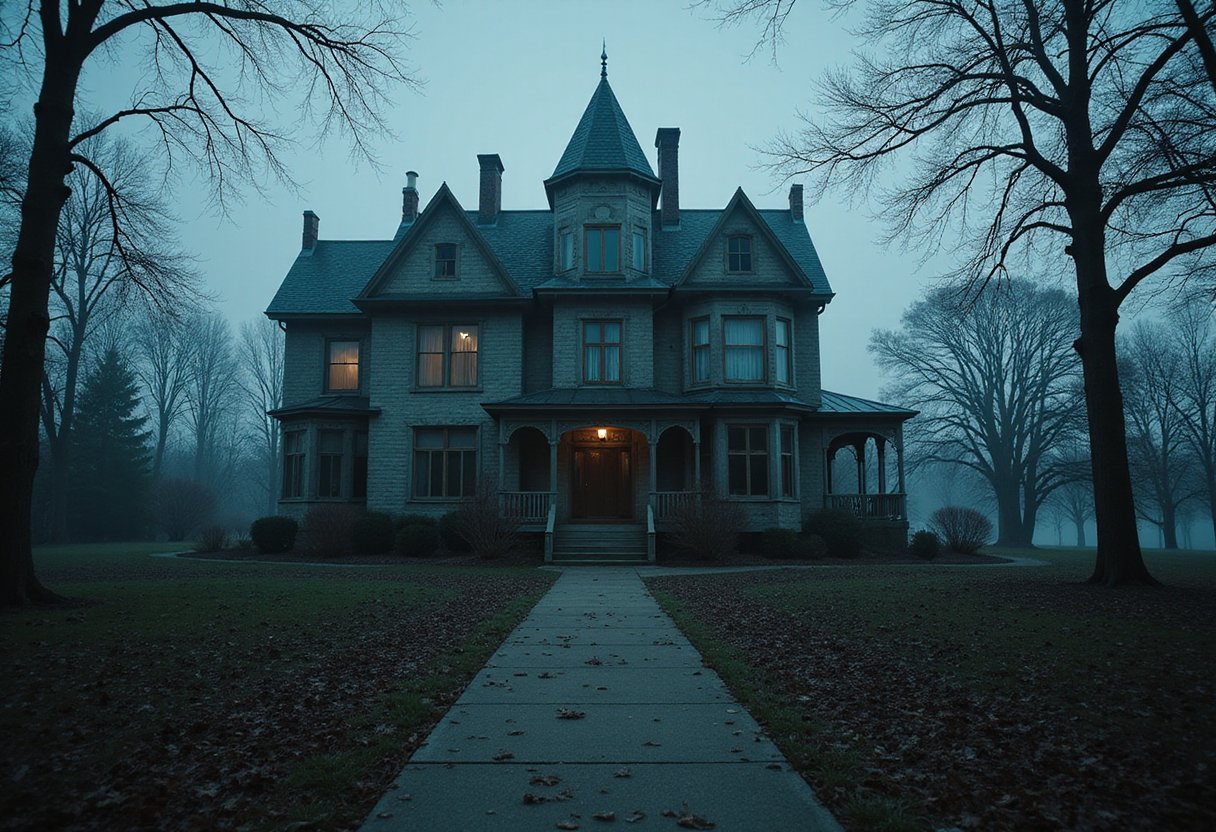
As in the novel, the story opens with Mr Lockwood, played by Ross Townsend-Green, paying a courtesy call to his brooding landlord Heathcliff, played by Sky Cheema, at Wuthering Heights. From there the film departs from the source. Lockwood's visit now resembles Jonathan Harker's stay at Dracula's castle.
The shrouded phantom of Catherine Earnshaw, played by Elle O'Hara, lurks at every turn. In her famous nocturnal apparition, she leaves "an extra dollop of gore on the windowsill". The host does little to put his guest at ease. Lockwood is soon trapped in the house by a bubo-inflicting malady.
The ingredients for a haunted-house thriller stack up quickly:
- hallucinations that unsettle the visitor
- surly servants who offer no comfort
- the unexplained absence of Heathcliff's rumoured son Linton
Lockwood begins to suspect, the review notes, that "it's a different kind of moors story he's stumbled into".
Why does the remake fail?
The Guardian's review places the film within a broader shift. Horror, the critic argues, has replaced pornography as "the genre that infiltrates and apes all others". Out-of-copyright cartoon characters have already been, in the reviewer's phrase, "grave-robbed for not-so-fresh IP". Classic literature now appears to be fair game for what the review calls a "gruesome glow-up", with Brontë's GCSE stalwart the latest target.
What does this change for the film's audience? Very little, on this evidence. The problem is not the premise but the execution. The film carries horror's surface — the stranglings, the slashings, the impalings — without its pleasures. By refusing to wink at its own absurdity, the review suggests, the production squanders the one advantage a wild reimagining has over the novel itself: permission to have fun.
The casting of the story as a straight haunted-house piece also flattens what made Brontë's book endure. Gothic menace in the novel operates as subtext. Here it is literalised, spelled out in blood on the windowsill, and the translation loses more than it gains.
Where does this leave literary horror?
Hirani's film is unlikely to be the last out-of-copyright text drafted into horror service. The economics that push producers toward public-domain material remain. The lesson from Wuthering Heights: The House of the Damned, if the Guardian's verdict stands, is that raiding the canon is not enough; the genre still demands either craft or wit, and ideally both.
Source: Guardian Film
More from Marcus Bennett
Show full bio
Staff writer covering people, launches and day-to-day practice in arts in the broadest sense at Arts & Voices.
500 articles