Programme
- Silkroad celebrates its 25th anniversary with a gala concert at Carnegie Hall this Saturday.
- Yo-Yo Ma founded the collective in 2000 as the Silk Road Ensemble; Rhiannon Giddens became artistic director in 2020.
- The roster counts 36 members, with workshops in Boston and Hangzhou, China.
- Silkroad's new touring model embeds musicians in a community for three days before each concert.
- The latest project, 'Sanctuary,' explores music's capacity to provide refuge.
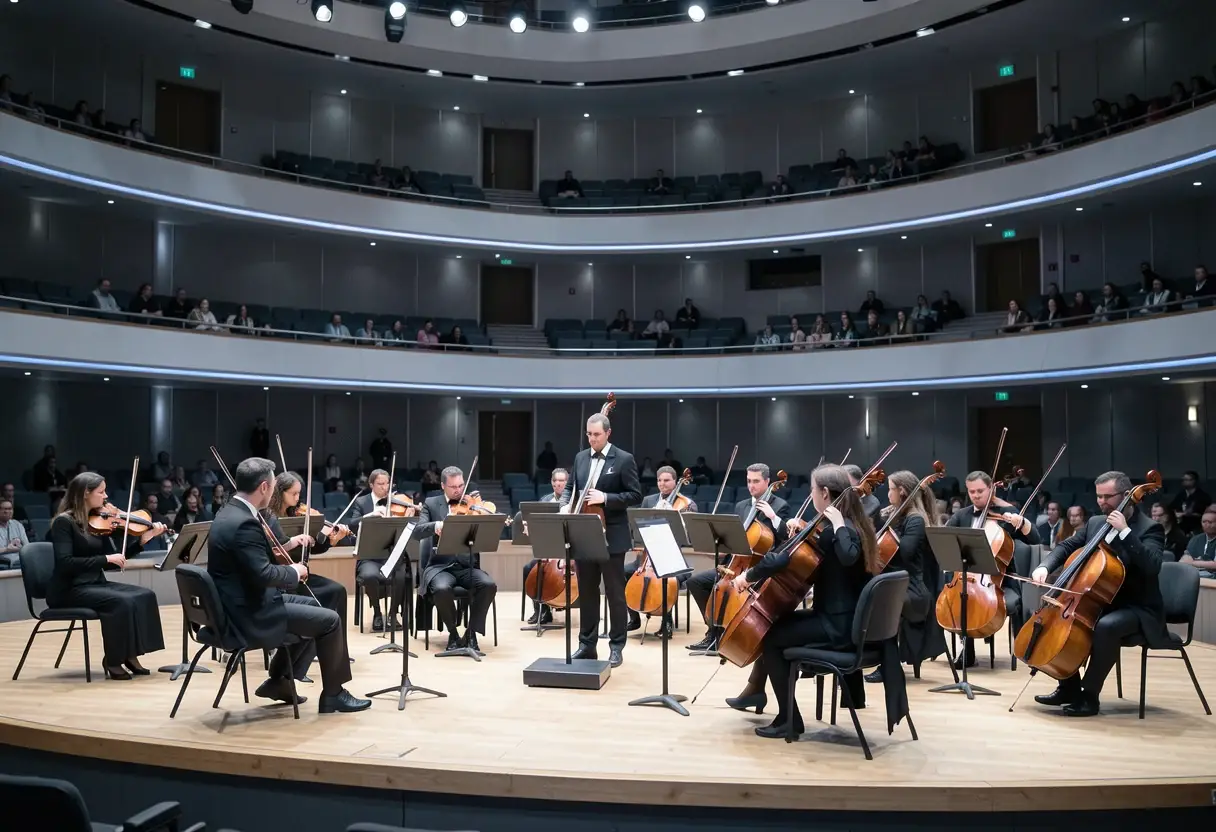
Yo-Yo Ma's global music collective Silkroad marks its 25th anniversary this Saturday evening with a gala concert at Carnegie Hall, featuring both Ma and his successor as artistic director, Rhiannon Giddens, alongside artists from across the globe.
Ma founded the organization in 2000 as the Silk Road Ensemble, inspired by the ancient trade route stretching from East Asia to the Mediterranean. The idea: champion artistic connection as a vehicle for building empathy. That was before 9/11, before immigration policy re-emerged as a core political issue, and before foreign performers became routinely shut out of US touring by visa blocks and skyrocketing fees.
Today Silkroad is sprawling. Its roster counts 36 members. It runs a Global Music Workshop in Boston and Hangzhou, China, pairing musicians in cross-cultural collaborations. It brings performers into underserved and marginalized communities, and produces recordings, a documentary film and a podcast.
Ma, writing by email, argued the mission has gained urgency. "We are living through a time shaped by the twin forces of our nature," he said, "our capacity for tremendous creativity and our ability to wreak terrible destruction." He said he hoped Silkroad would "remind us that we have a choice, that we can always choose creativity over destruction."
He pointed to "Wedding," a piece by the Syrian-born composer and clarinetist Kinan Azmeh. "Before we played it," Ma recalled, "Kinan would say: 'This piece is inspired by all the joy of a Syrian village wedding, and it reminds us that falling in love is a human right that can never be taken away.'"
What has changed under Giddens?
Giddens, who became artistic director in 2020, took charge just as the pandemic sharpened societal fissure and isolation. "How can I be useful? What is the thing that I bring that nobody else can bring?" she asked herself.
Her answer drew on her foundation in improvisational music. Many Silkroad artists came from improvisatory traditions, yet the group remained rooted in Western classical practice: written compositions, performed in big concert halls. "I said, 'That's great,'" Giddens recalled, "'but we've been doing that for 20 years.' We've been asking these folks from these different non-Western traditions to meet us in a certain way. Can we not go over a little bit to their side?"
The shift produced Silkroad's latest project, "Sanctuary," which explores music's capacity to provide refuge amid uncertainty. It also restructured touring.
"Instead of going show to show," Giddens said, "we go into a community for three days. Ideally, we'll have two days of different kinds of community engagements, and then the third day will be the concert," with tickets provided to community participants. The result, she said, changes who is in the hall: "They feel like they have a buy-in already — like, 'Those are my friends onstage!'"
Executive director Ben Hartley said the format has nourished artists' sense of purpose at a time when slimmer touring economics push performers to dash between cities. "This year," he said, "we had musicians come off tour saying, 'This is the best tour I've ever done.' We said, 'Did you say the best Silkroad tour?' They said, 'No. The best tour I've ever done.'"
The Scottish-born harpist and composer Maeve Gilchrist recalled a June performance with Moroccan guimbri player Mehdi Nassouli for preschoolers in Oklahoma. "I have a 3-year-old, and I've never seen her sit as still as these kids," she said. Some 40 children lined up to play the harp; the musicians stayed for every one.
For the artists themselves, the stakes are personal. "If I hadn't joined Silkroad, if I hadn't met Yo-Yo, I probably would just be someone who's good at his art," said Sandeep Das, an Indian tabla player and composer with the collective since its early days. "The biggest journey has been from being just a good musician into learning the importance of being a good human being first."
What does this change for audiences? Saturday's Carnegie Hall gala will test whether a 25-year-old institution rebuilt around community residencies can still fill its flagship stage — on its own new terms.
Original: npr.org
More from Tom Whitfield
Show full bio
Market editor covering people, launches and day-to-day practice in arts in the broadest sense at Arts & Voices.
1,378 articles