18 Commissions, 400 Acres: Inside the Krauses' Site-Specific Sculpture Estate
Jill and Peter Kraus have spent two decades commissioning site-specific sculpture on 400 acres in Dutchess County — 18 works, no advisers, no deadlines, and a strict no-'plop art' policy.
Programme
- 18 commissioned outdoor sculptures stand across the Krauses' nearly 400-acre Dutchess County property.
- Matthew Monahan's Second Nature (2023) took around 14 years, eight of them convincing the artist to accept.
- The Krauses began collecting in 1980 with a Pierre Alechinsky print and bought the former James Cagney land in 2001.
- A full tour takes about six hours, including two after dusk for three video installations.
- Tatiana Trouvé's Between sky and earth, commissioned in 2012, has been adjusted at least yearly since.
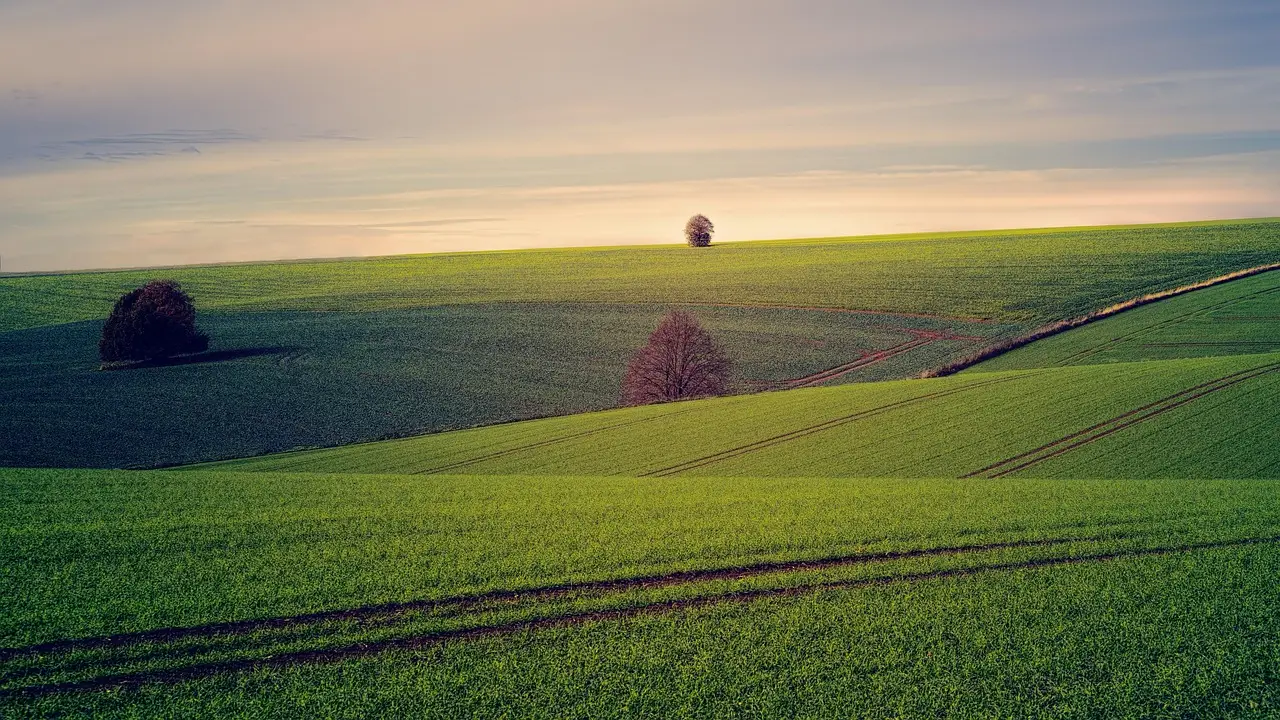
Eighteen commissioned outdoor sculptures stand across Jill and Peter Kraus's nearly 400-acre property in Dutchess County, New York — and from any one of them, you cannot see another. The rolling hills isolate each work. Sabine Hornig's concrete Entrance With Floating Stairs II (2010) sits atop a rise, vanishing and reappearing as visitors approach. "You come across it, and as you drive toward it, it starts to disappear—and then it comes back," Jill Kraus said during a tour this past May. "Everybody thinks we manipulated the landscape here—we did not."
For two decades, the Krauses have rejected what Jill calls standard collector practice: "Most people who collect outdoor sculpture just buy and plop it—they have 'plop art,'" she said. Seeing all 18 outdoor commissions, from a Roxy Paine tree to abstract sculptures by Franz West, plus the Art Barn — a mini museum — takes roughly six hours, at least two of them after dusk for three video projection pieces. The connective tissue, Jill said, is that the works "are all dealing with this place."
The tour typically opens with Sol LeWitt's Dome Structure (Four Domes and A Sphere), his only realized spherical work, mounted on a 10-foot foundation so it does not slide downhill. The Krauses' children were friends with LeWitt's children at boarding school; the couple commissioned the work before the artist's death in 2007. Two decades of weathering have left fissures in the concrete.
How the commissions work
Jill, who holds a BFA and an MFA and worked 20 years as a design director, takes a collaborative approach. "I like to discuss ideas and push artists out of their comfort zone," she said. "We want them to look at the natural habitat and then react to it." The couple uses no adviser and sources engineers and fabricators themselves.
One rule applies to every artist: visit at least twice — "once when the leaves are on the trees, and once when the leaves are off." Then, Jill said, "You can drive all over the property. We'll show you every square inch, and you find a spot where you want to work."
Time is the other currency. Matthew Monahan's Second Nature (2023) took roughly 14 years, the first eight of them spent persuading the artist to accept the commission. The Krauses are currently in ideation with Max Hooper Schneider and Meriem Bennani. "I suspect they work to positively sabotage these conventions by selecting artists with little or no experience in outdoor work, and by insisting on site specificity," Monahan said by email. "There was no deadline and no discussion of cost."
Monahan's finished work — a 6-foot-high, 50-foot-long wall, double his original model, filled with rocks from the property and fragments of a welded figure — ended up on a slope Peter steered him toward. "The sloping site made the work better," Monahan said, calling the Krauses "friends and collaborators."
A hermit, a river of stone, a disappearing house
Tatiana Trouvé's Between sky and earth, commissioned in 2012 and adjusted at least yearly, imagines a hermit called the Guardian living on a wooded mound about 65 feet in diameter. His belongings — books, chairs, a patent leather shoe, suitcases, ropes — are fabricated in concrete, copper, or bronze. Moss now grows over parts; some elements moved after proving too heavy for their branches. "It's not an object," Jill said. "It's a world." "Jill and Peter have that touch of madness that belongs only to passionate people," Trouvé said.
Elsewhere: Jon Piasecki's Stone River, finished in 2009 after three April-to-November seasons of hammer-and-chisel work laid out in the Fibonacci sequence; Jose Dávila's fallen shipping-container riff on a Donald Judd stack; Jeppe Hein's mirror labyrinth; Katja Strunz's dandelion-seed sculptures; and Monika Sosnowska's collapsed staircase that "has become a tree in the forest."
After dark, three video pieces run: Ján Mančuška's ballpoint-pen animation The Invisible Exists (2009), Tony Oursler's three-channel +/- (2023) projecting a Hudson River Valley history onto tree lines, and Doug Aitken's Lighthouse (2012), which projects a year of seasonal footage onto the house itself. "As day turns into night, the structure turns into this image of the landscape around it," Aitken said.
The Krauses began collecting in 1980 with a Pierre Alechinsky print. They bought the former James Cagney cattle land in 2001 after comparing Connecticut's peak-to-valley terrain with the glacier-flattened hills of the Hudson Valley side. When neighbors asked about horses or hunting, Jill answered: "No, we're growing art."
What does this change for artists? Monahan and Aitken both answer the same way: the Krauses offer what most collectors will not — unlimited time, no deadlines, and a demand that the work answer to the land rather than to the market. "We need more of that," Aitken said.
Source: ARTnews
More from Tom Whitfield
Show full bio
Market editor covering people, launches and day-to-day practice in arts in the broadest sense at Arts & Voices.
1,209 articles