ADAA Fair Returns Smaller: Pelton at $2.4M Leads Opening Sales
The rebranded ADAA Fair opened at the Park Avenue Armory with 63 exhibitors, a new Whitney partnership, and opening sales led by a $2.4 million Agnes Pelton.
Programme
- The rebranded ADAA Fair opened Thursday at the Park Avenue Armory with 63 exhibitors, 12 fewer than before.
- Jonathan Boos reported the top opening sales: Agnes Pelton's The Well of Peace (1932) at $2.4 million and a Beauford Delaney at $1.6 million.
- The ADAA canceled its 2025 edition last July as a 'strategic pause' and ended its Henry Street Settlement partnership, which had raised over $38 million.
- The Whitney Museum of American Art is the fair's new beneficiary.
- The fair runs November 12–16, 2026.
Agnes Pelton's The Well of Peace (1932), priced at $2.4 million, headlined the opening sales at the newly rechristened Art Dealers Association of America Fair, which opened Thursday night at the Park Avenue Armory in New York. Dealer Jonathan Boos reported the Pelton sale alongside a Beauford Delaney painting at $1.6 million, according to figures released by the ADAA after Thursday's preview.
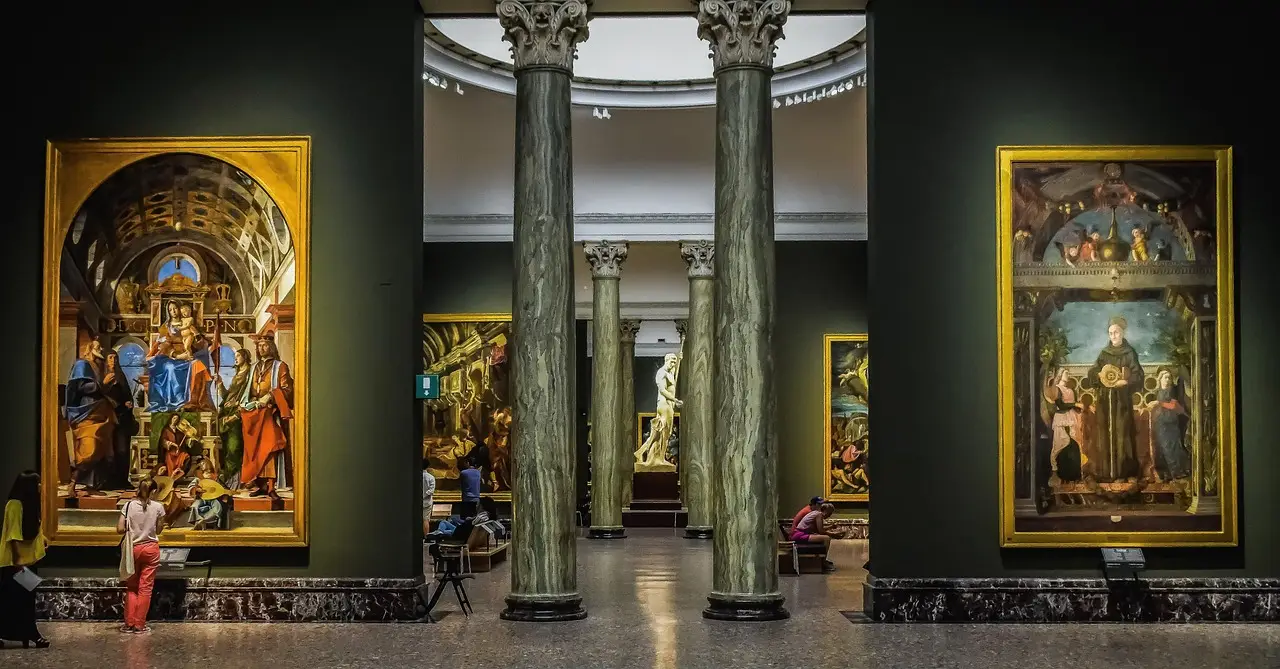
The fair shrank to 63 exhibitors — 12 fewer than before — and it works. You can navigate it without a map, spend time actually looking, and the organizers moved the bar to the center of the exhibition hall, opening up sightlines across the room. The Armory's old New York charm helps too.
What happened to the old Art Show?
The return wasn't smooth. Last July, the ADAA abruptly canceled its 2025 edition, calling the decision a "strategic pause." The organization then retired the Art Show name and ended its decades-long fundraising partnership with the Henry Street Settlement, which had received more than $38 million through the fair's benefit previews. The Whitney Museum of American Art is now the beneficiary, and the fair places new emphasis on its national membership.
The reasons behind the cancellation remain unclear, though rumors about the Henry Street split circulated freely.
Executive director Kinsey Robb, who took over the association in September 2024, has spent the past year talking about making the fair more valuable to members. Asked whether that meant exhibitors pay less, she offered a different definition. "I think it's sales, sure," she said, "but the real benefit was the connections dealers make with one another and with collectors." She described a collegial install, with dealers genuinely interested in their neighbors' booths. "It's not my fair," she said. "It's the members' fair."
Did the members actually sell?
Yes, and across the whole price spectrum:
- AH Arts sold a Helen Frankenthaler work on paper for a reported $75,000.
- James Barron Art placed works by Beverly Pepper, Kenneth Noland, and Kikuo Saito, priced from $40,000 to $85,000.
- Jessica Silverman sold eight works by Julie Buffalohead, priced between $22,000 and $50,000.
- Charles Moffett sold all four Lily Stockman paintings at $20,000 apiece, plus four Julia Jo works between $30,000 and $40,000.
- Kraushaar Galleries reported two six-figure sales alongside several works priced below $2,000.
That last spread — six figures down to under $2,000 — may be the fairest illustration of the ADAA's appeal. Caveat: these are dealer-reported figures at asking prices, so they don't necessarily reflect what buyers paid.
Five booths worth the trip
Gavlak pairs two generations taking on light and the cosmos. Lita Albuquerque, a veteran of California's Light and Space and Land Art movements, shows luminous paintings with gold-leaf discs floating over saturated blue, black, and crimson — in Goya's First Breath (2025), a pale gold oval glows like a distant planet. Jessica Cannon's intricate paintings, built from thousands of tiny marks, shimmer in contrast: August Radii (2026) spirals in peach, orange, pink, and green; Razor Moon (2026) cools things down in blues and purples. Albuquerque's works run $90,000–$125,000; Cannon's $25,000–$40,000.
Peter Blum Gallery devotes its booth to Alex Katz works on paper spanning roughly seven decades, from early cut-paper collages to recent charcoal flower studies. A tiny Untitled collage (ca. 1957–58), five by eight inches, sets four figures on a nearly empty beach — mostly just sand, and all very Katz.
Eric Firestone Gallery presents seven women of the New York School: Helen Frankenthaler, Pat Passlof, Elise Asher, Miriam Schapiro, Sari Dienes, Adaline Kent, and Jeanne Reynal. Highlights include a previously unexhibited 1951 Frankenthaler landscape in oil and pencil on palette paper, made a year before her breakthrough; Dienes's Burnt Totem (1961), an assemblage of discarded wooden hat forms; and Passlof's Keeping Still Mountain, titled after the I Ching.
Cristin Tierney Gallery shows Maureen O'Leary's wonderfully strange paintings. Spring (2026) crowds children, animals, and leaping barbecue flames into a backyard scene with echoes of the Nabis and Post-Impressionists — ordinary life, remembered as a vivid dream. The presentation coincides with O'Leary's second solo show at the gallery, The Linden Trees, through December 19.
Piero Atchugarry gives Brazilian artist Túlio Pinto a solo stand of four sculptures in stone, steel, and glass. In Complicity #52, rust-colored steel beams grip amber glass forms with a piece of rose quartz hanging precariously off one end. Works from his Complicity Vectors series and recent Gravitas sculptures appear to defy physics without doing so — exactly the kind of physically engaging booth that makes a smaller fair worth visiting.
Original: observer.com
More from Grace Kim
Show full bio
Correspondent covering technology and product news in arts in the broadest sense at Arts & Voices.
1,421 articles