Andy Baraghani Opens Ditto, a Flatiron Café Built Like a Home
James Beard Award winner Andy Baraghani opens Ditto in a 1905 Flatiron factory, testing every design choice against one question: would he do it in his own home?
Programme
- Ditto occupies a 1905 former factory on 16th Street in the Flatiron district, last used as an agnès b. store.
- Baraghani and investor Michael Silber tested roughly 50 chairs before choosing the 1960s Galvanitas Model S22.
- The rear dining room's walls are Venetian plaster tinted to match Benjamin Moore's Buckland Blue.
- Baraghani won a James Beard Award for his cookbook The Cook You Want to Be.
- Chairs came from Amsterdam Modern in Los Angeles; bud vases were bought on eBay for under $20 each.
Chef Andy Baraghani opens Ditto, an all-day café in New York's Flatiron district, housed in a 1905 former factory that most recently served as an agnès b. store. The James Beard Award winner designed the space with one guiding test: "Would I actually do this in my home?"
"I've always been obsessed with design, since I was a kid," Baraghani said. "I love how restaurant interiors can take you to a different place."
The venue sits on 16th Street, two blocks from the former site of the much-missed City Bakery. It serves breakfast, lunch, and dinner.
How did Ditto come together?
Restaurant investor Michael Silber, behind New York hot spots Borgo, Penny, and Bistrot Ha, pitched Baraghani the idea of a laid-back all-day restaurant. Baraghani's first reaction: "I have no interest."
The reluctance was not about experience. Baraghani started in restaurants as a teenager at Chez Panisse in Berkeley, later worked at Estela in New York, and became a food editor at Bon Appetit. His cookbook, The Cook You Want to Be, won a James Beard Award.
The two men bonded over greenmarket cooking and, in Baraghani's words, decorating deep dives. "Andy and I talked about styles ranging from Bauhaus, de Stijl, and classic modernism to 1970s and '80s aesthetics from places like Italy and France," Silber said.
They hired interior designer Eric Wink, a close friend who had helped design the home Baraghani shares with his husband, Keith Pollock — a former AD editor and now a West Elm executive. Architect Alta Indelman, a veteran collaborator with restaurateurs Andrew Tarlow and Gabe Stulman, joined the team.
City Bakery was a touchstone. "They wanted it to feel casual and approachable, with a bit of a New York diner quality," Wink said.
What does the space look like?
Ditto divides into three zones:
- Front: a market area selling hand-picked groceries, lit by vintage glass-prism Holophane pendants in the window.
- Middle: a glossy white Bauhaus-curved counter where customers line up and take a number, under three oversized custom fabric pendants.
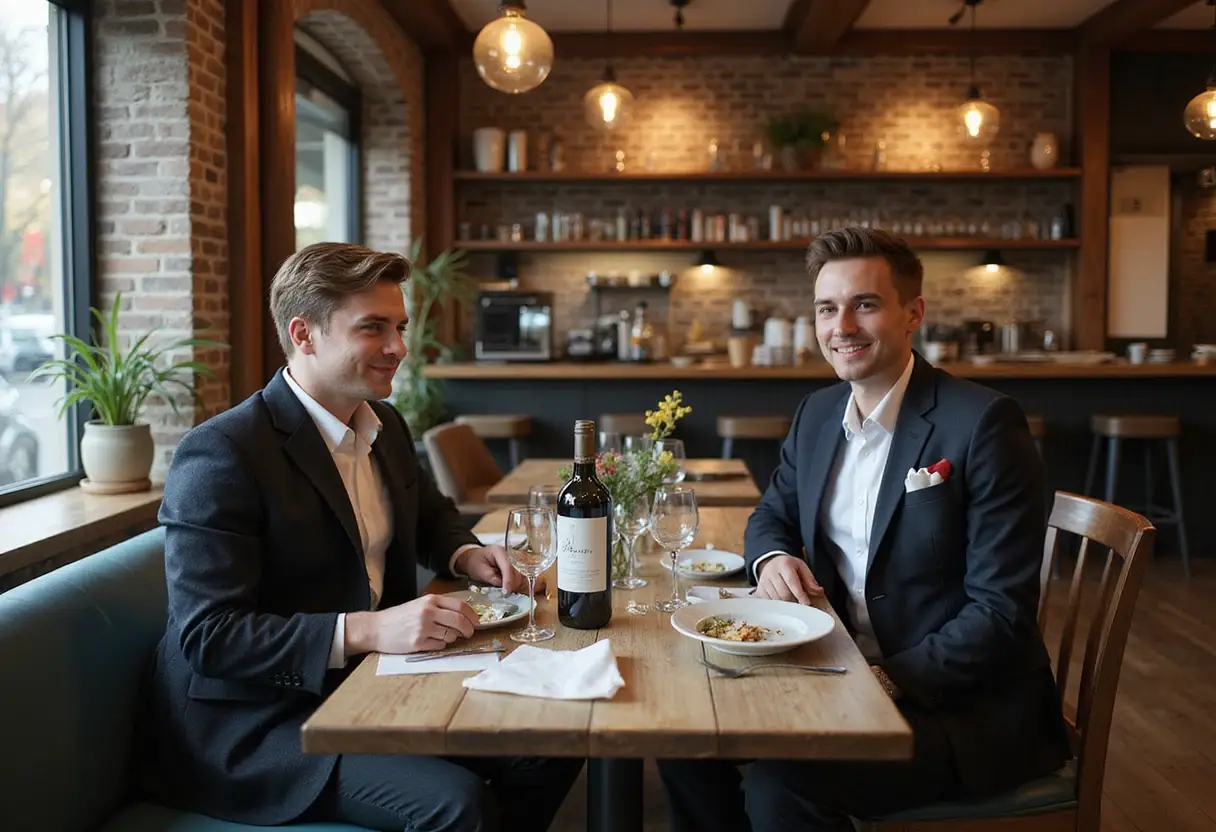
- Back: an intimate dining area with Venetian plaster walls tinted to match Benjamin Moore's Buckland Blue, an open kitchen, and a banquette running the length of the room.
"There's that good chaos in the middle and the back is a calmer moment," Baraghani said.
Indelman clad the walls and open kitchen in patinated stainless steel and preserved industrial elements, including structural arches and polished concrete floors, to give the space a utilitarian, high-tech ambience.
The menu, handwritten daily on butcher's paper, includes pomegranate spoon salad and what Baraghani calls "the Platonic ideal of granola" — tahini, maple syrup, and yogurt drizzled with fig-leaf oil.
Which objects define the design?
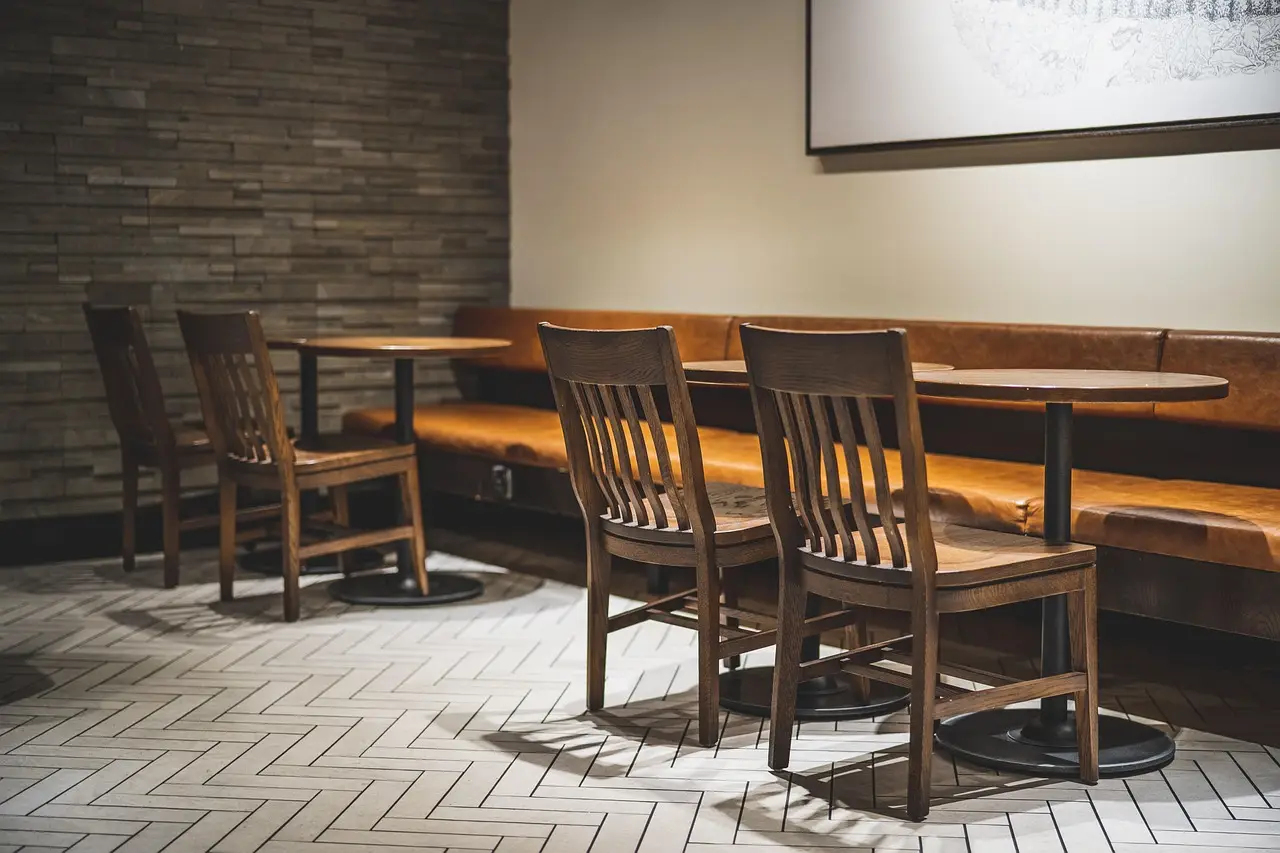
Baraghani and Silber personally honed the visual details. "We went through 50 possibilities to find the right chair," Silber said. They chose a 1960s Dutch industrial chair, the Model S22 from Galvanitas, sourced from Amsterdam Modern in Los Angeles.
Silber spent hours on eBay bidding on midcentury ceramic bud vases. "They were each under $20 but put them together on a shelf and you have your own little Giorgio Morandi tableau," he said.
Other elements carry equal specificity:
- White wall speakers created by sound artist Tom Bloxam, programmed with playlists by Michael Scanlon of Chandelier Creative, which oversaw branding.
- Custom stools in Maharam's Stripe It fabric, which Baraghani said had a "Baja California" vibe. "We needed that twist," he said.
- Neo-Metro's wall-mounted MiniLoo stainless-steel toilet in the restrooms. "I added a custom wood top to soften it a bit," Wink said.
- A pair of massive midcentury French ceramic faces on loan from Baraghani's own home, hung opposite the daily menu. "They anchor the space and add a touch of craft," he said. "I just knew they needed to be here."
Ditto marks the moment a cookbook and YouTube star converts a private design obsession into a public, three-zone hospitality venture — and a test of whether home instincts can anchor a commercial kitchen.
Original: instagram.com
More from Elena Vasquez
Show full bio
Senior reporter covering technology and product news in arts in the broadest sense at Arts & Voices.
1,215 articles