Programme
- UCSB Theater staged Arthur Miller's 'All My Sons' for five performances at the Performing Arts Theater on the UCSB campus.
- Sara Rademacher directed the production.
- Cast included Mason Andres Davis as Chris, Alexander Beay as Joe, and Kelly Brenya as Kate.
- Miller's play is considered part of the criterion collection of 20th-century American theater.
- The plot turns on a fatal manufacturing error in Joe's plant and a son, Larry, missing in action.
UCSB's Theater department staged Arthur Miller's All My Sons for just five performances at the Performing Arts Theater on the UC Santa Barbara campus — and the short run left what the production's reviewers call a powerful impression.
Director Sara Rademacher takes on a play that critics place in the criterion collection of 20th-century American theater. Miller's 1947 drama, as the review frames it, "captures the deadly cracks on the fighter planes of the American dream." The production is described as "an intense vision of post-war Americans who find their patriotism running aground on the inescapability of American greed."
What is the play actually about?
The story turns on one family in the aftermath of the Second World War. Chris, played by Mason Andres Davis, has come home from fighting overseas. His worldview is built on the selflessness of men willing to die for their country.
His father, Joe (Alexander Beay), wrestles with the guilt of a fatal manufacturing error made in his plant. Kate (Kelly Brenya), Joe's wife and Chris's mother, refuses to accept that her second son, Larry — missing in action for several years — is dead. The review calls the show "a controlled burn of generational angst as Americans old and young grapple with the trauma and sacrifice of living through the war."
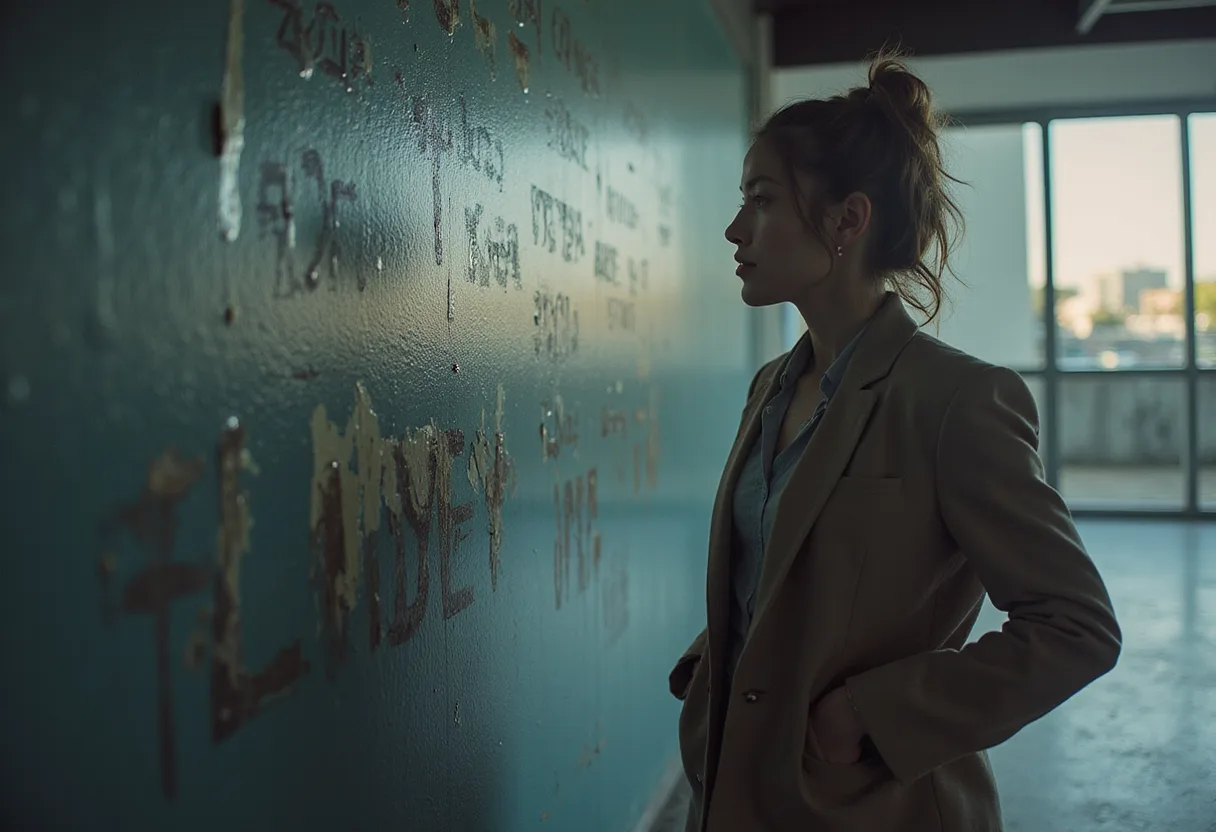
Miller builds the plot with what the review calls imperative details, stacked tightly toward a story of shame and desperation. In the opening moments, Chris, Joe and Kate tut at the destruction of Larry's memorial tree, uprooted in a storm. That image, the review notes, heralds "the unearthing of truths, the violation of memory, and the harbinger of dissolution."
How does this production work?
Rademacher's direction "brings a sharpness to the production that teases a crevasse of unspeakable anguish," according to the review. In plain terms: the staging keeps the audience aware, from the start, that something unspoken sits underneath the family's ordinary conversation — and it lets the pressure build rather than release it early.
The standout performance belongs to Kelly Brenya. Her Kate is "a mother lost in the netherworld of grief and denial," someone who "maintains a cheerful hollowness that serves as personal armor and a rudder for the floundering family." That double function — denial as both shield and steering mechanism — is the engine of Miller's tragedy, and Brenya's performance carries it.
What does this change for the audience?
For a university production, the bar is the text itself: Miller's play is tightly written, and a weak staging can flatten its accumulating detail. This one, by the review's account, doesn't. The five-show run has now closed at the Performing Arts Theater on the UCSB campus, and its impression — a family undone by a wartime business decision — is the kind that lingers after the house lights come up.
The run's brevity means most readers missed it live. The takeaway for Miller watchers is simpler: the play's diagnosis of American greed and patriotism still lands with student casts and campus audiences, which is exactly what keeps it in the 20th-century canon.
Source: independent.com
More from Grace Kim
Show full bio
Correspondent covering technology and product news in arts in the broadest sense at Arts & Voices.
1,596 articles