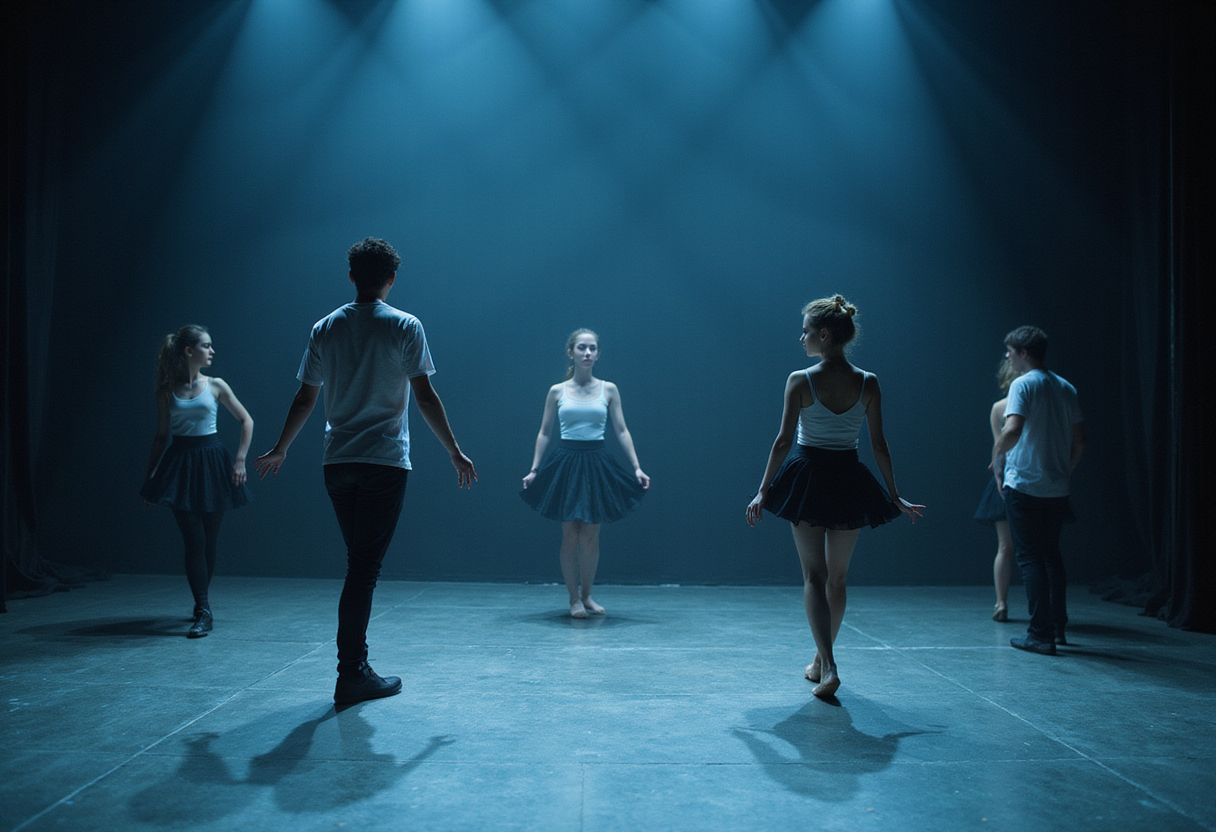
At the Met, Georgian Dance Lands in a Macbeth Staged for Sweat
The Metropolitan Opera has folded Georgian dance into its 'Macbeth' staging. The action director's stated reason: 'I wanted to actually smell the sweat.' The director's name is not in materials.

Programme
- The Metropolitan Opera has folded traditional Georgian dance into its current staging of 'Macbeth'
- The production's action director explained the choice: 'I wanted to actually smell the sweat'
- The action director's name does not appear in the available materials reviewed
- Georgian dance is rooted in the Caucasus and centers male performers with rigid torsos and airborne leaps
- Performance dates, conductor, composer credit, and dancer identities are not specified in the available materials
The Metropolitan Opera has folded traditional Georgian dance into its current staging of "Macbeth," and the production's action director has explained the choice in the plainest terms available: "I wanted to actually smell the sweat."
The reasoning — surfaced in coverage of the staging — treats movement not as ornament but as evidence of effort. The director's standard is theatrical: if the performers' exertion is not legible to the room, the drama has not landed.
What Georgian dance does
Georgian dance, rooted in the Caucasus, runs on a contradictory physical vocabulary. Male performers — and the tradition centers male dancers — keep their torsos rigid and upright while sending their lower bodies airborne. The signature moves are jumps measured in feet of vertical clearance, executed with arms held close. The body looks pinned in place until it isn't. The result reads as controlled fury.
That tradition now lands inside one of opera's bloodier psychological dramas. The Met's staging imports a mode of physical risk-taking that most opera productions never ask of their singers, and the gravity-defying leaps fit the violence of the source material.
Who is shaping the staging?
The action director's name does not appear in the available materials. Neither do performance dates, a conductor, the composer of the Macbeth being staged, or the Georgian performers' identities. The Met's fuller announcement, if more detailed, was not in the materials reviewed.
That gap matters. A director's mandate only travels as far as the company carrying it. "Smell the sweat" is a standard; without a credited staging team, the standard is unattributed.
What does this change for the audience?
It changes what the audience is being asked to do. The "smell the sweat" mandate reframes the listener's role from passive reception to active witnessing. Bodies on stage do visible, exhausting work. Effort is the medium, not a byproduct.
For opera regulars, this is a stylistic departure. Opera has long treated motion as supportive of singing. A Macbeth staged as physical endurance inverts that hierarchy: dance becomes a central language, and the singers enter a space already charged with kinetic risk.
So what?
If the Met is asking its audience to read effort as content, the experiment will be tested by the principals' willingness to match what the Georgian performers are already giving. The director has named the bar. Whether the cast clears it is the question the next round of reviews will answer.
Source: NYT Arts
More from Tom Whitfield
Show full bio
Market editor covering people, launches and day-to-day practice in arts in the broadest sense at Arts & Voices.
476 articles