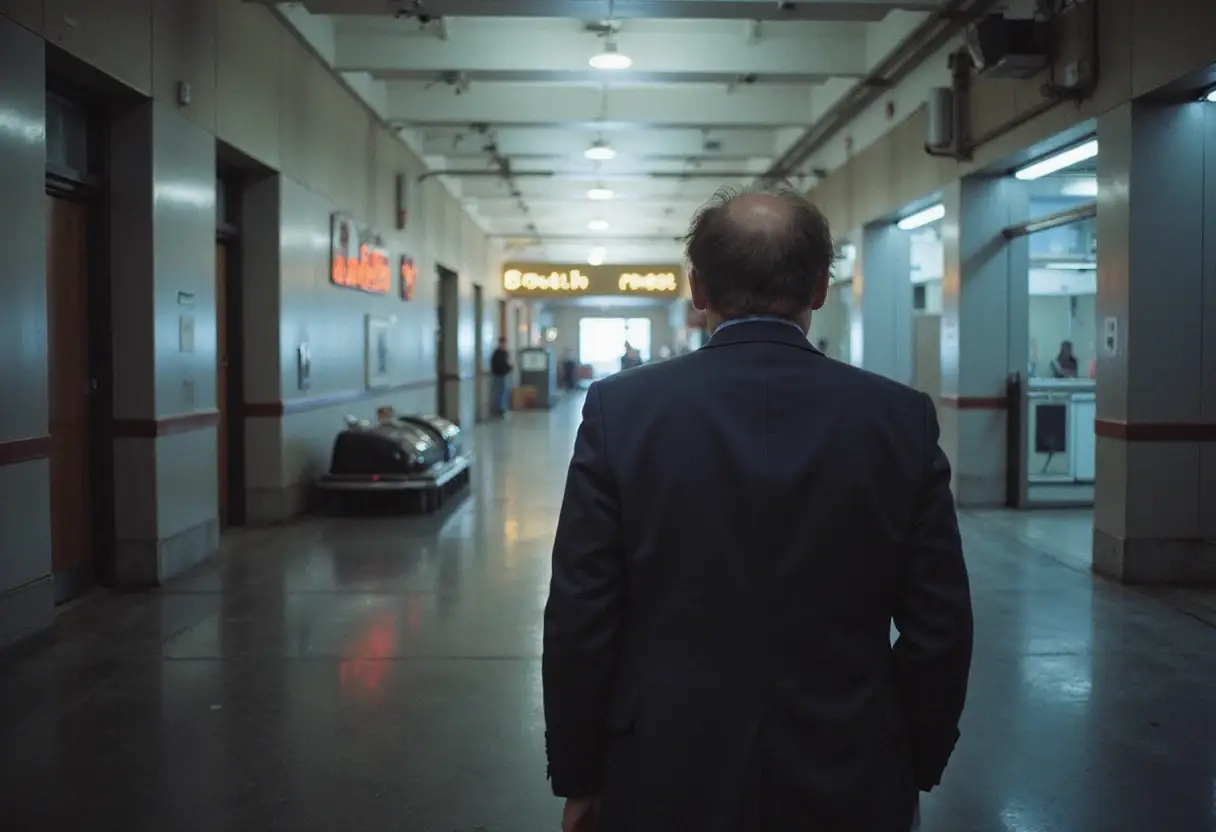
Billy Joel's New York: The Houses, Hits and Money Behind the Photos
From oyster boats to a $32 million Amagansett sale, a new photo retrospective traces Billy Joel's decades-long relationship with New York, told largely in his own words.
Programme
- Billy Joel signed with Columbia Records in 1973 after three years in Los Angeles.
- His 1977 album The Stranger was a runaway success, but he told Playboy he bought a $300,000 house with a mortgage instead of a mansion.
- Joel's Amagansett estate, once shared with Christie Brinkley, later sold to Jerry and Jessica Seinfeld for $32 million.
- He sold a Central Park West duplex to Sting for $5 million, per The New Yorker.
- In 2007 Joel designed a 57-foot powerboat, the Vendetta, with a top speed of about 50 knots.
Billy Joel says New York made him who he is. "My speech patterns are New York. The music that I like, it was all New York–based. That's what I think of when I think of home," the singer said in his 2025 HBO documentary Billy Joel: And So It Goes. "It's my roots."
A new photo retrospective follows the Grammy winner from his early days in New York through his brief stint in Los Angeles and back home again. The pictures come with stories, and the stories come with numbers: a $300,000 house, a $32 million sale, a 57-foot boat.
Where did the Piano Man come from?
Joel is a Bronx native who grew up in Hicksville, a middle-class suburb of Nassau County on Long Island. Money was scarce. "There was poor, and then there was Billy Joel poor. He was lucky if he had enough money to buy a pack of cigarettes," his childhood friend and fellow musician Jon Small said in the documentary.
His mother, Rosalind, insisted he take piano lessons no matter how hard things got. According to Joel's sister Judy, the talent "had to be nurtured." As Judy put it in the HBO film: "She knew that he was going to be something someday."
Before he became something, Joel worked on an oyster boat. He would look up at a mansion on the hill above the water — the Centre Island property he nicknamed MiddleSea — and wonder what life there was like. "I used to think, 'They're rich bastards. They never had to work a day in their life,'" he recalled. "Well, I own that house now. It's not finished yet. And neither am I."
How did New York write the songs?
The answer runs through Los Angeles. Joel moved west in the early 1970s and signed with Columbia Records in 1973. After three years, he and his first wife, Elizabeth Weber, returned to New York, where he recorded his fourth studio album, Turnstiles.
"I wanted to get back to New York and make more of a rock and roll album," Joel said in the documentary. On a bus ride to Highland Falls, where Weber had found them a house on the Hudson River, the autumn colors did the rest. "The trees were, like, gold and red, and I remember thinking, 'This is the New York State that I loved when I was a kid. This is magic. We don't have this in California.' And I wrote this love song to New York on the bus."
That song became "New York State of Mind," one of his most popular tunes.
His LA years still matter to him. He wrote "Piano Man" from his time as a lounge musician working under the name Bill Martin at a now-defunct bar, the Executive Room, near Wilshire Boulevard and Western Avenue. "I got tips and made union scale, and I was able to afford an apartment in Studio City," he told the Los Angeles Times. In 2023, he described that period as feeling like "an exiled writer living in Paris." "I still look back to my time in LA with a certain amount of romance," he said.
What did success buy him?
Not a rock-star lifestyle, by his own account. After his fifth album, 1977's The Stranger, became a runaway success, Joel told Playboy the money didn't faze him. "I read these stories about Peter Frampton's multimillion-dollar mansion, 15 Rolls-Royces and all that," he said. "Who cares? It's all bullshit. What was his last record like? Was it any good? That's the question."
He admitted one indulgence — "It's nice to have four motorcycles" — but drew the line there. When he and Weber bought a home, he said, "We got a $300,000 house with a mortgage like everybody else." It was a glass house in Oyster Bay, on Long Island's North Shore, with floor-to-ceiling windows overlooking the Long Island Sound. Joel appeared on the cover of his 1980 album Glass Houses poised to hurl a rock at it. "I think, Why not? Take chances," he said. "I really wanted to throw a rock at my own house."
Who ran the business?
In the 1970s, Joel asked Weber to manage him through the New York–based firm Home Run. She recalled that the "story [Joel] likes to tell" involves waking up the next morning to phones everywhere and "cabinets installed" — "That's not really true, but it's close to true."
The arrangement didn't last. Weber left the role when the marriage ended, and her brother Frank took over. Home Run dissolved amid financial woes in the 1980s, and Joel pressed charges against Frank over mishandled funds. The parties settled, on undisclosed terms.
Success strained the marriage too. "Record success doesn't translate into happiness," Joel said of the period around 1979. He admitted he "wasn't aware" how much money he was bringing in: "I know we were living in a nice house, my wife was going out and buying all kinds of nice stuff. I never really went out and did that."
What does the property portfolio show?
Joel's homes have passed through famous hands. He and his second wife, supermodel Christie Brinkley, owned a 12-acre oceanfront property in Amagansett, in East Hampton, where they raised daughter Alexa Ray Joel. Jerry and Jessica Seinfeld later bought it for $32 million. Per The New Yorker, Joel also sold a Central Park West duplex to Sting for $5 million and a Martha's Vineyard house to businessman Mickey Drexler. He once bought a Hamptons home from Jaws star Roy Scheider.
On Centre Island, where The New Yorker visited him in 2014, Joel described his self-designed interiors as "Catholic martyrs and saints, grotesqueries" — a Queen Mary model on the mantel, a Last Supper triptych by the fireplace.
And there's the water. "As a little kid, I always liked boats and the romance of living on an island," he told Parade in 2018. In 2007 he designed a 57-foot powerboat, the Vendetta, capable of about 50 knots. Boating, he said in the documentary, meant "freedom." "I am the captain of my ship."
Original: davidsheff.com
More from Grace Kim
Show full bio
Correspondent covering technology and product news in arts in the broadest sense at Arts & Voices.
1,068 articles