'Blue Film' Cost $100,000. Here's How the Camboy Drama Pulled It Off
Shot in 11 days for $45,000, the two-hander about a camboy and his client survived a failed hard drive, festival rejections and a midnight waxing to turn a profit.

Programme
- "Blue Film" completed principal photography in 11 days for $45,000, plus $50,000 for post-production.
- A failed hard drive wiped a day of footage, forcing a costly 12th shoot day.
- The film earned $144,371 in U.S. limited release and was rejected by Sundance and SXSW before Edinburgh accepted it.
- Mark Duplass challenged the filmmakers to hit the $50,000 production budget.
- Distribution deals now cover the U.K., Germany and Latin America.
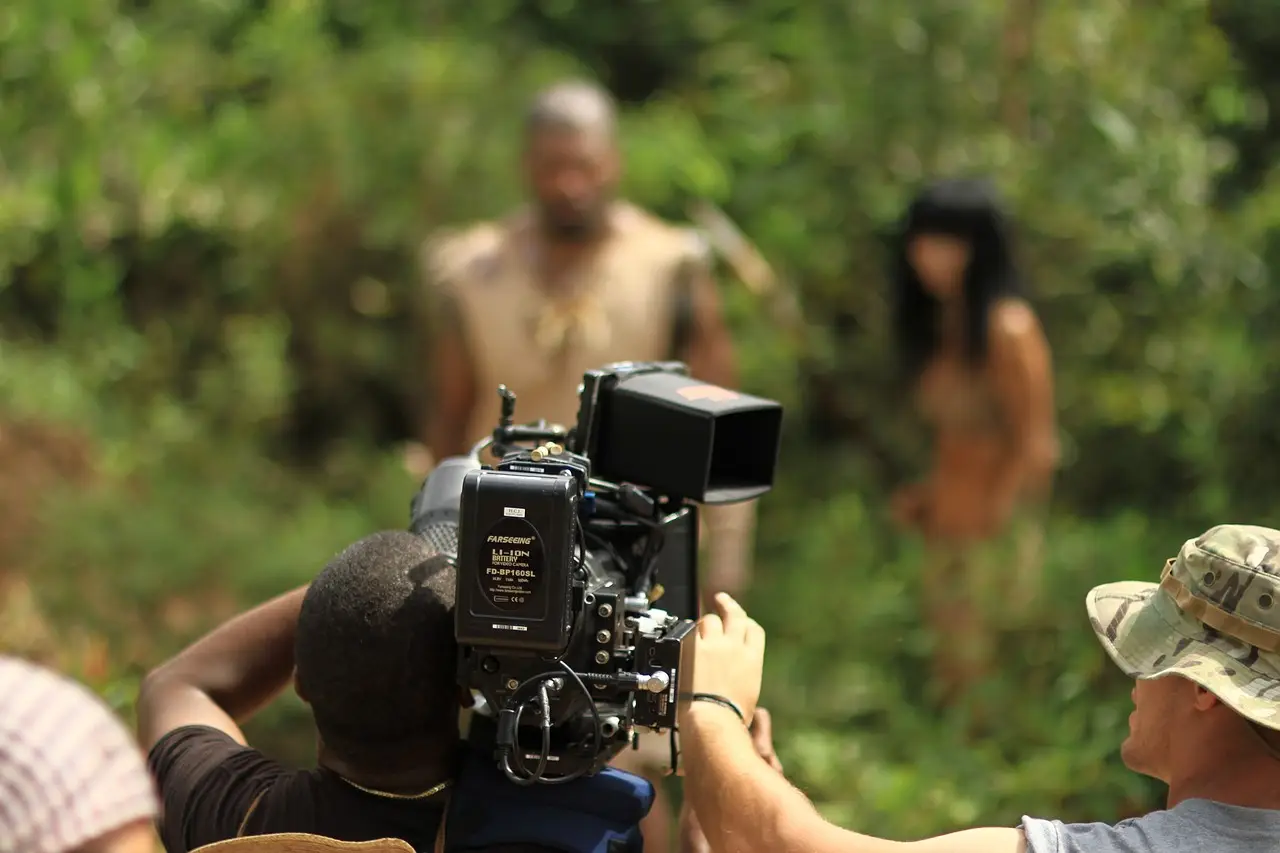
The producers of "Blue Film" shot a feature in 11 days for $45,000, then spent $50,000 more on post-production. The film grossed $144,371 in U.S. theaters. By microbudget arithmetic, that's a hit.
The story behind the numbers is a lesson in attrition. Writer/director Elliott Tuttle's drama has just two characters: Reed Birney, the Tony winner seen in "Mass" and "The Menu," plays a john with a dark secret; Kieron Moore ("Boots," "Vampire Academy") plays Aaron Eagle, a fetish camboy who agrees to spend the night. Most of the film unfolds in one Hancock Park house, rented from a friend of producer Waylon Sall for $1,000 a month.
"They had just moved out of their home, and the new tenant hadn't moved in yet, so I was able to get a favorable deal," Sall said. "We shot there for pennies and were able to dress it like a vacant Hollywood Airbnb."
Who put up the money?
Mark Duplass, the indie maverick, challenged Tuttle and his producers — Bijan Kazerooni, Sall, Will Youmans and Adam Kersh — to make the film on a shoestring. They hit the target, barely.
"You can't do half a day on production on a union shoot for $50,000," Kazerooni said. "You can't make a short film for $50,000 anymore. I've produced short films since 'Blue Film' that have cost more than our entire production budget."
The actors worked for scale (the minimum union rate) with backend participation written into contracts. Both leads flew in and stayed over 20 days, tolerating economy flights and indie conditions.
"What made everything possible was a willingness from our cast and from our crew to tolerate indie film conditions and to not balk at things," Youmans said.
What went wrong on the last day?
Champagne was open when cinematographer Ryan Jackson-Healy, who shot "Mass," called Kazerooni to his car. The production's hard drive had failed. They'd lost a full day of footage, including a monologue by Birney.
"He is sitting there white-knuckling the steering wheel, and he goes, 'We lost the day,'" Kazerooni remembered.
A 12th day of photography was cobbled together — new crew hires, extended hotels, changed flights. "I can negotiate with a camera shop about pricing all day long," Kazerooni said. "I can't negotiate with Delta Airlines."
How did they cast it?
The subject matter scared people off. "It was harder to attach a casting director because of the content of the movie than it was to attach Reed," Kersh said. "We had a lot of passes. They were all afraid of it."
Casting director Eleanor Hendricks ("Stand Clear of the Closing Doors") signed on and found Moore. There was also the chest-hair problem: Moore spends the film's second half shirtless after Birney's character shaves him.
"Kieron had a lot of hair. He's British. He's pale. He was in a lot of pain," Sall said of the late-night waxing session between shoots. "He was screaming that he wanted to kill me, but you know the results are undeniable."
Why did Scotland change everything?
Sundance, SXSW and other major festivals passed after screening it. Edinburgh didn't. Critics embraced the film there, and Obscured Releasing, a distribution newcomer, bought the U.S. rights and released it theatrically last summer, followed by a wider on-demand run.
"Premiering in Scotland changed everything," Kersh said.
The film has since secured distribution in the U.K., Germany and Latin America, and is expected to recoup its investment and turn a profit. Kazerooni now fields calls from filmmakers asking how it was done. "You get money for your movie the way you get money for anything in your life, which is any way you can," he said. "There's no magic to it."
Original: pmc.com
More from Daniel Okafor
Show full bio
News editor covering companies, deals and strategy in arts in the broadest sense at Arts & Voices.
732 articles