Blue Hippo Returns: Inside the Studio Building Macy's 100th Parade
Macy's 100th Thanksgiving Day Parade brings back a blue hippo lost to the skies in 1931, plus Felix the Cat and Underdog, from a studio logging 50,000 work-hours a year.
Programme
- The 100th Macy's Thanksgiving Day Parade runs this year, with production spanning five years.
- More than 75 studio staff work 50,000 collective hours annually in a 72,000-square-foot facility.
- A blue hippo balloon released in 1931 and never recovered returns for the centennial.
- The centennial adds seven new balloons, six new floats, and one new balloonicle.
- A single parade float can take up to six months to complete.
A blue hippo that vanished into the New York sky in 1931 returns this year for the 100th Macy's Thanksgiving Day Parade. Executive producer Will Coss confirmed the comeback during a tour of the parade's 72,000-square-foot design and fabrication studio, arranged with Hoda Kotb, who has hosted the broadcast since 2018.
Where the parade actually gets made
"Everything you see in the parade is done right here in the studio," Coss said. More than 75 people work there, spread across costume, sculpting, metal shop, engineering, carpentry, and balloon fabrication departments. Together they log 50,000 hours a year. The operation is full-time and year-round, a fact that surprises most of the millions who watch from the sidewalks or their sofas.
The current warehouse is not the first home of parade HQ. Before the move, the floats and balloons were built inside a former Tootsie Roll factory in Hoboken, New Jersey. Candy maker's floor, balloon maker's ceiling. The parade has a habit of inheriting other industries' leftovers.
What's the balloon history nobody mentions?
The first parade, in 1924, featured live animals on loan from the Central Park zoo: elephants, lions, tigers, and bears. The giant character balloons replaced them soon after. But the early balloon tradition had a stranger custom. From 1928 to 1932, Macy's released the balloons into the air after the parade and offered cash rewards to anyone who found them.
"That went on until things got a bit more challenging in the skies, because private aircraft would actually go and track them and try to grab them and bring them back down to Earth," Coss explained.
The scheme produced one genuine mystery. "In 1931, there was a blue hippo that was released, never to be seen again," Coss said. Hence this year's resurrection, timed to the centennial.
Which balloons are coming back?
The 100th parade leans on nostalgia. Alongside the blue hippo:
- Felix the Cat, the first character balloon ever to appear in the parade, returns.
- Underdog comes back after a 42-year absence.
- Snoopy, the most frequently recurring balloon in parade history, appears as his alter ego Joe Cool for the first time.
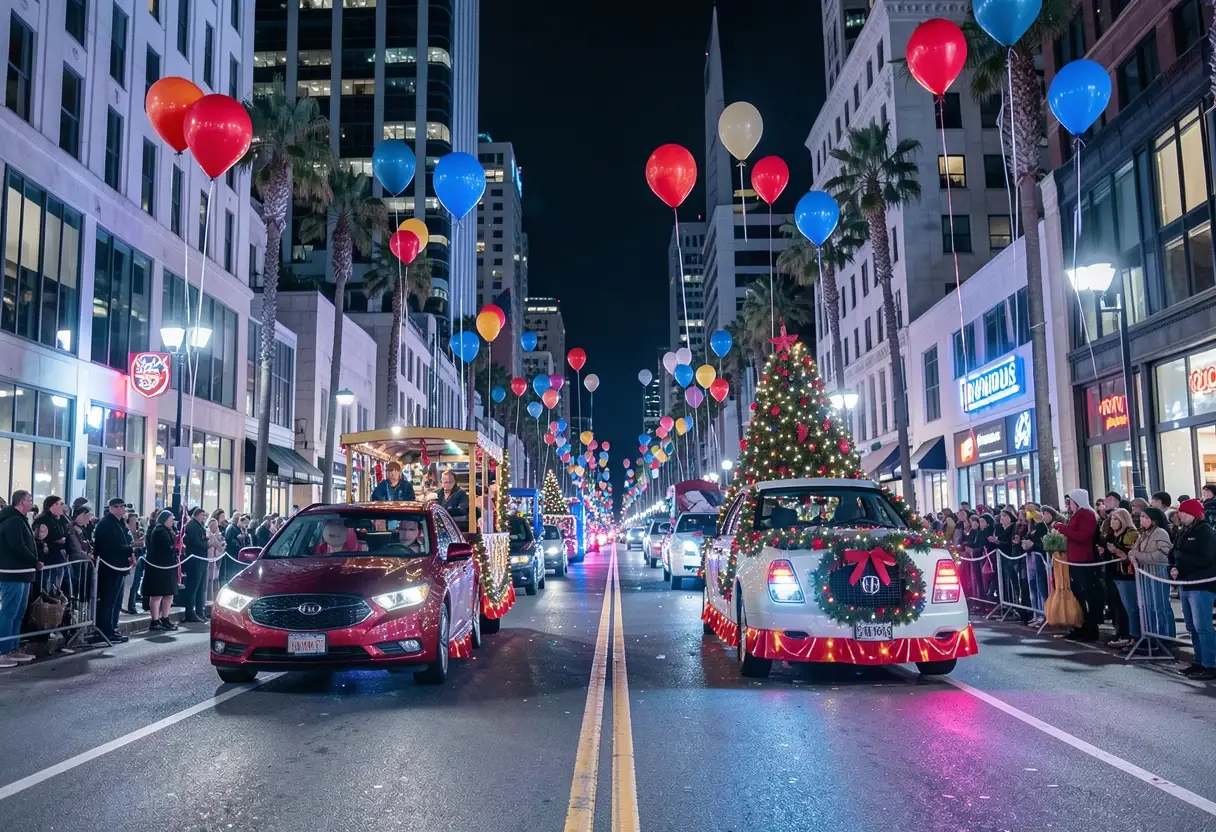
New material arrives too. The centennial adds seven new balloons, six new floats, and one new "balloonicle" — a balloon mounted on a wheeled vehicle.
How long does one float take?
Up to six months. A single float runs from concept drawings through design, engineering, and weatherproofing before it touches Sixth Avenue.
The centennial has been on the books longer than most editions. "The 100th Macy's Thanksgiving Day Parade has been in production since my first day here, five years ago," Coss said. "This year the stakes are high; you only have one shot at the 100th."
He framed the stakes in unusually plain terms for an operation of this scale. "While a lot of the work here requires a lot of planning, a lot of design, a lot of engineering, our end goal is to bring people together, to inspire joy, to create that new tradition," Coss said — "whether it's a family experiencing it for the first time or experiencing it for the 25th time."
A century in, the formula holds: one warehouse, 50,000 hours, and a hippo that finally came home.
Source: Architectural Digest
More from Daniel Okafor
Show full bio
News editor covering companies, deals and strategy in arts in the broadest sense at Arts & Voices.
1,701 articles