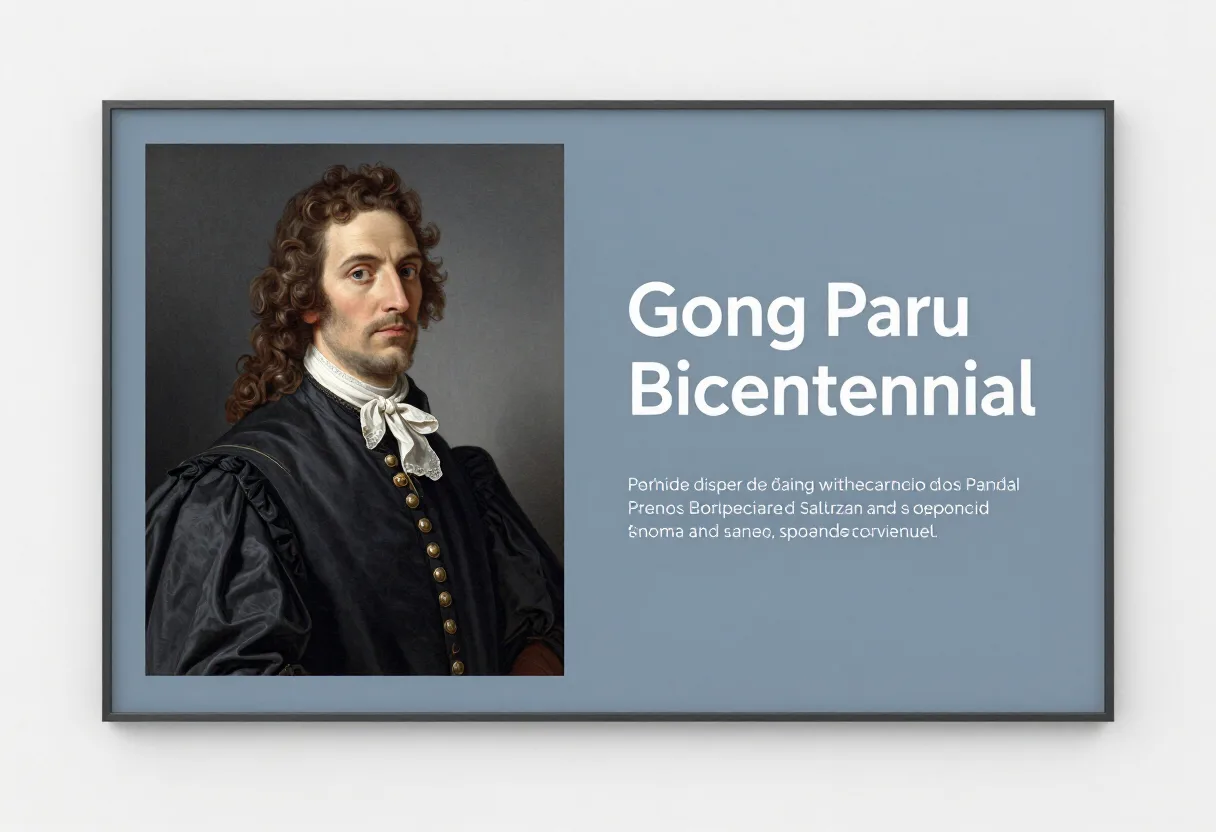
Botero's Bloated Old Masters Turn Art History on Its Head
Botero's $5.1m auction record and MoMA acquisition frame a career of inflated Old Masters. His son says the style was born by accident in 1956.
Programme
- Opera Gallery London shows Fernando Botero: in Praise of an Amplified World until end of November.
- The Musicians (1979) sold for $5.1m at Christie's New York in November 2023.
- MoMA acquired Mona Lisa, Age Twelve in 1961.
- Boterismo began in 1956-57 with Still Life with Mandolin in Mexico City.
- Botero donated his collection, including Picasso and Monet, to Colombia's Central Bank in 2000.
Fernando Botero's Mona Lisa (1978) stares out from the canvas with a round body, a large head and barely visible eyebrows. It is Leonardo's portrait, inflated. Opera Gallery's London branch is currently presenting Fernando Botero: in Praise of an Amplified World until the end of November.
Botero, who died in 2023, is one of Latin America's most instantly recognisable artists. "Some artists have a very personal language, and one of them is Botero – you will always recognise a piece by him," Belén Herrera Ottino, director of Opera Gallery Madrid, tells the BBC. His style even has a name: "Boterismo" (the artist's signature language of exaggerated, voluminous forms).
The market noticed early. MoMA acquired his Mona Lisa, Age Twelve (1959) in 1961. His bronze sculptures have stood on Park Avenue in New York and the Champs-Élysées in Paris. In November 2023, two months after his death, The Musicians (1979) fetched $5.1m (£3.9m) at Christie's New York.
How did Boterismo begin?
By accident, in Mexico City in 1956. Botero painted a too-small sound hole on a mandolin in Still Life with Mandolin (1957) and "felt that the instrument exploded in volume and form," his son, Fernando Botero Zea – Colombia's former Minister of Defence – tells the BBC. "That was the day that the style of Botero was born."
For Botero, exaggeration was "a way of celebrating the presence of things," Herrera Ottino says, and a "celebration of life, and of the sensuality of nature". His son puts it simply: "It was clear to him that throughout history, the purpose of art was to create pleasure."
Which Old Masters obsessed him?
Botero believed the Italian Renaissance was art's highest moment, followed by decline "with brilliant exceptions like Picasso and the Impressionist painters". After moving to Madrid in 1952 at 20, he studied at the Royal Academy of Fine Arts of San Fernando and worked as a copyist at the Prado. A bookshop window showing Piero della Francesca made him "make the decision to move to Florence," Botero Zea says.
Two works shaped his career:
- Piero della Francesca's Meeting between the Queen of Sheba and King Solomon (1452-1466), which echoed the religious art of Catholic churches in Medellín, where he grew up with little access to museums.
- The Duke and Duchess of Urbino (c 1473-1475), which inspired his diptych Federico da Montefeltro, Battista Sforza (1998) – plumper, and with the couple's positions switched.
Paolo Uccello's The Battle of San Romano, depicting a 1432 clash between Florentine and Sienese forces, supplied the rotund white horse that reappears across Botero's work, including El Arrastre (1984).
In Menina, after Velázquez, he fattens five-year-old Margaret Theresa from Las Meninas (1656). In Fornarina, after Raphael (2009), Raphael's veiled young woman becomes a large smiling figure.
Was he just painting 'fat' people?
He rejected the word outright. "I don't paint fat women… No one believes me, but it's true. If I paint a woman, a man, a dog or a horse, I do it with volume [in mind]," he told El Mundo in 2014. He also despised abstraction, telling the Los Angeles Times in 2012 that a painting "has to talk directly to the viewer" rather than leave people feeling "he needs a professor to tell him whether it's good or not".
What does this say about Latin America?
Plenty. Botero donated his personal collection – including Picasso, Monet and Dalí – to the Central Bank of Colombia in 2000, founding the Botero Museum in Bogotá. "He's saying to the visitors, 'my name is on the same level as these other ones,'" says Nicolás Gómez Echeverri, the bank's director of arts.
Gómez Echeverri argues the remakes aren't simple homage. The Mona Lisa is printed across Colombia – there is even a pizza restaurant nearby with that name. Botero's version, he says, is "reaffirming how those images come from another context across the ocean and become part of our Latin American visual culture".
Knowledge of pre-Colombian art, with its large rounded forms, recontextualises the volumes further. Botero also demolished the high/low boundary: "He's saying that it doesn't exist," Gómez Echeverri says, turning on its head the idea that "high art" must be European, classicist and white.
The London show runs through November. Expect pleasure, by design.
Source: artsjournal.com
More from Daniel Okafor
Show full bio
News editor covering companies, deals and strategy in arts in the broadest sense at Arts & Voices.
1,098 articles