Bruno Taddia Leads Teatro Pergolesi's 1960s-Set 'Don Pasquale'
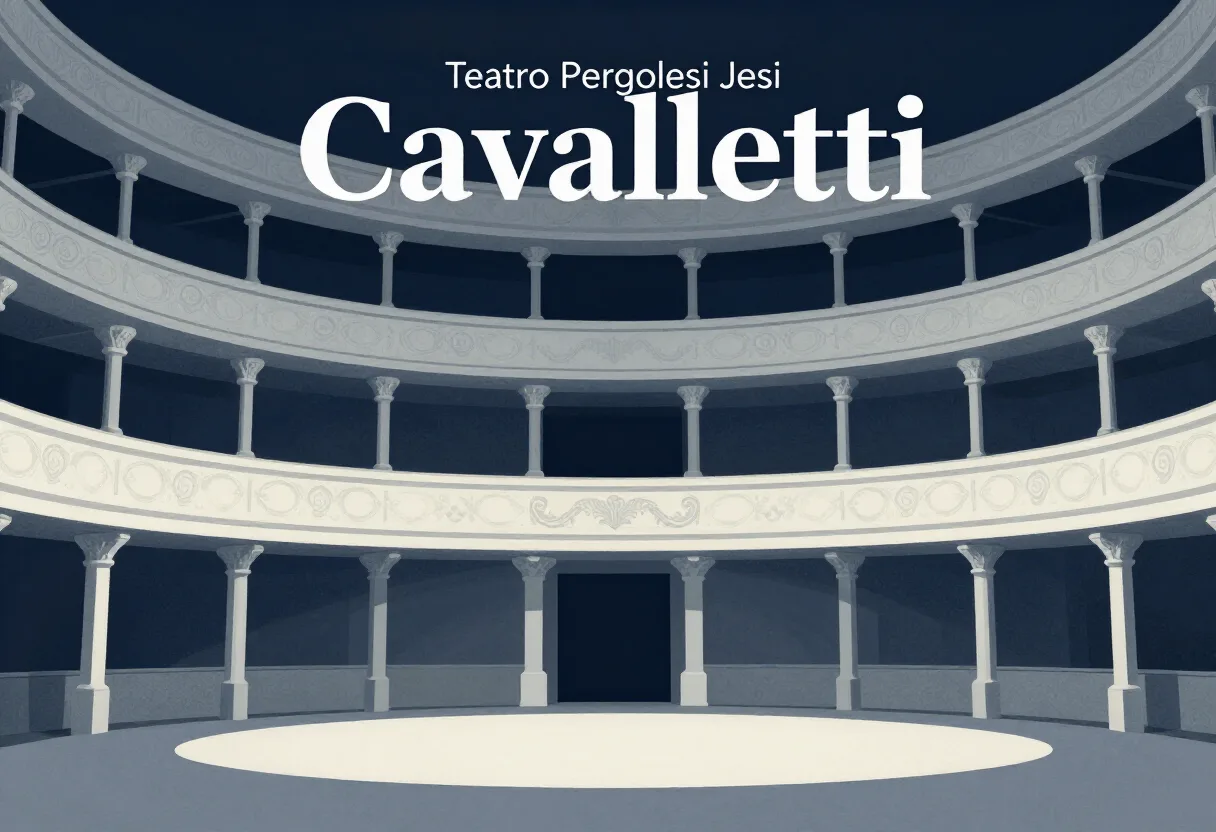
Bruno Taddia headlines a new 1960s-set 'Don Pasquale' at Teatro Pergolesi, directed by Italo Nunziata and conducted by Danila Grassi, on Oct. 30–31, 2026.
Programme
- Performances take place Oct. 30 and 31, 2026, at the Teatro Pergolesi.
- Bruno Taddia sings the title role; Nikoletta Hertsak, Francesco Lucii, Daniele Terenzi and Kevin Baliviera complete the principal cast.
- Italo Nunziata directs; Danila Grassi conducts.
- Sets and costumes are by young winners of the Svoboda Competition.
- The staging is set in the 1960s, drawing on black-and-white television and the variety show 'Signore e Signora.'
Baritone Bruno Taddia will sing the title role in a new production of Donizetti's "Don Pasquale" at the Teatro Pergolesi, staged on Oct. 30 and 31, 2026, in a production inspired by the 1960s.
The Teatro Pergolesi has assembled a five-singer principal cast. Taddia's Pasquale will be joined by Nikoletta Hertsak as Norina, Francesco Lucii as Ernesto, Daniele Terenzi as il dottor Malatesta, and Kevin Baliviera as il notaro. Danila Grassi conducts. The production marks the house's investment in a freshly conceived staging of one of Donizetti's most performed comedies rather than a revival.
Who is staging it?
Italo Nunziata directs. His concept relocates the opera's social comedy to Italy's economic boom years, and his explanation of the choice is unusually detailed for a season announcement.
"The musical whirlwind and the action suggested images of the 1960s as the setting for my new 'Don Pasquale,'" Nunziata said. "That decade truly felt like a whirlwind. Everything was new, everything moved fast, and everything seemed possible, with social mobility constantly in flux."
He frames the era as one of rupture, not nostalgia. "It was a decade that changed the face of our country forever: streets filled with cars, youth rebellion within families shattered an outdated way of life, and young women asserted their independence—both in their careers and in their personal choices—by shortening their hemlines and smoking freely in public," he said.
The fit with the opera's plot is direct: "Don Pasquale" turns on a young couple, Ernesto and Norina, outmaneuvering the old bachelor Pasquale to secure their own future — a family conflict that Nunziata maps onto generational rebellion.
What will it look like?
The visual language draws on two reference points Nunziata names explicitly: black-and-white television and the "optical" fashion of the era. The designers are not veterans but "the young winners of the Svoboda Competition," who created both the sets and the costumes.
The staging stops short of a literal broadcast setting. "It's not set strictly inside a television studio, but rather through a lens that evokes the expressive language of that medium," Nunziata said. He cites the 1960s musical variety show "Signore e Signora" as his model: the performers "appear to meet just moments before going 'on air,' launching into their performance and choreographed movements the instant the music begins."
What does this change for audiences?
For a two-performance run, the production pairs an established cast with a design team selected through competition — a route that gives emerging scenic artists a mainstage credit at a historic Italian theater. The risk is familiar: conceptual restagings of bel canto comedies live or die on execution, and no further casting or creative details have been announced beyond the principals. Audiences in Jesi will judge the result on Oct. 30 and 31, 2026.
Source: Opera Wire
More from Tom Whitfield
Show full bio
Market editor covering people, launches and day-to-day practice in arts in the broadest sense at Arts & Voices.
936 articles