BTS Boycotts the Grammys Over New Asian Pop Category
BTS refuses to submit for the 2026 Grammys over the new best Asian pop music performance category, with Stray Kids following — the latest chapter in a 66-year history of classification disputes.

Programme
- BTS announced it will not submit for Grammy consideration in 2026, citing opposition to dividing music by region or language.
- The best Asian pop music performance category is one of five new Grammy categories debuting nominees next week.
- Stray Kids also announced it will not submit; BTS has five past nominations and zero wins.
- The Academy cut categories from 109 to 78 in 2011, prompting a class-action lawsuit by four Latin jazz musicians.
- Only 12 Black artists have ever won album of the year since the awards began in 1959.
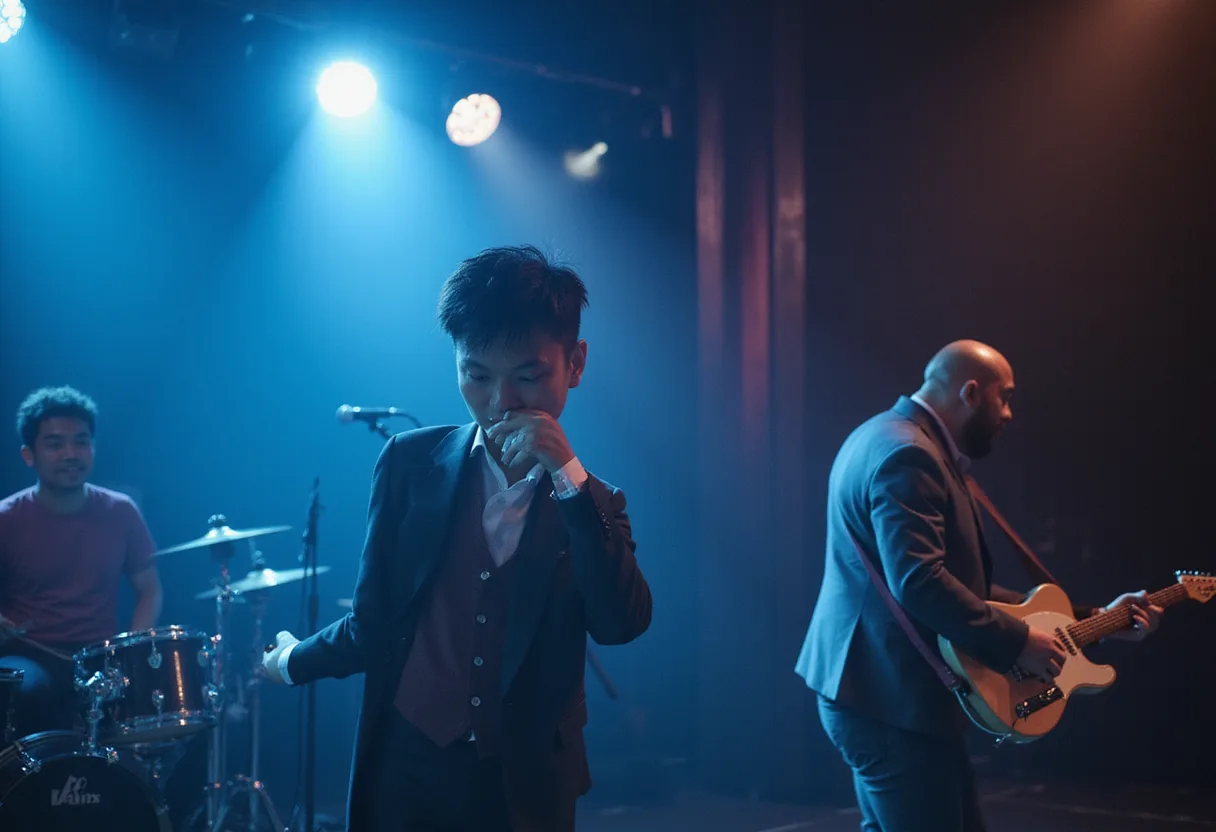
BTS will not submit music for Grammy consideration this year, the band announced on social media, in protest at the Recording Academy's new best Asian pop music performance category, which debuts its first slate of nominees next week.
The category, one of five new awards introduced for 2026, recognizes "contemporary popular music originating from or widely recognized within Asian markets, including K-Pop, J-Pop, and C-Pop," and requires "meaningful use of one or more Asian languages" for eligibility. Just over a month after the Academy unveiled the award, BTS responded.
"We have decided not to submit for Grammys this year. Rather than music being divided by region or language, we hope music itself can be heard and loved for what it is," the band wrote. "We are always grateful to [our fandom] ARMY and everyone who is always with us."
The boycott lands mid-comeback. BTS released the album Arirang in March after a years-long hiatus for the members' mandatory military service in South Korea and then embarked on a sold-out global tour. Days after BTS' statement, the K-pop group Stray Kids announced it also will not submit.
What does the Academy say?
Recording Academy CEO Harvey Mason Jr. responded on Instagram, writing that he was saddened but respected the group's decision. He then defended the award's purpose.
"The Asian Pop category was created to celebrate the depth, diversity and extraordinary growth of pop artistry coming out of Asia," Mason Jr. wrote. "More categories mean more artists' work is recognized. It's never to divide, but to expand who is recognized by our 15,000 Grammy voters."
That reassurance has a historical burden to carry. BTS has been nominated for five Grammys, including several nods for best pop duo/group performance, and has never won. In February, "Golden" from the film KPop Demon Hunters became the first K-pop song to win a Grammy.
Is the category a spotlight or a sideline?
Mathieu Berbiguier, visiting assistant professor of Korean studies at Carnegie Mellon University, calls the new category a double-edged sword: it can highlight Asian music as streaming collapses borders in global listening habits, yet it also looks like an attempt to move K-pop's gains out of the general categories.
"Given that the term K-pop in itself hasn't been created in Korea, it's a category that has been created in difference, in comparison to other genres," Berbiguier says. "It is difficult to think of it as something positive, because it's kind of saying we want to acknowledge you, but at the same time in a separate category, so that it doesn't mix up with what is supposed to be mainstream."
Berbiguier defines K-pop not as a genre but as a system: young recruits trained extensively to sing, act or dance, then debuted as solo acts or groups. Even insiders question the label. Bang Si-Hyuk, founder of HYBE, the conglomerate behind BTS, told Maeil Business Newspaper in 2023 that the "K" might need to be dropped to keep expanding globally. RM of BTS told Rolling Stone the question is "an important debate."
"It shows you that the agenda is not the same on the side of the K-pop entertainment companies and the Grammys, because the Grammys probably think of it as a gateway to get more international recognition," Berbiguier says. "But then for the K-pop entertainment companies, that's not what they want. They want to be recognized as a whole."
How old is this fight?
As old as the awards. Since 1959, the Academy has faced criticism for how it racializes popular music. Only 12 Black artists have ever won album of the year, and Black musicians have long accused the Academy of pigeonholing them into smaller categories.
The Academy ignored hip-hop until 1988, when it created best rap performance — then refused to televise the award at the 1989 ceremony. LL Cool J, Public Enemy and DJ Jazzy Jeff & The Fresh Prince, who won the Grammy, boycotted the ceremony in protest.
In 2016, Frank Ocean declined to submit Blonde, calling the voting system "dated" and naming it his "Colin Kaepernick" moment; he had already been nominated seven times and won twice. In 2020, Tyler, the Creator won best rap album for IGOR and called the placement a "backhanded compliment."
"It sucks that whenever we — and I mean guys that look like me — do anything that's genre-bending or that's anything they always put it in a rap or urban category. I don't like that 'urban' word — it's just a politically correct way to say the N-word to me," Tyler said. Six months later, the Academy dropped "urban" and renamed the award best progressive R&B album.
What happened when categories were cut?
Smaller genres fared worse in 2011, when the Academy cut categories from 109 to 78. Native American, Zydeco and Cajun music merged into best regional roots music; Latin jazz rolled into best jazz album. Four Latin jazz musicians — Bobby Sanabria, Mark Levine, Ben Lapidus and Eugene Marlow — filed a class-action lawsuit claiming the changes damaged their livelihoods. A New York judge dismissed the suit, but the category returned.
The "world music" category was cut from two awards to one. Ian Brennan, producer of the 2012 winner Tassil by Tinariwen, says global representation was slashed in half and smaller regional musicians could not compete with bigger names.
"There's no category that has greater diversity or should have greater diversity than this category. But what we see is so much redundancy," Brennan says. Angelique Kidjo has 10 nominations; Anoushka Shankar has nine; Ethiopian jazz has never been recognized. The Academy has since added best global music album, best global music performance and, in 2024, best African music performance.
John Vilanova, music scholar and journalism professor at Lehigh University, says the tension is structural: "They're not at the bleeding edge and they're kind of not designed to be. It's a legacy product. So when they're making these adjustments, it is often in this kind of stumbling, bumbling way."
Yet he credits the Academy with seriously diversifying its voting body. This year, Bad Bunny's DeBÍ TiRAR MáS FOToS became the first Spanish-language album to win album of the year.
What does this change for Asian artists?
For smaller musicians, possibly a real opening. Miist, a Chinese singer and Academy voting member who records in Mandarin, English and Spanish, welcomes the new category despite the criticism.
"It gives us an opportunity to showcase our music, which almost could have never had a chance to be heard by maybe 15,000 or 16,000 voting members," she says. "They would have never had a chance to be discovered. It also gives the voting members a chance to experience these different cultures and music."
She concedes the Academy communicated the changes poorly and should have included more Asian musicians in the process, but calls the category a step in the right direction: "The Academy has to stand at a place that represents what the members want, what the musicians want. [It's] not necessarily the same thing as what the market wants. So I can see that the Academy is trying hard to balance the two, but I think we need to give them some time to get there."
The first nominees arrive next week. Whether the category celebrates BTS or merely occupies the space the band refused will be legible in who shows up on that list — and who stays away.
Source: feeds.npr.org
More from Tom Whitfield
Show full bio
Market editor covering people, launches and day-to-day practice in arts in the broadest sense at Arts & Voices.
1,334 articles