Rock's Swastika Fetish: Daniel Rachel Catalogues a Venerable Tradition
A new book by Daniel Rachel argues Bowie's fascist flirtations were rock's rule, not its exception—from Lennon's salutes to Kanye's "Heil Hitler."

Programme
- Fifty years ago Cameron Crowe interviewed Bowie for Playboy; the singer later said he had been "out of my mind totally, completely crazed."
- Daniel Rachel's book 'This Ain't Rock 'n' Roll: Pop Music, the Swastika, and the Third Reich' is published by Akashic.
- In Melbourne in 1964 the Beatles gave Hitler-type salutes from a hotel balcony to thousands of fans.
- Kanye West released a song titled 'Heil Hitler' last year and this year blamed a car accident and bipolar condition.
- Rock Against Racism formed in the late 1970s after Eric Clapton's anti-immigrant remarks echoing the National Front.
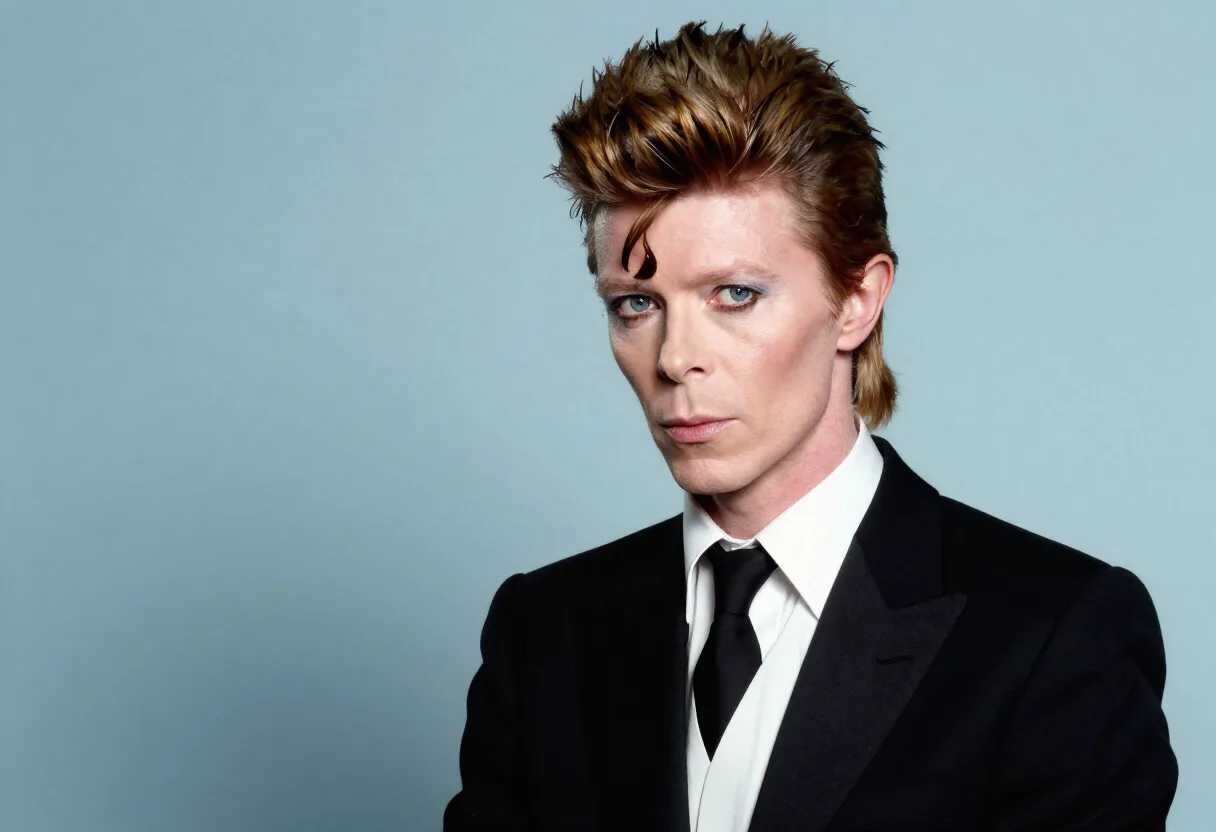
Fifty years after David Bowie told Playboy interviewer Cameron Crowe that he stood by "everything but the inflammatory remarks" in their conversation, a new book argues that Bowie's fascist flirtations were not an aberration in rock history. They were the norm.
Daniel Rachel, a British musician and writer, makes that case in "This Ain't Rock 'n' Roll: Pop Music, the Swastika, and the Third Reich" (Akashic). The title comes from Bowie's song "Diamond Dogs," which opens with the announcement "This ain't rock 'n' roll—this is genocide!" Rachel devotes a chapter to Bowie, but the Thin White Duke—Bowie's circa-1976 persona—gets lost among so many other semi-fascist and outright Nazi outbursts from musicians of the 1960s, 1970s and 1980s. Seen in this light, Kanye West's intermittent admiration for Hitler looks less like an anomaly and more like an homage to a durable tradition.
What did Bowie actually say?
Bowie spent later years struggling to explain the Playboy interview and his other dabblings in fascist rhetoric. He said he had been "out of my mind totally, completely crazed"; that he had thought in mythological rather than political terms; that he had indulged in "glib, theatrical observations"; and that the horror of the Holocaust had "completely evaded my extraordinary fucked-up nature at that particular time." Critics and biographers proposed "cocaine psychosis," speaking "at least partially tongue-in-cheek," or "illogical irony." The issue has periodically resurfaced since Bowie's death in 2016, yet it has barely dented a reputation long accorded the status of genius—an extension of the old Romantic cult of the artist-hero.
How far back does it go?
Rachel reaches back to the late fifties in Britain. As a Liverpool art student, John Lennon drew himself delivering a Hitler salute beneath the legend "HEIL JOHN," and he occasionally snapped such salutes through the following decade. When the Beatles chose faces for the cover of "Sgt. Pepper's Lonely Hearts Club Band," Lennon suggested Jesus and Hitler; neither appears. George Harrison later said: "We were the generation who didn't suffer from the war and we didn't want to have to keep being told about Hitler."
In Melbourne in 1964, the Beatles greeted thousands of fans from a hotel balcony. Lennon raised his right arm and mimicked a Hitler mustache with his finger; Paul McCartney and Harrison followed suit. One newspaper caption read, "Whenever the Beatles appeared on a balcony, they couldn't resist giving Hitler-type salutes."
The tics grew creepier among the Beatles' successors:
- Brian Jones of the Rolling Stones was photographed in an S.S. uniform, crushing a doll under his boot.
- Mick Jagger praised Leni Riefenstahl's "Triumph of the Will" and modelled for the director.
- Keith Moon marched through a Jewish London neighborhood in Third Reich regalia; Sid Vicious did the same in Paris.
- Malcolm McLaren's Nazi infatuation made swastikas a punk staple.
- Lemmy of Motörhead amassed a storehouse of Nazi memorabilia; Nikki Sixx of Mötley Crüe called umlauts "German and strong."
- Band names carried sinister associations: Joy Division, Spandau Ballet.
What were the excuses?
Rachel catalogs them in a section titled "Never Mind the Swastikas." Eric Clapton called Nazi uniforms "great"; Dee Dee Ramone found them "just so pretty"; Ace Frehley of Kiss called them "the coolest." Asked about the Iron Cross shaved into his hair, Lou Reed replied, "I was young. I was having fun." Siouxsie Sioux called Nazi antics an "anti-mums-and-dads thing." Peter Hook of Joy Division declared the band "nothing more than a bunch of lads obsessed with the war." Nick Cave called his swastika use on two early-eighties record covers "deliberately moronic."
The trend also provoked resistance. In the late seventies, Rock Against Racism mobilized in Britain after Clapton delivered anti-immigrant diatribes echoing the far-right National Front. The Dead Kennedys sang, "You still think swastikas look cool? / The real Nazis run your schools." Critic Lester Bangs warned: "Anytime you conclude that life stinks and the human race mostly amounts to a pile of shit, you've got the perfect breeding ground for fascism."
Is fascist chic exclusively a white male problem?
No, according to Rachel's final chapters. Michael Jackson's teaser for "HIStory," with the star marching between rigid ranks of soldiers, was echt Riefenstahl. Madonna and Lady Gaga each drew on S.S. kink via the 1974 film "The Night Porter." Nicki Minaj alluded to "Triumph of the Will" in her "Only" video. Last year, Kanye West released a song titled "Heil Hitler"; this year he blamed a car accident and a bipolar condition.
The book has limits. Rachel, who grew up singing along to the Sex Pistols' "Belsen Was a Gas" and calls writing the book painful, gathers evidence assiduously but does not explain the phenomenon's origins. Many of the rockers he cites were not viscerally anti-Jewish; some were Jewish. Tommy Ramone, principal author of "Blitzkrieg Bop," came from a family of Holocaust survivors, as did Gene Simmons, who once said, "One word from Hitler and the masses would move in unison. It was the same with Kiss."
A gentler reading came from Dick Hebdige's 1979 book "Subculture: The Meaning of Style": "The signifier (swastika) had been willfully detached from the concept (Nazism) it conventionally signified." Pamela Rooke, who wore a red armband at the Sex Pistols' 1976 television debut, later shrugged: "There was no Nazi Party now." The reviewer's caveat: signifiers have a way of reuniting with their signifieds, and the Nazi thing is alive and well.
The deeper source, the review argues, may lie in the theatrics of pop spectacle itself—isolated figures receiving mass adoration, enabled by electric amplification and mass media just as Hitler was. Susan Sontag's 1975 essay "Fascinating Fascism" described "the grouping of people/things around an all-powerful, hypnotic leader-figure or force"; Adorno denounced mass culture as inherently totalitarian. The review resists that verdict—Prince at Madison Square Garden in 2004 imposed nothing but his own virtuosity—but mistrusts pop's faith in its own innocence, noting that Bowie's bisexuality is credited with advancing gay rights while his Hitler fantasies are filed as boyish tomfoolery. Whether fans keep paying thousands of dollars to watch Taylor Swift earn her second billion, at the distance of a Hail Mary pass, may decide whether the cult of the pop god finally loosens its grip.
By Tom Whitfield
Source: artsjournal.com
More from Tom Whitfield
Show full bio
Market editor covering people, launches and day-to-day practice in arts in the broadest sense at Arts & Voices.
1,334 articles