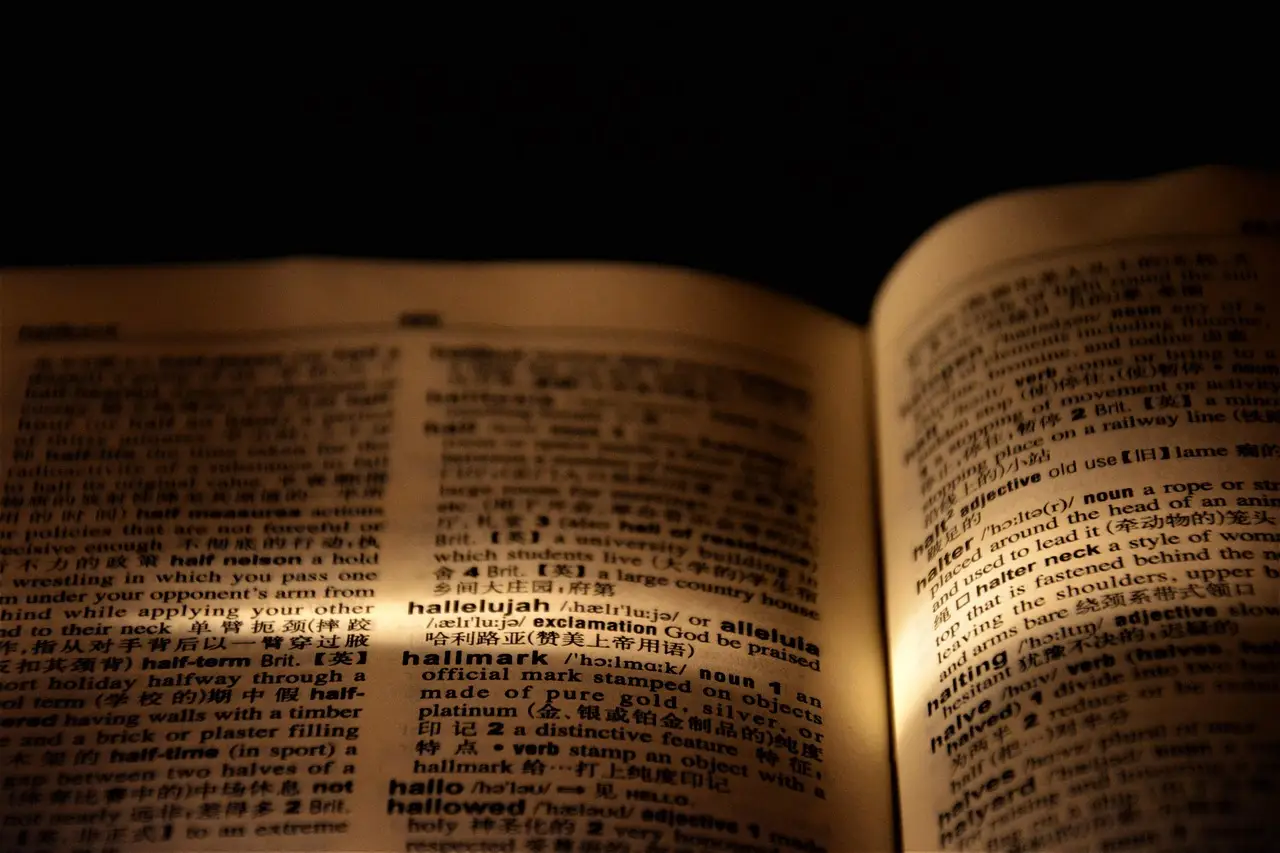
Cambridge Dictionary Names 'Human' Its 2026 Word of the Year
The Cambridge Dictionary picked "human" — an adjective in use since the 1450s — as its 2026 word of the year, citing fears over AI blurring the line between people and machines.

Programme
- Cambridge Dictionary named "human" its 2026 word of the year, a word in use since the 1450s
- Lexicographer Colin McIntosh: "AI is changing how we talk about being human"
- Collins chose "AI" in 2023; Cambridge picked "hallucinate" the same year
- Merriam-Webster's 2025 pick was "slop"; Collins went with "vibe coding"
- 2026 runners-up were "agent" and "analogue"
The Cambridge Dictionary has chosen "human" as its word of the year for 2026, and the reason is artificial intelligence. Fears about AI pushed the editors of one of the world's oldest English dictionaries back to a word that has been in use since the 1450s.
The choice works as a backlash of sorts. "Human" reflects an ongoing debate over how AI has blurred the lines between machines and people, the dictionary's editors said.
What does an old word say about new technology?
Colin McIntosh, the Cambridge Dictionary's lexicographer, put the mechanism plainly. "AI is changing how we talk about being human," McIntosh said. "Fears about what humans may lose when we outsource our thinking have made us reconsider the extent to which we rely on AI: from top mathematicians to teachers of young children."
Cambridge defines "human" — an adjective derived from the Latin "humanus" — as "having the qualities, faults and feelings that people have, as opposed to gods, animals or machines." That final category, machines, is doing new work in 2026.
The pick breaks with convention in one sense. Dictionaries typically choose a novel word — sometimes slang that has crossed into the mainstream — or an existing word that has taken on a new meaning. "Human" is neither brand new nor newly coined; it's an old word made urgent.
AI has dominated recent word-of-the-year lists
This isn't a one-off. Artificial intelligence has factored heavily in Word of the Year distinctions across several dictionaries in recent years:
- 2023: Collins Dictionary chose "AI" itself. That same year, Cambridge picked "hallucinate," in reference to AI's tendency to fabricate information.
- 2025: Merriam-Webster named "slop" its word of the year, for low-quality content produced by AI, while Collins went with "vibe coding" — the AI-assisted software development method.
- 2026: Cambridge's "human," joined by runners-up "agent" and "analogue."
The runners-up tell the same story from two directions. "Agent" refers to an AI system that can make decisions and operate without human control. "Analogue" covers experiences or objects that don't involve the internet or digital technology at all.
A comment from Bill Gates
Microsoft co-founder Bill Gates, who has promoted the smart use of AI, weighed in on the selection. "AI is making us think harder about what it means to be human," Gates said. "The measure of AI's success should be how much it improves human lives."
What does this change for readers? Not the language itself — nobody needed a dictionary to use "human." What changes is the signal: the institutions that track English have now spent four consecutive years circling the same anxiety, and in 2026 they landed on the one word AI can't fully replicate.
The Associated Press closed its report with an editor's note worth repeating here: "This story was produced by a human."
Source: artsjournal.com
More from Grace Kim
Show full bio
Correspondent covering technology and product news in arts in the broadest sense at Arts & Voices.
1,676 articles