Cher at 80: Six Decades of Farewells That Never Stick
Cher's 325-show farewell tour grossed $250 million, yet the 80-year-old kept reinventing: ABBA, Christmas records, Hall of Fame, a Number 1 memoir.

Programme
- Cher's 2002–2005 'Living Proof: The Farewell Tour' played 325 shows and grossed about $250 million, the top female tour of its time.
- 'Believe' (1998) topped charts in 23 countries and made her, at 52, the oldest woman then to hit Number 1 on the Billboard Hot 100.
- 'Dancing Queen' (2018), her ABBA album, debuted at Number 3 on the Billboard 200 when she was 72.
- In 2023, at 77, she became the first female solo artist with UK Top 40 new material across seven consecutive decades.
- She won the Best Actress Oscar for 'Moonstruck' (1987) and entered the Rock and Roll Hall of Fame in 2024.
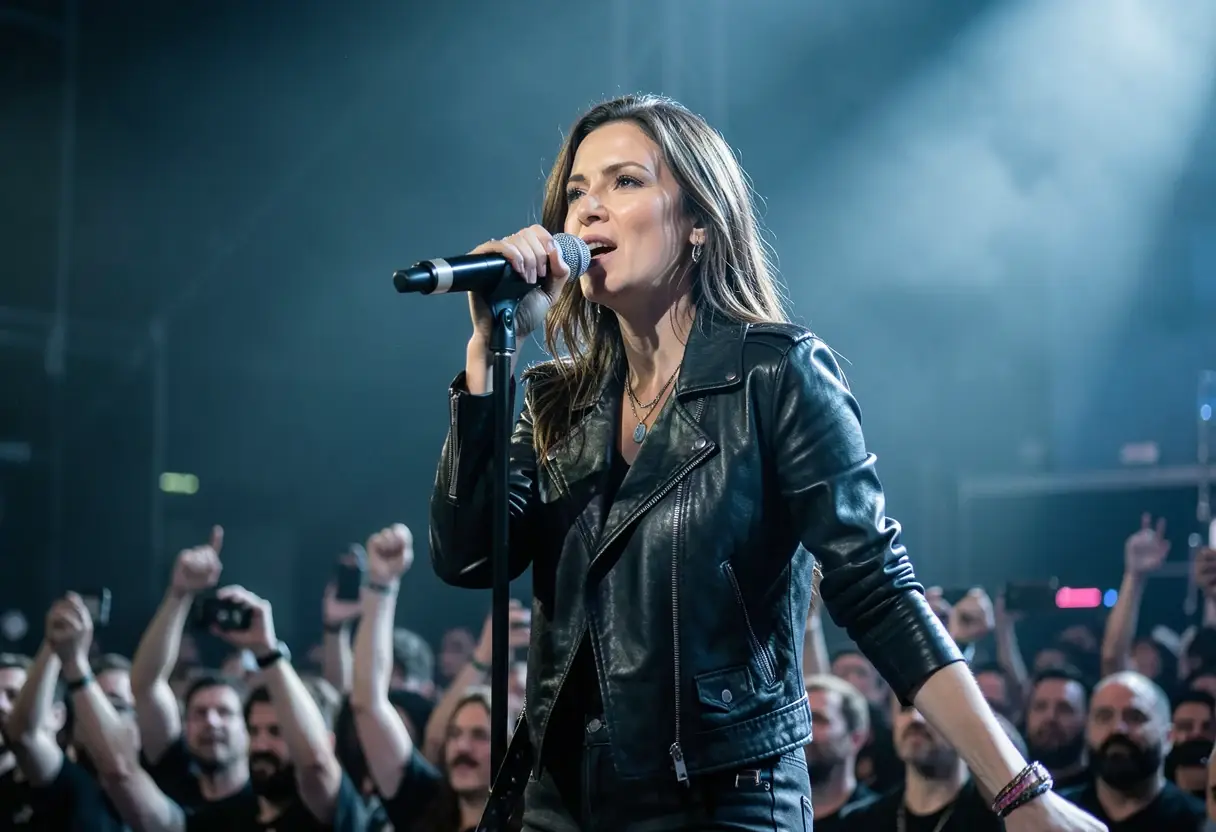
Cher played 325 concerts on her 2002 farewell tour, sold more than 3.5 million tickets, and then returned to Las Vegas for another 200 performances. Nobody, apparently, briefed her on what "farewell" means. At 80, she has spent more than six decades proving the point.
The résumé reads like a committee's work. She has been half a folk-rock duo, a television comedian, a disco queen, a Hollywood leading lady, a rock singer, a dance-pop innovator and an international touring phenomenon. Along the way she collected an Academy Award, Grammy Awards, a Primetime Emmy, Golden Globes, and enough Bob Mackie costumes to fill a museum.
Where did it start?
In the clubs and studios of early-1960s Los Angeles. As a teenager, Cher met Sonny Bono, then working for producer Phil Spector, and sang backing vocals on recordings tied to Spector's Wall of Sound (the producer's signature layered orchestral pop technique). Her contralto would become one of the most recognizable sounds in popular music.
In 1965, Sonny & Cher released "I Got You Babe," a folk-rock duet that reached Number 1 in the United States and Britain. The bell-bottoms and fur vests became part of the decade's visual language. Cher's solo career ran parallel: her version of Bob Dylan's "All I Really Want to Do" became a hit, and "Bang Bang (My Baby Shot Me Down)" reached Number 2 on the Billboard Hot 100 in 1966. The stage was already large enough for two careers.
What happened on television?
CBS's "The Sonny & Cher Comedy Hour" drew more than 30 million viewers a week in the early 1970s, mixing music, sketches, celebrity guests and the couple's playful exchanges. Designer Bob Mackie built the unforgettable outfits — Cher could deliver a dry one-liner, then sing in a costume that seemed to have arrived from another galaxy. Her solo hits kept coming: "Gypsys, Tramps & Thieves" (Number 1, 1971), "Half-Breed" (1973) and "Dark Lady" (1974). In 1975 she launched her own variety series, "Cher," welcoming David Bowie, Tina Turner, Elton John, Ray Charles and Bette Midler. The Bowie medley remains a fascinating meeting of theatrical worlds.
Disco followed in 1979 with "Take Me Home," then hard rock with the band Black Rose. Folk, pop, R&B, disco, hard rock — an unusually broad foundation, as it turned out.
How did she win an Oscar?
In 1982, Robert Altman cast her in "Come Back to the 5 & Dime, Jimmy Dean, Jimmy Dean" on stage, then in his film adaptation. Mike Nichols put her opposite Meryl Streep in "Silkwood"; the role of Dolly Pelliker earned an Academy Award nomination and a Golden Globe. "Mask" won her Best Actress at Cannes in 1985, and "Moonstruck" (1987), opposite Nicolas Cage, won her the Academy Award for Best Actress. She accepted it in a Mackie gown, warmth and humour intact. The woman who sang "I Got You Babe" now stood among Hollywood's most celebrated actors.
Her musical imagination was already elsewhere. The late 1980s brought arena rock with Jon Bon Jovi, Richie Sambora, Desmond Child and Michael Bolton — "I Found Someone" (1987), then "Heart of Stone" (1989) with "Just Like Jesse James," "After All" with Peter Cetera, and "If I Could Turn Back Time," whose video was filmed aboard the USS Missouri.
What was the Cher effect?
In 1998, at 52, she released "Believe." Producer Mark Taylor and the recording team used Auto-Tune (pitch-correction software) in a deliberately exaggerated way, giving her voice a distinctive electronic character. The technique became famous as the Cher effect and influenced generations of pop, hip-hop and electronic musicians. "Believe" topped the charts in 23 countries and made Cher the oldest woman at the time to reach Number 1 on the Billboard Hot 100 — 33 years after "I Got You Babe." The album sold roughly 11 million copies worldwide; "Strong Enough" followed as a dance-floor favourite.
What came after the farewell?
Plenty. "Living Proof: The Farewell Tour" ran from 2002 to 2005, grossed approximately $250 million, and became the highest-grossing tour by a female artist at that time. That's a spectacular way to say goodbye. She then took a Caesars Palace residency with more than 20 costume changes, co-starred with Christina Aguilera in "Burlesque" (2010), and sang Diane Warren's "You Haven't Seen the Last of Me" — a title that doubles as her career summary. "Closer to the Truth" (2013) debuted at Number 3 on the Billboard 200, matching her highest solo chart position.
Then ABBA entered. After playing Ruby Sheridan in "Mamma Mia! Here We Go Again" (2018) and delivering "Fernando," she recorded "Dancing Queen," an entire ABBA album. It debuted at Number 3 on the Billboard 200 — at 72.
What records does she still hold?
In 2023, at 77, her first Christmas album, "Christmas," featured Stevie Wonder, Cyndi Lauper, Michael Bublé, Darlene Love and Tyga. "DJ Play a Christmas Song" reached the UK Top 20 and, per the Official Charts Company, made Cher the first female solo artist with a UK Top 40 hit of new material across seven consecutive decades. The Rock and Roll Hall of Fame inducted her in 2024; Zendaya introduced her, and she performed "If I Could Turn Back Time" and "Believe," the latter with Dua Lipa. Her memoir, "Cher: The Memoir, Part One," hit Number 1 on The New York Times bestseller list, and "The Cher Show" puts three performers on Broadway to cover her eras — a sensible allocation of labor.
Her biggest dance hit arrived at 52, her ABBA album at 72, her chart record at 77. Anyone weighing a creative change should note that curiosity, in her case, has outlasted every farewell. She recorded a song called "If I Could Turn Back Time"; judging by everything since, she has found plenty of reasons to keep looking forward.
Source: thatericalper.com
More from Daniel Okafor
Show full bio
News editor covering companies, deals and strategy in arts in the broadest sense at Arts & Voices.
1,247 articles