Cherrie Yu Stages Ping-Pong as Dance at Abrons Arts Center
Cherrie Yu's 'Daily Diversions' at Abrons Arts Center merges table tennis and postmodern dance, with modular tables, hand-played matches and a multigenerational cast.
Programme
- Cherrie Yu's 'Daily Diversions' ran Thursday to Saturday at Abrons Arts Center on the Lower East Side.
- Yu, 31, choreographed a first 10-minute version of the work in 2023 for a Manhattan Chinatown gallery.
- Matt Shalzi designed modular quarter-size tables that merge into half- or full-size ones.
- The cast includes dancer Ariel Herrera, 66, returning to performance after about 30 years, and player An Kong, 22, from Hong Kong.
- At MoMA in August, Yu paired table tennis with Tchaikovsky's 'Dance of Cygnets.'
Choreographer Cherrie Yu staged a table tennis tournament last month on the Lower East Side — on a theater stage. The event, held at Abrons Arts Center, tied into her performance work "Daily Diversions," which ran Thursday through Saturday in the same theater. The piece juxtaposes table tennis and postmodern dance with a multigenerational cast that mixes competitive players with dancers.
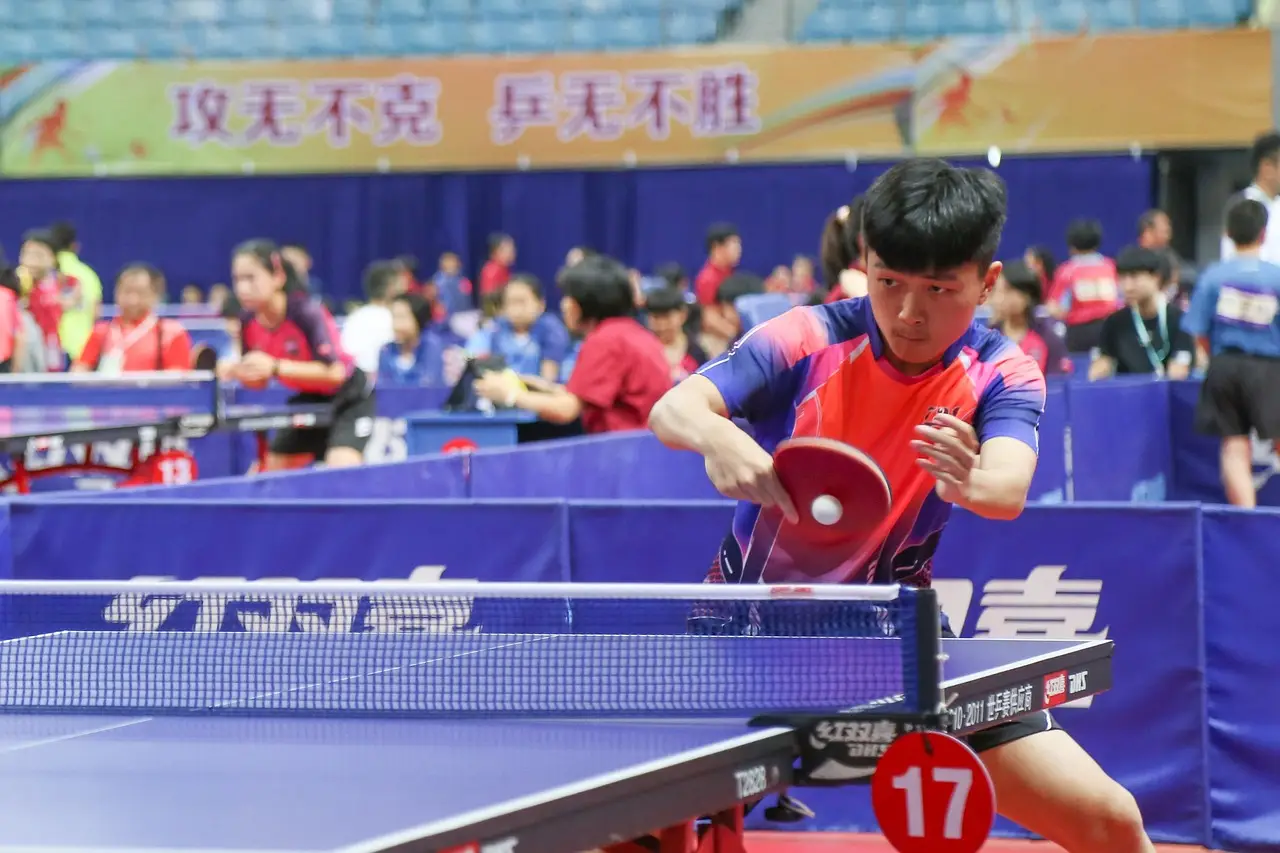
Some of the tournament tables were quarter-size. Designed by Matt Shalzi, they can merge into half-size or full-size tables. Yu calls that modularity a working metaphor: the piece takes Ping-Pong apart and puts it back together, drawing attention to the sport's formal and rhythmic properties through narration, movement and game play.
How did Ping-Pong return to Yu's life?
Yu, 31, trained with a table tennis coach for several years as a child in China, where her mother had been a champion player in college. The sport dropped out of her life until she moved to New York in 2021. In Herald Square, she happened upon a game, watched, and someone handed her a paddle.
"And it all came back," she said, "the muscle memory from when I was in 2nd or 3rd grade, the control I forgot I had."
Yu had moved to the United States for college in 2013. In New York, she was working out a life as a choreographer and her relationship to the largely white, Euro-American history of postmodern dance. Ping-Pong reconnected her with the family and country she had left behind. She played in the morning, then took class in Merce Cunningham technique.
"Those two things started to converge in my brain and body," she said. Relearning the sport from a Taiwanese elder, she gained physical confidence she carried into dance class. "And then when I did a Cunningham exercise, I felt more like myself," she said.
What does the audience actually see?
The current version of "Daily Diversions" includes conventional matches and atypical ones: games played with hands instead of paddles, with both hands and paddles, or with an added extra ball. Players twirl between bounces or continually rotate positions. Shalzi's tables are assembled and disassembled mid-performance. In some games, balls bounce across tables separated like islands.
The variations isolate the sport's mechanics: the seesaw motion linking two facing bodies, the differing angles of forehand-to-forehand versus forehand-to-backhand exchanges, the relations between power and placement, arch and drive, speed and spin.
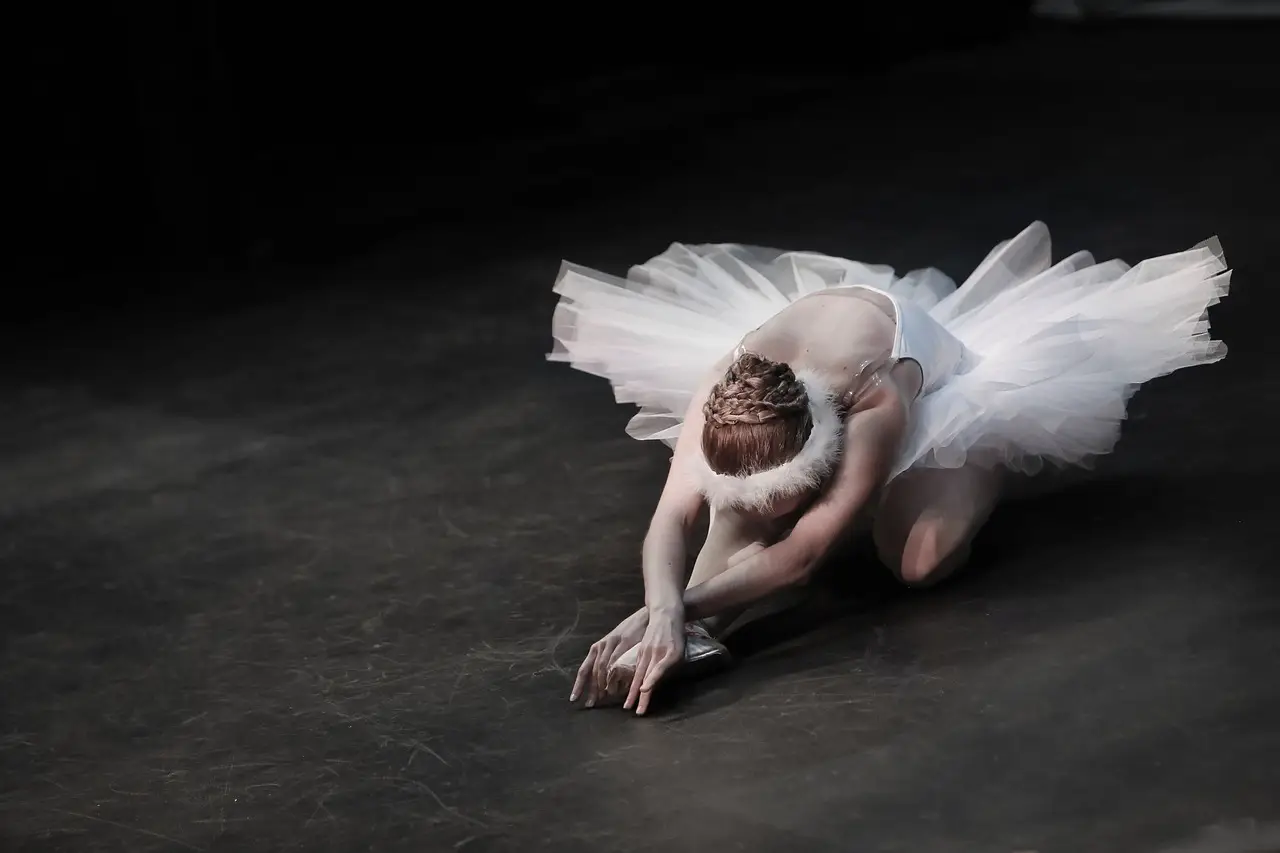
"Daily Diversions" has no music. The soundtrack is hollow plastic balls on wooden tables and paddles of wood, sponge and rubber. Narrated sections trace the sport's origins as a late-19th-century English offshoot of tennis and list onomatopoetic alternate names — pim-pam, clip-clap, whiff-waff. At the Museum of Modern Art in August, in a marathon curated by the performance space Pageant, Yu had paired table tennis with Tchaikovsky's "Dance of Cygnets" from "Swan Lake."
Who is in the cast?
The work has grown since a 10-minute version Yu choreographed in 2023 for a Manhattan Chinatown art gallery, which used three elders from the local table tennis community and a smaller-than-normal Shalzi table.
"A lot of performances are one and done," Yu said, "but I felt we needed to do it again and bring in more people."
Dancer Ariel Herrera, 66, played a little table tennis as a child in the Philippines. For him, the show marks a return to dance performance after roughly 30 years. A 1988 New York Times review called him "a young talent to be followed," but he "got sidetracked," he said, building an L.G.B.T.Q. human rights program at Amnesty International. He met Yu in a dance class last year.
"I love being surrounded by these younger dancers," he said. "It's helping me as I try to remember what's in my body."
An Kong, 22, moved to New York from Hong Kong three years ago for college and met Yu the first time he played Ping-Pong in the city. "For me, playing table tennis is just about myself," he said. "But Cherrie is always telling us that we have to feel each other. We're a team, and it's like we have to win the game together."
"Cherrie is a formalist at heart," Herrera said. "She's very rigorous."
In a chapbook on the piece, Yu writes that Ping-Pong feels like "the ultimate form of abstraction — an exchange of energy that starts and ends with nothing." Yet she is equally invested in the social life of sport and art. With "Daily Diversions," she writes, she wanted a world in which players and dancers could "move side by side and relate to each other" — a world, she says, that mirrors her own life in New York.
Original: abronsartscenter.org
More from Elena Vasquez
Show full bio
Senior reporter covering technology and product news in arts in the broadest sense at Arts & Voices.
1,274 articles