Claudia O'Doherty's 'Sarah's Channel' Predicted Our Doomscrolling Apocalypse
Claudia O'Doherty's 2019 web series 'Sarah's Channel' — a beauty vlogger filming through the apocalypse — now reads less like spoof, more like mirror. Streaming on YouTube.
Programme
- Claudia O'Doherty starred as beauty blogger Sarah in the ABC web series Sarah's Channel, released in 2019.
- The series runs five episodes of roughly five minutes each, plus a blooper reel — about 30 minutes total.
- Sarah's Channel is available to watch on YouTube.
- O'Doherty previously played influencer villain Emily in the surprise hit Maddie's Secret.
- The series is set in a post-apocalyptic cave system inhabited by mutant worshippers.
Claudia O'Doherty played a beauty blogger broadcasting from a post-apocalyptic cave in 2019, and the joke has since stopped being one. Sarah's Channel, the five-episode ABC web series now streaming on YouTube, has acquired the glow of prophecy.
O'Doherty, the Australian actor and comedian known for Bluey, Our Flag Means Death and Love, built her career on adorable. She's all big eyes and bangs, stealing scenes. But as viewers of the surprise hit Maddie's Secret learned, she's supremely satisfying as a villain. There she played Emily, a food influencer who weaponises calorific "dude food" and psychologically annihilates anyone threatening her umumi-infused reign.
Sarah is Emily's ancestor. The show isn't her first turn as a girl next door twisted into a villain by the punishing world around her and online.
What actually happens in Sarah's Channel?
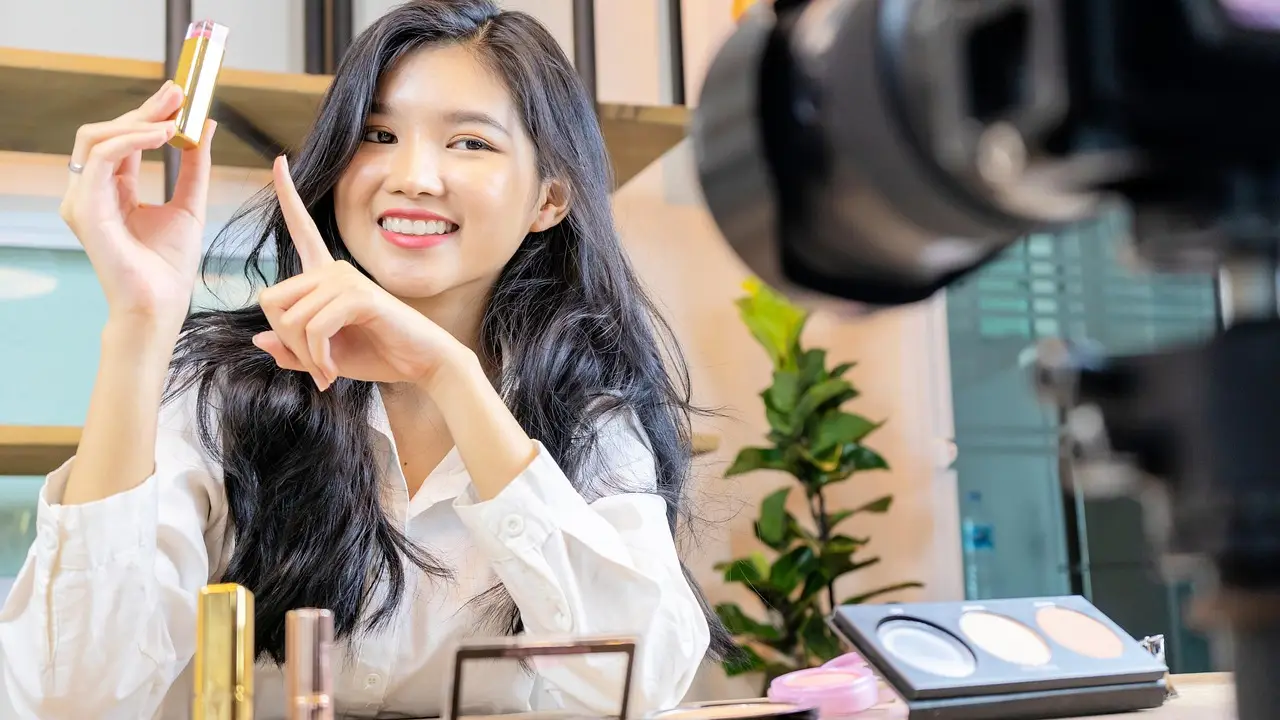
Each of the five episodes runs about five minutes; the whole thing, blooper reel included, barely passes 30. Sarah shows off her room, her favourite products, her wellness routine, even a potential boyfriend. It looks like a standard "get ready with me" video, the influencer format where creators apply makeup while chatting.
Then she describes the products. Her favourite toner is made from "melted sleet that I've boiled and strained through a piece of fabric". Her primer contains the "top layer of runoff from the water bore", tinted with clay. Her bronzer is coloured from "rust, mud and ash which I scraped off a wall". Everything is blended with an old piece of bread.
A gnarled, disembodied hand passes her an eyeliner from off-screen. By the end of episode one, Sarah promises a trip to the "surface" will yield exciting new products and vlogs.
The reveal: she's filming underground after an unspecified apocalypse, cared for by a trembling race of mutants who fear and worship her. Her lip stain's main ingredient is blood. A prized discard turns out to be a severed hand.
Who is the real monster here?
The show sells itself as a beauty spoof doubling as a survival thriller, but the real terror isn't what lurks above. The lurching creatures who increasingly cameo in her content are more terrorised than terrifying — they shelve their plan to save the world so they can make her smoothies, plan her workouts and submit to "goblin to glam" makeovers.
Neither Sarah nor the plot much cares what happened to Earth. Sarah doesn't appear to fear anything beyond running out of lip stain. She ignores the severity of her situation until the sky literally begins falling.
Why does it hit differently in 2026?
Rewatched seven years on, the series lands harder. The critic who first watched it months before the pandemic absorbed it as a genre mashup poking fun at smooth-brained social media content. Now, Sarah's insistence on spending dwindling resources on smoothies and a gratitude journal — instead of protecting the fragile remaining wisps of humanity — feels familiar.
The comparison writes itself: anyone who's felt a whisper of relief when a doomscroll is interrupted by an outfit-of-the-day video has met Sarah's logic. In 2019 she was a delusional villain. Now she's just another person online, taking selfies, going to the gym, disappearing into a hole of self-promotion.
It's still funny, but less of a joke. Ironically, Sarah has a flash of accountability in the final episode; the same can't be said for the rest of us. One comfort survives: the world might end, but content is eternal.
Source: theguardian.com
More from Daniel Okafor
Show full bio
News editor covering companies, deals and strategy in arts in the broadest sense at Arts & Voices.
1,510 articles