Programme
- The Cleveland Orchestra is about to decide between two music director candidates.
- Candidate Santtu-Matias Rouvali debuted last night with the La Scala Philharmonic in Milan.
- He conducted Sibelius's First Symphony; critic Francesco Maria Colombo called him 'a phenomenon'.
- The orchestra gave Rouvali a round of applause 'as rarely seen', per Colombo.
- Rouvali's background as a percussionist underpins his rhythmic control, Colombo writes.
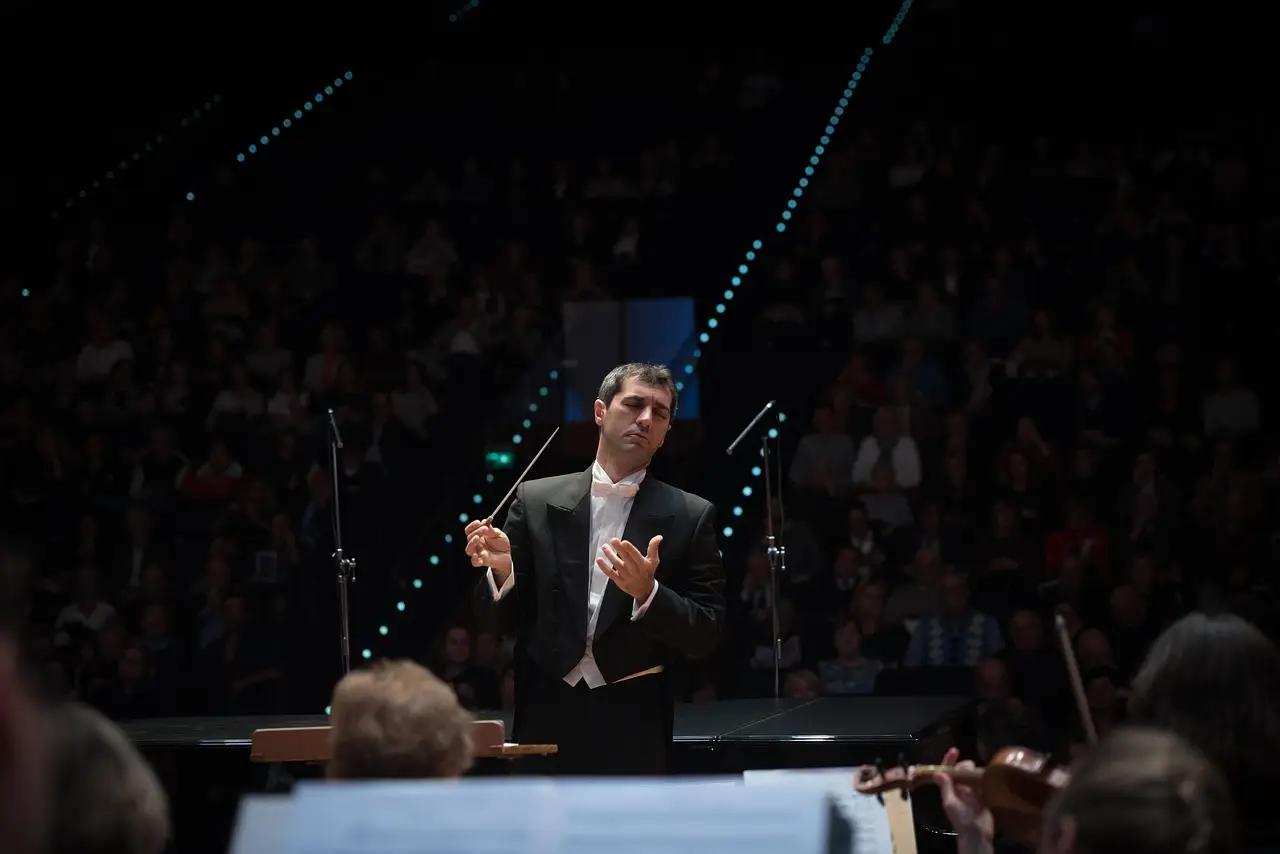
The Cleveland Orchestra is about to choose between two music director candidates, and one of them — the Finnish conductor Santtu-Matias Rouvali — debuted last night with the La Scala Philharmonic in Milan.
The report from Milan comes from Francesco Maria Colombo, and it is unusually warm. Colombo does not hedge. "Without going too far, Santtu-Matias Rouvali, who debuted tonight at La Scala Philharmonic, is a phenomenon," he writes.
What did Rouvali actually conduct?
The centerpiece was Sibelius's First Symphony, and Colombo credits Rouvali with a reading that avoided the most common trap in this repertoire. "It is easy for conductors to redo Tchaikovsky with this Symphony, making mistakes: almost everyone does it," Colombo writes. The danger, in his account, is imposing Tchaikovskian convention on a score that does not work that way.
Colombo's analysis of why matters here: "The beauty of Sibelius' writing lies in the slow and often indescribable confluence of small language cells, which compose the form not on the basis of conventions of the symphonic genre, but for a kind of natural aggregation."
His verdict on the Milan performance: "the orchestra was made to play it as if the Sibelius First Symphony were being performed every two weeks, and yet I (for example) in Milan have never heard it."
How did the hall and the players respond?
By Colombo's account, the audience gave Rouvali great applause after the Sibelius. More tellingly, the orchestra itself delivered a round of applause — "as rarely seen," in his words. An orchestra's own clapping is the reaction a search committee tends to weigh, because the musicians have the closest view of what a conductor actually does.
Colombo also traces the source of the precision on the podium: "His gesture is among the most precise (it comes from percussion and has a stunning rhythmic control), elegant and expressive." Rouvali trained as a percussionist before turning to conducting, and Colombo credits that background for the rhythmic control on display.
What does this change for Cleveland?
On the evidence available, nothing is decided. The source names no date for the announcement, no second candidate, and no terms. What it does establish is timing: the Cleveland Orchestra's decision is imminent, and one of the two contenders has just delivered a Milan debut that a local critic called phenomenal — while noting, honestly, that Milan had not heard the Sibelius First there in his memory, which makes the bar lower than the superlatives suggest.
Still, the La Scala showing gives Cleveland's decision a public data point: a rare orchestra ovation, an enthusiastic local critic, and a Sibelius performance praised for avoiding the standard mistakes. Whether the Ohio committee weights a Milanese ovation in its final calculus, the source does not say. The choice, we are told, is coming.
Source: Slipped Disc
More from Tom Whitfield
Show full bio
Market editor covering people, launches and day-to-day practice in arts in the broadest sense at Arts & Voices.
1,209 articles