Cocaine, Casserole and The Last Waltz: Scorsese and Robertson's Wild Mulholland Nights
Scorsese snuck off from New York, New York to film the Band's 1976 farewell with seven cinematographers — then moved in with Robbie Robertson behind blackout blinds, running triple features until dawn.
Programme
- Scorsese filmed the Band's Last Waltz at Winterland Ballroom on Thanksgiving 1976 while under contract for New York, New York.
- He brought seven cinematographers, including László Kovács and Vilmos Zsigmond, to shoot the six-hour-plus concert in 35mm.
- Robertson moved into Scorsese's Mulholland Drive house around February 1977 after both marriages collapsed.
- Mardik Martin wrote an unfilmed script about the period, titled Insomnia, dated April 15, 1985; it surfaced after his 2019 death.
- The account appears in 'Just a Shot Away: Martin Scorsese's Life in Film' by Mark Binelli, Metropolitan Books, copyright 2026.
Martin Scorsese filmed the Band's farewell concert at San Francisco's Winterland Ballroom on Thanksgiving 1976 while contractually bound to finish New York, New York — and then moved in with Robbie Robertson on Mulholland Drive, where, according to Robertson's memoir, "most of our lives were lived in darkness."
The account comes from an excerpt of "Just a Shot Away: Martin Scorsese's Life in Film" by Mark Binelli, published by Metropolitan Books, an imprint of Henry Holt and Co., and copyrighted 2026.
Jonathan Taplin, the producer who reconnected with the Band in the summer of 1976, pitched the idea ten days into the shoot of New York, New York. The Band planned an all-star farewell at Winterland on Thanksgiving, promoted by Bill Graham. Taplin and Robertson visited Scorsese at his MGM office. "He was living a very crazy existence," Taplin said. "First off, he was having an affair with Liza Minnelli. And yet his wife, Julia Cameron, was around on the set all the time. So he was constantly ducking out."
Steve Prince — described as "a kind of hangout guy, driver, bodyguard, and coke dealer" — had joined the entourage. "He was the guy who would stand outside of Marty's trailer on the set of New York, New York and bar the door," Taplin said.
How did the deal get made?
Robertson and Scorsese met over dinner at the Mandarin in Beverly Hills, each man bringing both his wife and his girlfriend: Julia Cameron and Liza Minnelli for Scorsese; Dominique Bourgeois, a Québécois journalist, and her friend, the actress Geneviève Bujold, for Robertson.
The two men were the same age, but Robertson had joined the Band at 16 and played with Dylan while Scorsese was still an anonymous film student. Robertson later said Scorsese "was the only person that knew enough about the fucking music and grew up on it just like me, and was basically just as much a punk as the rest of us."
Afterward they went to On the Rox, the after-hours Sunset Boulevard bar favored by John Lennon, Jack Nicholson and Harry Nilsson. Robertson floated the guest list: Dylan, Muddy Waters, Van Morrison, Joni Mitchell, Neil Young. Scorsese stopped resisting. United Artists would never approve moonlighting — but the production would pause for Thanksgiving anyway.
What did Scorsese do with the shoot?
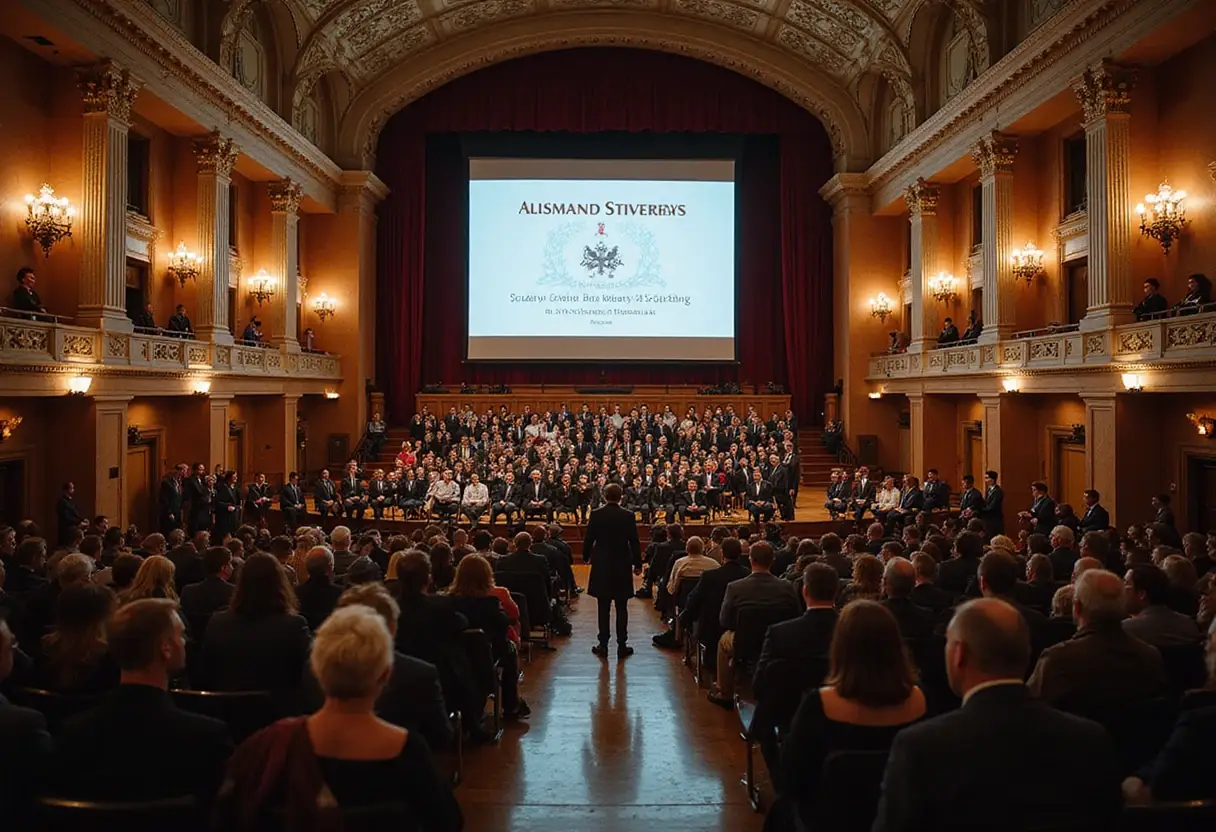
He declined to keep it low-key. Instead of the 16mm Robertson had suggested, Scorsese storyboarded the whole production against the set list, timed to specific lyrics, hired set designer Boris Leven to dress Winterland with props from the San Francisco Opera, and brought seven cinematographers — including László Kovács, Michael Chapman and Vilmos Zsigmond — to shoot 35mm, at Kovács' suggestion.
"Can the cameras even shoot that long?" Scorsese asked. "You won't know unless you try," Kovács said.
The concert ran over six hours. United Artists bought the film before completion based on the footage. But Robertson decided the show, in Levon Helm's words, "too lily-white," had missed two key influences on the Band: country and gospel. So the same May week Star Wars opened, Scorsese and the musicians regrouped on an MGM soundstage to record added material with the Staple Singers and Emmylou Harris, plus interviews at the Band's Malibu studio, Shangri-La.
Who moved in with whom?
At a production meeting on Mulholland Drive in February 1977, by Robertson's memoir dating, the two men discovered their marriages were collapsing in tandem. "You know, my wife threw me out, she left me, I have nowhere to go," Robertson said. Scorsese surprised him: "'You could stay here if you want!' He leaned in, speaking more quietly. 'Julia just moved out. She's gone. It's just Steve and me.'"
Robertson settled into the converted-garage screening room, beneath a poster of Fritz Lang's M. Scorsese sold The Last Waltz to United Artists and edited it there by day; Robertson worked on the soundtrack album and a new suite for the film.
The nights belonged to movies. Scorsese programmed double and triple features, called the studio to demand Robertson's ETA, and had Two Guys from Sicily pizza waiting. "Disgusting," Robertson said. Robertson called it their "Odd Couple routine." A kitchen sheet listed titles to screen. Robertson favored Bergman, Buñuel and Cocteau; Scorsese sometimes slogged through B-pictures for a single scene.
Steve Prince installed blackout blinds throughout the house, a task Robertson said he approached like "the Manhattan Project." Bujold told Women's Wear Daily in December 1977 that Scorsese ran "two or three films a night, one on top of another, whoosh" on a projector whose squeaking the neighbors could hear.
What does the unmade script reveal?
The fullest record of the period may be a script nobody has filmed. Mardik Martin, Scorsese's longtime collaborator, spent time at the Mulholland house and, with the initial cooperation of Scorsese, Robertson, Steve Prince and Isabella Rossellini, wrote a roman à clef dated April 15, 1985. Binelli writes that it depicts Scorsese descending into a kind of madness: overlapping affairs, heroic cocaine consumption, little sleep, literal messianic delusions, and a near-death.
Mardik's fidelity to reality helped kill the project. He filed his tapes and pages away; they surfaced only years after his death in 2019. The script had the perfect title: Insomnia.
Dawn, Scorsese said, "meant death." To Robertson it just meant he better get some sleep.
Source: rollingstone.com
More from Marcus Bennett
Show full bio
Staff writer covering people, launches and day-to-day practice in arts in the broadest sense at Arts & Voices.
1,481 articles