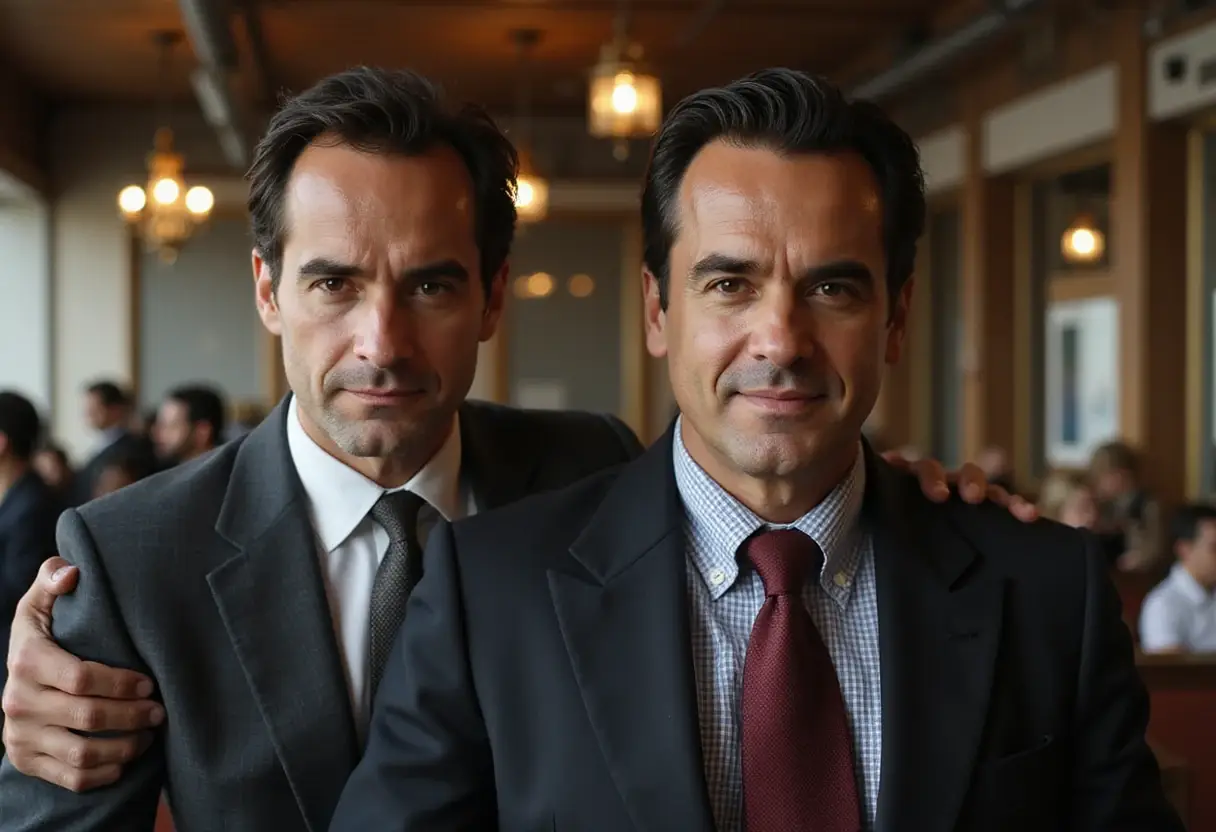
Coen Brothers Defend Movie Theaters While Accepting Lumière Award
Joel and Ethan Coen took streaming deals with Netflix and Apple TV+, yet told the Lumière Film Festival in Lyon that nothing replaces watching a film with a crowd.

Programme
- Joel and Ethan Coen received the lifetime achievement Lumière Award in Lyon on Friday, October festival date per source.
- "Barton Fink" won the Palme d'Or at Cannes in 1991; "No Country for Old Men" won four Oscars in 2008 despite leaving Cannes 16 years later empty-handed.
- The brothers made "The Ballad of Buster Scruggs" with Netflix and "The Tragedy of Macbeth" with Apple TV+.
- Producer Eric Fellner has made nine films with the Coens.
- Frances McDormand was cast in the Coens' 1984 debut "Blood Simple."
Joel and Ethan Coen accepted the Lumière Award for lifetime achievement in Lyon on Friday, hours after telling a festival masterclass that no screen — however convenient — can replace a crowded movie theater.
The Oscar-winning brothers spoke at the Lumière Film Festival in a wide-ranging conversation hosted by festival director Thierry Frémaux, who also heads the Cannes Film Festival. Their verdict on how audiences now watch films was blunt.
"The joy of sitting in a movie theater with a crowd of people, there's no substitute for that," Joel Coen said. "I don't think there's any filmmaker that enjoys the idea of working on ever diminishing platforms. 'Oh, I saw your movie on my iPhone.' That's very disheartening."
Streaming partners, theatrical convictions
The remarks carry weight because the Coens have themselves worked with the streaming giants. They made "The Ballad of Buster Scruggs" with Netflix, and Joel directed "The Tragedy of Macbeth" for Apple TV+.
Joel acknowledged that shifts in distribution have also served independent filmmakers. The rise of home video, he noted, helped launch the brothers' careers by carrying their early films to wider audiences and new markets. But he drew a firm line between access and experience. He also praised the Lumière festival for gathering large audiences to watch films on the big screen — something, he said, that has become increasingly difficult in the United States.
What does this change for cinema? Nothing on its own, but the stance of filmakers who have taken streaming money yet argue for theatrical viewing gives exhibitors their most credible voice in the debate.
Four decades, one desk
The filmmakers behind "Fargo," "The Big Lebowski" and "No Country for Old Men" described a partnership now in its fifth decade and a creative process they insist is unremarkable.
"We've always written together," Joel said. "Ethan once said the way we adapt a book is that I hold it open and he retypes it into a computer."
"That's why we prefer to adapt hardcover books, because of the spine," Ethan deadpanned.
Asked by Frémaux whether the brothers ever argued, Joel described a process of bouncing ideas off each other. "Burn After Reading," he recalled, began as a joke about a film they would never make — one opening with the typewritten words "CIA Headquarters, Langley, Virginia."
"And then we thought, well, why don't we make that?" he said.
Credit to the collective
The brothers repeatedly deflected praise toward their collaborators. Ethan acknowledged cinematographer Bruno Delbonnel, who sat in the audience and shot "Inside Llewyn Davis," "The Ballad of Buster Scruggs" and "The Tragedy of Macbeth."
"Us being up here, we're taking credit for what a lot of other people have done," Ethan said.
"Something emerges out of the collaboration with somebody else," Joel said, extending the principle to his own partnership with Ethan. "The secret to that kind of collaboration is knowing when the other person is right and you're not."
"I think we're pretty pleasant to work with," Ethan ventured, joking that their "very big egos" left them unthreatened by other people's ideas. Producer Eric Fellner, in attendance, confirmed the claim. "We've made nine films together, so I think the answer is yes," Fellner said. "But beyond easy, they are by far and away the most joyful people to make films with in the industry."
McDormand, Cannes and Billy Wilder
Frances McDormand, Joel's wife of more than 40 years, was also in Lyon. Joel recalled casting her for the brothers' 1984 debut, "Blood Simple," fresh out of drama school. Delighted with her audition, they asked her to return that day to read with another actor. She declined; she had promised to watch her boyfriend appear on a television soap opera.
The brothers also reflected on Cannes, where "Barton Fink" won the Palme d'Or in 1991. Frémaux recalled that "No Country for Old Men" left the festival empty-handed 16 years later, despite winning four Oscars, including best picture. Joel answered with a Billy Wilder joke about an elderly patient told, at 75, that he had "peed enough." Ethan turned the punchline on their host: "Joel and I agree that your graciously having us here was your way of telling us 'You've peed enough.'"
Frémaux, backed by cheers, assured the brothers the festival awaited their next film. Asked which screenwriting rules they most enjoyed breaking, Ethan insisted they were barely aware of any. Joel offered one piece of advice: "If you're a screenwriter, you should break as many rules as you can."
Ethan closed the masterclass where he had begun it: "We are not worthy." The evening's award ceremony, and the theatrical audiences the brothers champion, followed.
Source: Variety Film
More from Marcus Bennett
Show full bio
Staff writer covering people, launches and day-to-day practice in arts in the broadest sense at Arts & Voices.
585 articles