Cop31 Collapses, but a 5,000-Screening Art Film Moves Westminster
Cop31 failed over fossil fuel wording, but a petition of nearly 139,000 and a film screened 5,000 times are shifting climate debate from summit halls to church halls.

Programme
- Cop31 in Antalya ran two days over and ended without agreement after Saudi Arabia and Russia blocked any mention of fossil fuels.
- More than 130 countries, including the EU and UK, refused to sign the fossil-free deal text.
- UK Parliament debated a nearly 139,000-signature NEB petition on 16 November; over 70 MPs attended.
- The People's Emergency Briefing has screened more than 5,000 times since April last year.
- 193 countries plus the EU, covering about 85% of global emissions, remain in the Paris Agreement.
Cop31 ended without a final agreement in Antalya, Turkey, after talks overran by two days and collapsed over a single word: fossil fuel. A bloc of oil-producing states, led by Saudi Arabia and including Russia, refused any mention of fossil fuels in the closing text. More than 130 countries, including the EU and the UK, declined to sign a deal that omitted the main cause of climate change — two years after Cop28 in 2023 agreed to "transition away" from coal, oil and gas.
"We will not accept a Cop that greenwashes fossil fuel", declared Darragh O'Brien, Ireland's minister for climate, environment and energy and the EU's representative. A climate pact with no mention of fossil fuel, he said, was "unconscionable" and "failed to meet the moment."
What did the art at Cop31 say about the summit?
The official CopArt programme, curated by art advisor and contemporary art curator Nagihan Ozel, did not exactly radiate urgency. Its centrepiece: 18 mirror panels by veteran artist Heinz Mack, installed in the Green Zone. Mack has been making similar work since the 1960s. Nearby stood Anselm Kiefer's giant seascape with metal scales, Für Rabbi Löw (2010-12), a forest of recycled cardboard by Eva Jospin, and two monumental bronzes by Belgian artist Koen Vanmechelen — an ape balanced on a mirrored sphere atop a human thumb, and a child struggling to hold an iguana. Vanmechelen describes them as "exploring our relationship with the natural world."
Jarring by any measure: five animal sculptures made from discarded electronic and industrial defence waste, part of the "Upcycling a Future Vision" collection launched by Aselsan, Turkey's largest defence contractor, to show its "commitment to a circular economy" — also its 50th anniversary. The company, majority owned by the Turkish Armed Forces Foundation, produces electronic warfare technology and naval and air defence missile systems. It received a Green Transformation certificate for a five-year roadmap that includes recycling 87% of total waste. A defence firm certifying its greenness, at a climate summit. The irony writes itself.
Where did progress actually happen?
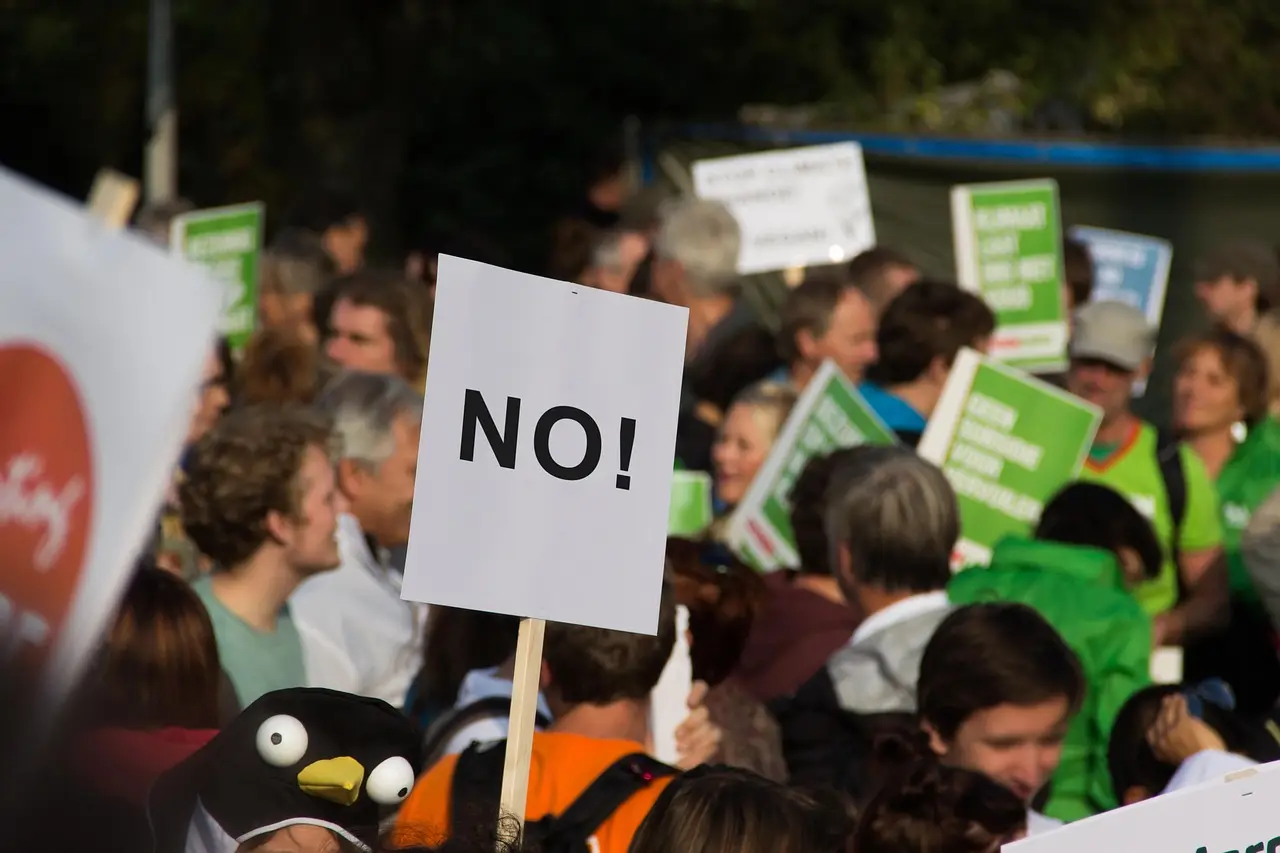
Away from the negotiating rooms, the ground shifted. On 16 November, while Cop31 stumbled on, the UK Parliament debated a petition of nearly 139,000 signatures calling for a nationwide emergency briefing on the climate and nature crisis. The petition came from the National Emergency Briefing (NEB), a campaign fronted by naturalist and BBC presenter Chris Packham, demanding a "prime-time Covid-style briefing across all channels" introduced by the Prime Minister. More than seventy MPs attended the three-hour debate, which ended broadly in favour of the idea without formal agreement. Climate transition minister Katie White MP said she and colleagues would meet NEB leaders and "explore opportunities to work together" within the government's climate and nature security taskforce. Her verdict on the film behind it: "a film has become a movement."
That film is The People's Emergency Briefing, a 50-minute documentary presented by Packham, screened two days later at a packed Tate Modern. Nine experts laid out threats to food security, nature, the economy, national security and public health. Since its release in April last year it has screened more than 5,000 times across the UK — church halls, offices, hospitals — with more scheduled. Anyone can register to screen it free.
Can the art world tip the balance?
The Tate event was organised by the Gallery Climate Coalition (GCC), the art world environmental charity, with a panel chaired by Frances Morris, former Tate Modern director and now the GCC's chair, alongside artist Heather Ackroyd and Peter Lefort, green futures network manager at the University of Exeter. Around two hundred artists, academics and art workers attended, including Cornelia Parker and Marcus Coates. Many committed to lobbying MPs and staging screenings in their galleries. Lefort called for "positive tipping points" — moments when cumulative changes in behaviour, policy and expectations reinforce each other and accelerate change.
There is form for this. In 2019, at the instigation of artist duo Ackroyd and Dan Harvey, bell-ringing artworkers and a woman in a coat of living grass on a white horse occupied Tate Modern's Turbine Hall via Culture Declares Emergency. Frances Morris, then director, responded by declaring a climate and ecological emergency at Tate.
The wider numbers hold a fragile consolation. The US sent no official delegation and the Trump administration is overtly hostile to climate action, yet 193 countries plus the EU remain committed to the Paris Agreement, covering around 85% of global emissions. Cop31 still produced partial agreements on faster electrification, methane cuts, forest and ocean protection, and support for climate-impacted communities. UK emissions have fallen more than 50% since 1990 — roughly 24% once aviation, shipping and trade are counted, per the Office for National Statistics. Solar now supplies 28% of Pakistan's power; France, Denmark, Spain and Portugal plan full fossil fuel phase-outs by 2050.
As one attendee at the Tate gathering put it: "we may be small compared to other sectors but we can be LOUD!" With the Cop consensus model visibly seizing up, the next push looks grassroots — and the art world, after its brush-down in Antalya, is auditioning for a leading part.
Source: theartnewspaper.com
More from Daniel Okafor
Show full bio
News editor covering companies, deals and strategy in arts in the broadest sense at Arts & Voices.
1,745 articles