Maya Hawke Calls Sunrise on the Reaping a Manual for Rebellion
Hunger Games: Sunrise on the Reaping has topped the box office while Paris protesters sing The Hanging Tree. Maya Hawke calls the prequel a map of how small rebellions stack up.
Programme
- Hunger Games: Sunrise on the Reaping, adapted from Suzanne Collins' 2025 prequel novel, has smashed the box office.
- Maya Hawke, who plays young Wiress from District 3, described revolution as 'tons of tiny little rebellions stacking on top of each other'.
- In 2014, Thailand's military banned the Hunger Games three-finger salute, symbol of opposition to the 22 May coup.
- A Hunger Games-themed Paris fashion week event drew a critical tweet liked 138,000 times.
- Police teargassed the Orchestre du Nouveau Monde in Paris during a protest featuring The Hanging Tree.
"Every attempt at a revolution [has] to get to a moment, like Katniss," said Maya Hawke, who plays the young Wiress from District 3 in Hunger Games: Sunrise on the Reaping. "It's not one moment. It's tons of tiny little rebellions stacking on top of each other until the dominoes just crash and you can change the world." Her words have outlived the press cycle, and the film has smashed the box office since its release following Suzanne Collins' second prequel novel in 2025.
The story follows Haymitch Abernathy — Katniss and Peeta's alcoholic mentor in the original trilogy — thrust into the games from the poorest district of Panem, and striving to literally break the machine. Plutarch Heavensbee, a broadcaster character, shows how the Capitol manipulates footage for television. Critics have largely read the film as franchise mechanics. Rafqa Touma, writing in the Guardian, argues the opposite: this is a gen Z call to action that reviewers have missed.
Does the fiction map onto the news?
Collins has been explicit about the origin. "These young people were competing for a million dollars … then I was seeing footage from the Iraq war, and these two things began to fuse together in a very unsettling way," she said in 2009. The books answer her moment: an officer behind a computer sends a weapon down on surveilled children like a video game; masked police snatch a teenager from home; a bombed tent hospital burns with civilians inside.
Michael Rosen wrote in 2012 that the books give "plenty of clues of how power was enacted in this totalitarian future society – enough clues for me to see parallels in past and present political regimes." His verdict: "I felt I was being warned and I quite like being warned."
The Guardian's children's books editor, Julia Eccleshare, has noted the generational split in reception. Young readers see the books "as full of potential and excitement"; adults "see it as a depressing reflection of the terrible state the world is in." Touma sides with the young readers, arguing gen Z grew up on literature about underdogs who alter an unjust status quo, and that accessible storytelling gave her generation the imagination to demand better.
Where has the three-finger salute turned up?
The political bleed-through is documented, not speculative:
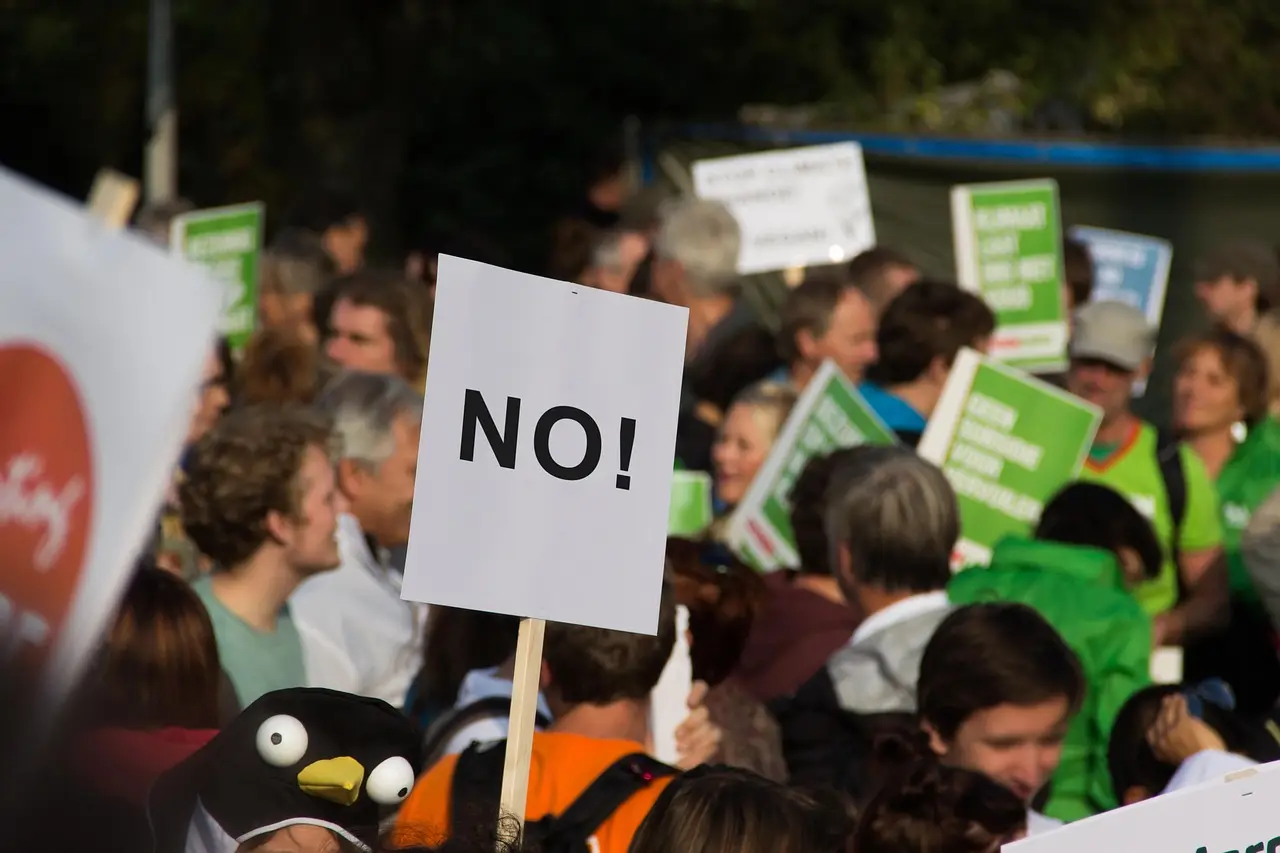
- One month ago, at the Place de la République in Paris, police teargassed the Orchestre du Nouveau Monde mid-protest. Part of their repertoire was The Hanging Tree, the resistance song from the Hunger Games universe. "Tear grenades were fired during rehearsal. The orchestra kept on playing."
- In 2014, Thailand's military banned the series' three-finger salute, which had become the unofficial symbol of opposition to the 22 May coup.
- This year, gen Z protests have swept from Serbia to Bangladesh, India to France — a phenomenon widely called a political awakening.
What's the uncomfortable part?
Touma concedes the critiques of the adaptation — rushed deaths, spoon-fed themes, omissions, "the wigs" — and raises harder questions. For some fans, she writes, footage of a government bombing a civilian hospital is easier to believe in fiction than in the news; anger for a fictional starving child comes easier than anger at active famines. She also flags that stories by white authors about white people cannot be popular culture's only entry point into systems of oppression.
Then there's the commerce. A lavish Hunger Games-themed event at Paris fashion week, staged while student protests raged across France, drew a viral verdict: "Oh so there is a hunger games exhibition in Paris with rich ppl wearing pretty dresses while young people are currently on the streets fighting for their rights how ironic" — a tweet liked 138,000 times. A story critiquing hyper consumerism, merchandised by it.
Touma remains heartened, because irony of that scale is, in her reading, the genre working as designed.
Source: theguardian.com
More from Daniel Okafor
Show full bio
News editor covering companies, deals and strategy in arts in the broadest sense at Arts & Voices.
1,741 articles