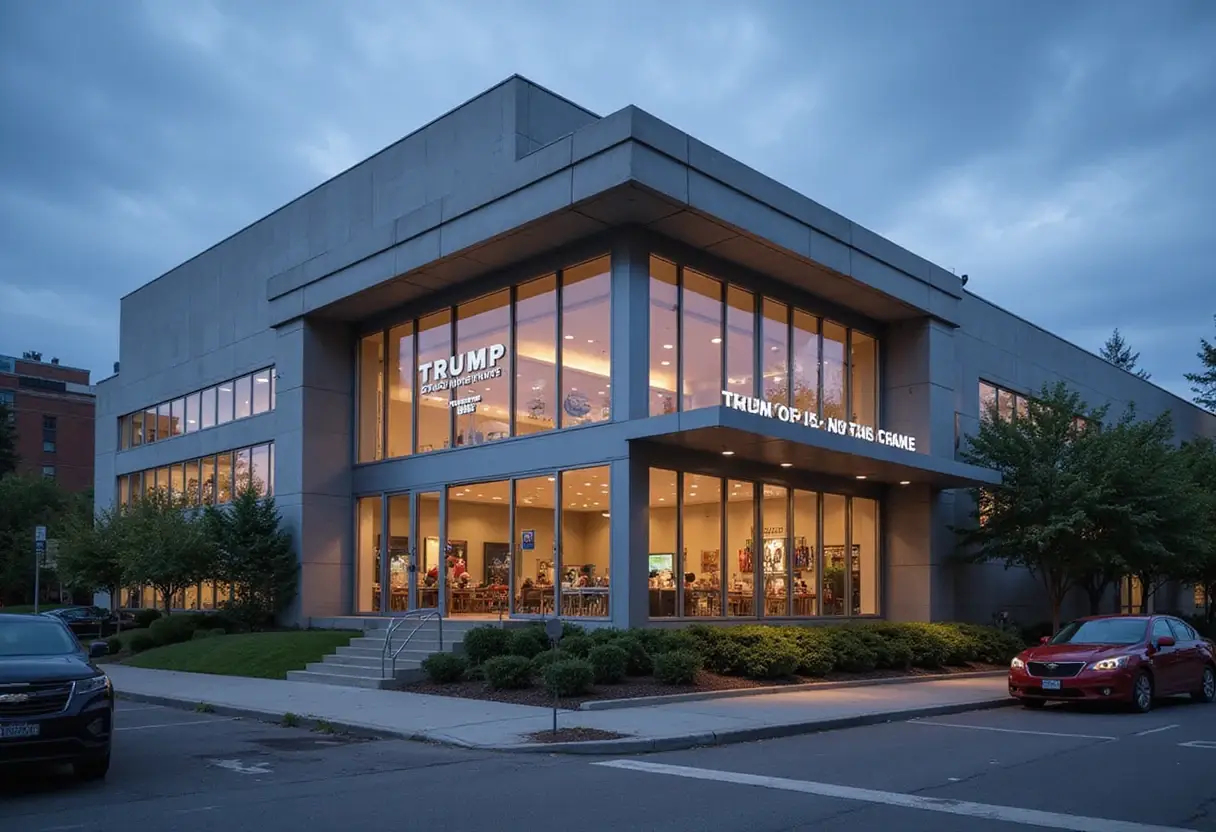
Court filing challenges Kennedy Center’s $257 million closure plan
Internal documents cited by Rep. Joyce Beatty’s lawyers portray the Kennedy Center’s two-year shutdown as concealing financial collapse under Trump, not as a $257 million renovation necessity.

Programme
- The proposed Kennedy Center closure lasts two years and is tied to a $257 million renovation.
- Trump took control of Kennedy Center operations in early 2025 as board chairman.
- Beatty’s Friday-night filing cites internal records and a Sept. 10 text message from former CFO Donna Arduin Kauranen.
- Arduin Kauranen reported Fischer telling Lutnick: “We need to get shut and need a unanimous vote.”
- Beatty, an ex officio board member, is suing to block the closure.
By Grace Kim
President Donald Trump has said the John F. Kennedy Center for the Performing Arts must close for two years for a $257 million renovation. He has called the building “dilapidated” and said the work will restore it, pave the way to larger audiences and a brighter financial future.
What does the court filing allege?
In a Friday-night court filing, lawyers for Democratic Representative Joyce Beatty of Ohio sought to block the closure. Beatty is an ex officio member of the Kennedy Center board (a board seat held by virtue of another office).
Her lawyers cited internal documents that they say show officials overstated the cost of keeping the center open during renovations. They also argue that officials concealed the closure’s real cause: the center’s financial collapse under Trump’s management. The lawyers characterize the decision as part of a sham process.
What does the internal message show?
One document is a Sept. 10 text message from Donna Arduin Kauranen, the center’s former chief financial officer, to another Kennedy Center manager. According to Arduin Kauranen, Jennifer Fischer, the board’s vice chair, had told Howard Lutnick: “We need to get shut and need a unanimous vote.”
She had been briefed on a conversation between two Trump allies. Howard Lutnick, the commerce secretary, is helping manage the center. The filing uses the exchange to support its contention that the shutdown required political coordination. The quoted passage does not identify who first proposed closure or explain how the board reached its final vote.
How did political loyalty enter the case?
Since Trump took control of operations in early 2025 as board chairman, artists and patrons have left the center, according to Beatty’s lawyers. That shift forms part of the case’s account of institutional decline.
The filing describes a board packed with loyalists, who later voted to affix Trump’s name to the building’s exterior. Beatty argues that board members voted to close the center under financial pressure and out of fealty to the president. Together, these claims frame the closure as both a financial response and an exercise in political loyalty.
Beatty’s filing records allegations rather than a judicial finding. Its significance lies in the conflict between two accounts: Trump’s case for building renewal and future finances, and Beatty’s account of concealed failure and fealty.
What does this change for artists and patrons?
Beatty’s lawsuit seeks to stop a closure that Trump says will last two years. It does not announce a ruling, an alternative schedule or an agreement to keep the center operating during construction.
For artists and patrons, the practical change is legal contest rather than operational certainty. The shutdown remains exposed to challenge, while the two accounts of its cause remain unresolved in the filing.
The next contest is whether a court accepts Beatty’s account of concealed financial collapse and political fealty, or allows Trump’s two-year closure to proceed. That is the concrete stake for artists and patrons who have already left, according to Beatty’s lawyers.
Source: NYT Arts
More from Grace Kim
Show full bio
Correspondent covering technology and product news in arts in the broadest sense at Arts & Voices.
983 articles