David Ellison's $111 Billion Skydance Merger Closes Oct. 6
A federal judge cleared the Paramount-Warner Bros. settlement on Sept. 30. The $111 billion merger closes Oct. 6 under the Skydance name, with Ynon Kreiz as co-CEO.
Programme
- The $111 billion Paramount-Warner Bros. Discovery merger closes Oct. 6, creating the largest M&A deal in Hollywood history under the name Skydance Corp.
- Judge Araceli Martínez-Olguin approved the antitrust settlement with 12 state attorneys general on Sept. 30; the new company carries an estimated $80 billion-plus in net debt.
- Former Mattel CEO Ynon Kreiz joins as co-CEO with a $31.5 million signing bonus; layoffs of roughly 4,500 L.A. film and TV jobs are projected over three years.
David Ellison has won. On Oct. 6, his $111 billion mega-merger uniting Paramount and Warner Bros. Discovery will close, creating the largest media combination in Hollywood history — and the 42-year-old scion of Oracle billionaire Larry Ellison has named the new giant Skydance Corp., after the production company he founded.
U.S. District Court Judge Araceli Martínez-Olguin approved the antitrust settlement between Paramount and 12 Democratic state attorneys general on Sept. 30 at just after 12:30 p.m. Pacific time, clearing the final legal barrier. The proposed consent decree, she wrote, reflects a "compromise that may leave some dissatisfaction for both sides and the public but a compromise that saves the risk, time and expense of litigating through trial."
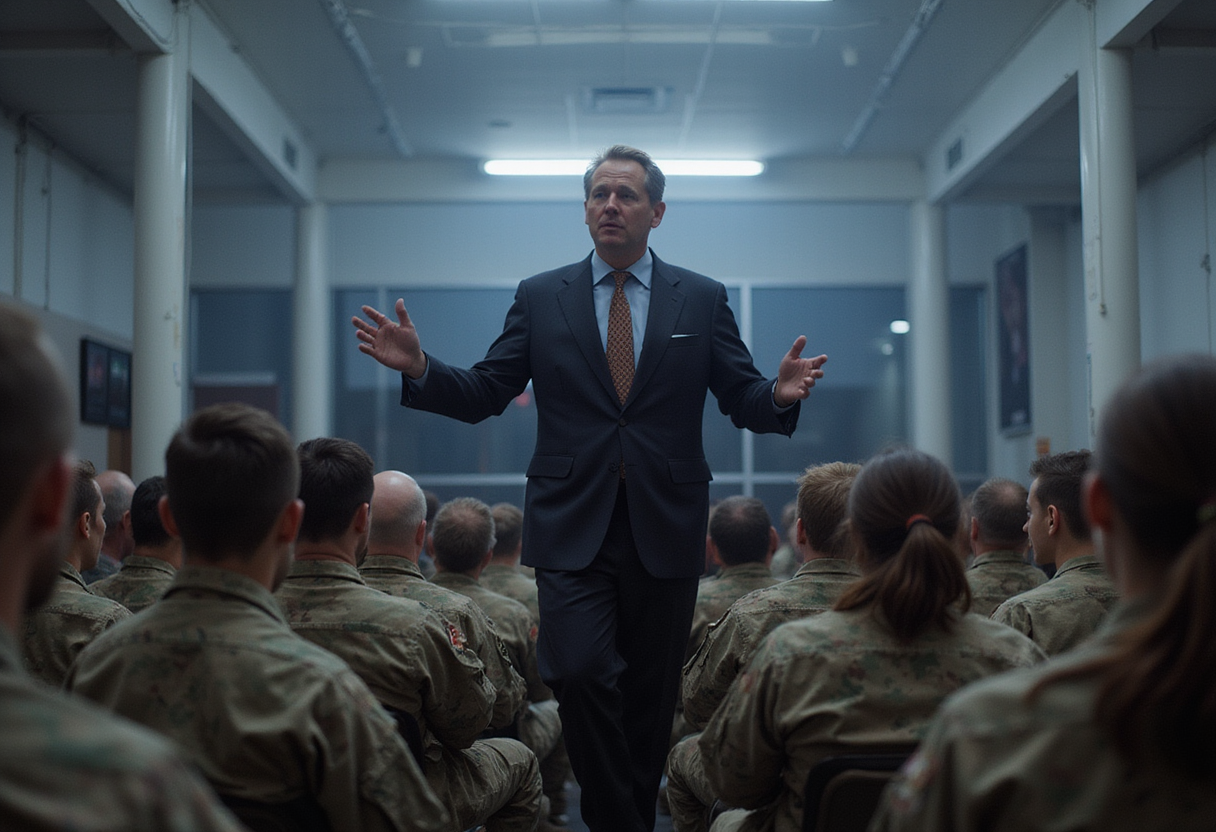
At the close, Paramount's common stock will move from Nasdaq to the New York Stock Exchange, trading under a new symbol: "SKYD," replacing "PSKY." Ellison is expected to lead a town hall with employees on Tuesday, and he and newly recruited co-CEO Ynon Kreiz will host a virtual press briefing with the executive leadership at 7 p.m. ET on Oct. 6.
Kreiz, hired from Mattel, will receive $31.5 million in fully vested stock as a signing bonus. During eight years at Mattel he cut costs through layoffs, swung the company to profitability and oversaw its first theatrical release, the 2023 blockbuster "Barbie" — though revenue stayed flat for four years. Ellison praised him in a companywide email as a "proven builder and operator."
"Together we are well positioned to integrate, operationalize and run the businesses as we build one of the most ambitious next-generation media companies in the industry's history," Ellison wrote.
An eighteen-month pursuit
Ellison spent more than a year pursuing Warner Bros. and HBO. The WBD board rejected his takeover offers eight times. CEO David Zaslav ghosted him in December 2025 after Netflix clinched a deal for WB's streaming and studios business — but Ellison outbid Netflix in February with a $31-per-share offer, nearly 2.5 times the stock price before the M&A frenzy began.
Regulators in 68 jurisdictions cleared the merger with minimal pushback; Trump's Justice Department rubber-stamped the pact in June without conditions. The last obstacle was the antitrust suit led by California Attorney General Rob Bonta, which a federal judge had allowed to proceed toward a March 2027 trial. In August, Ellison let it be known through press leaks that he would pull Paramount out of California if the state AGs did not relent. They settled on Sept. 21, with concessions so lenient they surprised industry watchers and employees at both companies.
"Ellison stared down the attorneys general and won. He stared down the unions and won," says Prof. Erik Gordon of the University of Michigan's Ross School of Business. "You can't see David Ellison as daddy's boy anymore. He's a formidable force in the industry."
The money and the math
The financing is staggering. Larry Ellison is bankrolling the deal with $46.7 billion in equity. Paramount secured roughly $24 billion from the sovereign wealth funds of Saudi Arabia, Qatar and the UAE — funds that will own 38.5% of the combined entity but hold no board seats. The company will be controlled by the Ellison family and RedBird Capital Partners founder Gerry Cardinale.
The new company's net debt is estimated at more than $80 billion, translating into annual interest payments topping $6 billion. Under the settlement, Paramount-WB must also invest at least $300 million more annually in U.S. film production above what the studios combined spent in 2025.
"They need to move as quickly as possible to get the leverage down," says Jawad Hussain, managing director at S&P Global. "The biggest hurdle and the biggest thing we're going to be keeping our eye on is integration and execution." Two years ago, Hussain notes, Skydance Media was a small company producing a few films a year. "Now it's managing one of the largest media companies. It's not necessarily an easy task."
Paramount executives have told Wall Street the merger can deliver $6 billion in cost savings. Prof. Tammy Madsen of Santa Clara University's Leavey School of Business cautions against cutting too deep. "Creativity matters," she says. "If you are too aggressive in eliminating redundancies in the creative parts of the company, you could kill the value."
Layoffs are expected before the end of the year, with a Los Angeles County report from August estimating some 4,500 film and TV jobs lost over three years in L.A. alone. On Oct. 1, employees on the Paramount lot and in Burbank were greeted with buffet breakfasts — French toast, egg burritos, chia pudding — an unusual spread that insiders read as a peace offering before the cuts.
Leadership churn and streaming questions
Michael De Luca and Pamela Abdy, co-heads of Warner Bros. Motion Picture Group, will leave post-merger, sources told Variety. Paramount film chiefs Dana Goldberg and Josh Greenstein are in line to run both studios. Zaslav departs with at least $550 million in stock and cash, including $34.2 million in cash severance, under his golden parachute.
Cindy Holland announced on Sept. 29 she was stepping down from running Paramount+; HBO's Casey Bloys is poised to take over the combined streaming business. HBO Max and Paramount+ will together count more than 200 million subscribers, but Prof. Sridhar Tayur of Carnegie Mellon warns against immediate integration: "You don't want to immediately combine the two streaming services because people won't pay the sum of the two subscription prices."
Ellison has held preliminary talks with CNN chief Mark Thompson about staying on, a relief to CNN staff wary that Bari Weiss, whom Ellison installed at CBS News, might extend her reach to the cable network. Under the settlement, a "news editorial independence board" with state representatives will set "guiding editorial and journalism principles" for CNN and CBS News — a condition critics dismiss as toothless.
Opposition persists. "This merger will stifle creativity, weaken free speech and cost people their jobs — it is a bad deal for this country and should never have been approved," actor Mark Ruffalo wrote on social media Sept. 30. The #BlockTheMerger coalition amassed more than 5,700 signatures from actors, filmmakers and industry workers.
In Europe, industry leaders watched closely. "Having spoken with David, I believe his vision is first and foremost an artistic, creative ambition," says Pierre-Antoine Capton, chairman of France's Mediawan. "He wants to build a more powerful group in order to invest in creation. It's not only about making cuts. I believe in his commitment to cinema and to theatrical releases."
Ellison announced the Skydance name on X on Oct. 2, with a sizzle reel that led off with a clip from "Titanic" — an inauspicious choice, given how that voyage ended. "Paramount and Warner Bros. shaped over a century of culture," he wrote. "We aren't rewriting history — we're equipping these iconic studios with a more powerful engine. Together, we are Skydance: a creative-first home for bold, quality storytelling."
The bet now rests on whether passion and imagination can service more than $80 billion in debt while keeping the creative talent intact.
Original: prnewswire.com
More from Daniel Okafor
Show full bio
News editor covering consumer brands and retail at Arts & Voices.
271 articles