Duane Eddy sold 12 million records and gave the guitar a lead voice
Duane Eddy, born April 26, 1938 and died April 30, 2024, made the electric guitar a lead voice through low strings, a water-tank echo and a Gretsch 6120.
Programme
- Duane Eddy was born April 26, 1938 in Corning, New York, and died April 30, 2024, four days after his 86th birthday.
- “Rebel-‘Rouser” (1958) reached No. 6 and sold more than one million copies; “Because They're Young” (1960) peaked at No. 4.
- The Country Music Hall of Fame and Museum credits Eddy with an estimated 12 million records sold by 1963.
- “Have ‘Twangy’ Guitar Will Travel” reached No. 5 and remained on the American album chart for 82 weeks.
- His 1986 “Peter Gunn” collaboration with Art of Noise won a Grammy for Best Rock Instrumental Performance.
Duane Eddy died on April 30, 2024, four days after his 86th birthday. The guitarist born in Corning, New York had sold an estimated 12 million records by 1963, according to the Country Music Hall of Fame and Museum. His legacy rests on a technical choice that reshaped popular music: he made the electric guitar the lead voice.
Eddy was born April 26, 1938, and began playing guitar at five after hearing cowboy Gene Autry sing. His family moved to Arizona, where country music, rockabilly and the emerging rock-and-roll scene formed his ear. He played local venues and radio programs with Jimmy Delbridge, as Jimmy and Duane.
How did a guitarist take the singer's place?
“Rebel-‘Rouser,” released in 1958, reached No. 6 and sold more than one million copies. The track opens with a guitar melody that needs no singer. Rock and roll in 1958 belonged to Elvis Presley, Little Richard, Chuck Berry and Buddy Holly, performers defined by their vocals. Eddy showed that an instrument could carry a recording alone.
The arrangement reinforced the guitar. Saxophonist Gil Bernal added an energetic overdub, members of the Rivingtons supplied handclaps and vocal shouts, and Eddy's backing players, associated with the Rebels, provided piano and saxophone figures around him.
One guitar melody, no vocalist, a million copies sold.
What produced the twang?
Eddy played melodies on the lower, thicker strings instead of climbing toward high notes and speed. The deeper register gave each note weight and presence.
Producer Lee Hazlewood supplied the space. He later wrote Nancy Sinatra's “These Boots Are Made for Walkin'” and “Some Velvet Morning.” Their Phoenix studio lacked a conventional echo chamber, so the musicians and engineers tested a large metal water tank. A speaker sent the recorded sound into the tank, and a microphone captured the reflections bouncing inside it.
In interviews, Eddy recalled that they tried tanks until they found the echo they wanted. The improvisation gave his low notes a cinematic distance that studios with costlier gear were not delivering, and Simon Nott's account of those Phoenix sessions describes the same speaker-tank-microphone chain.
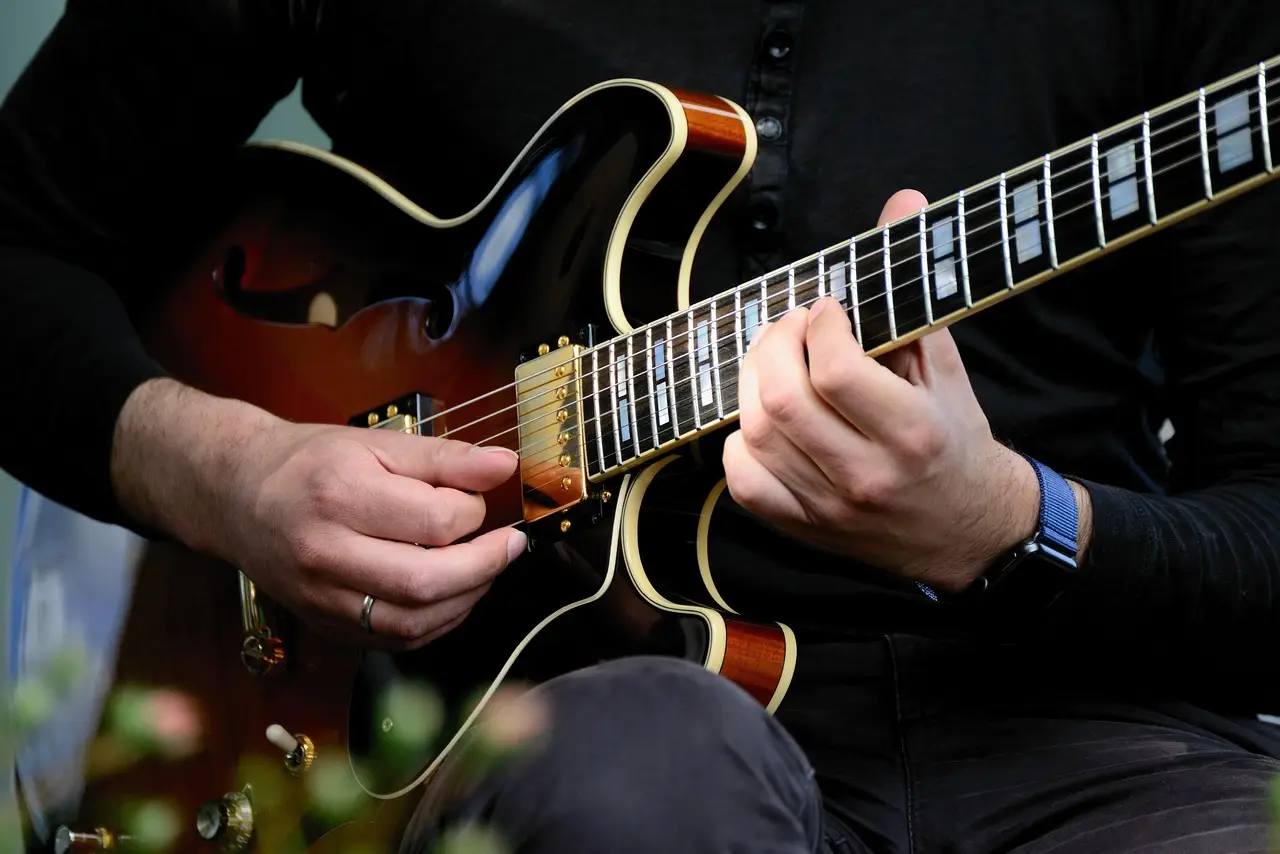
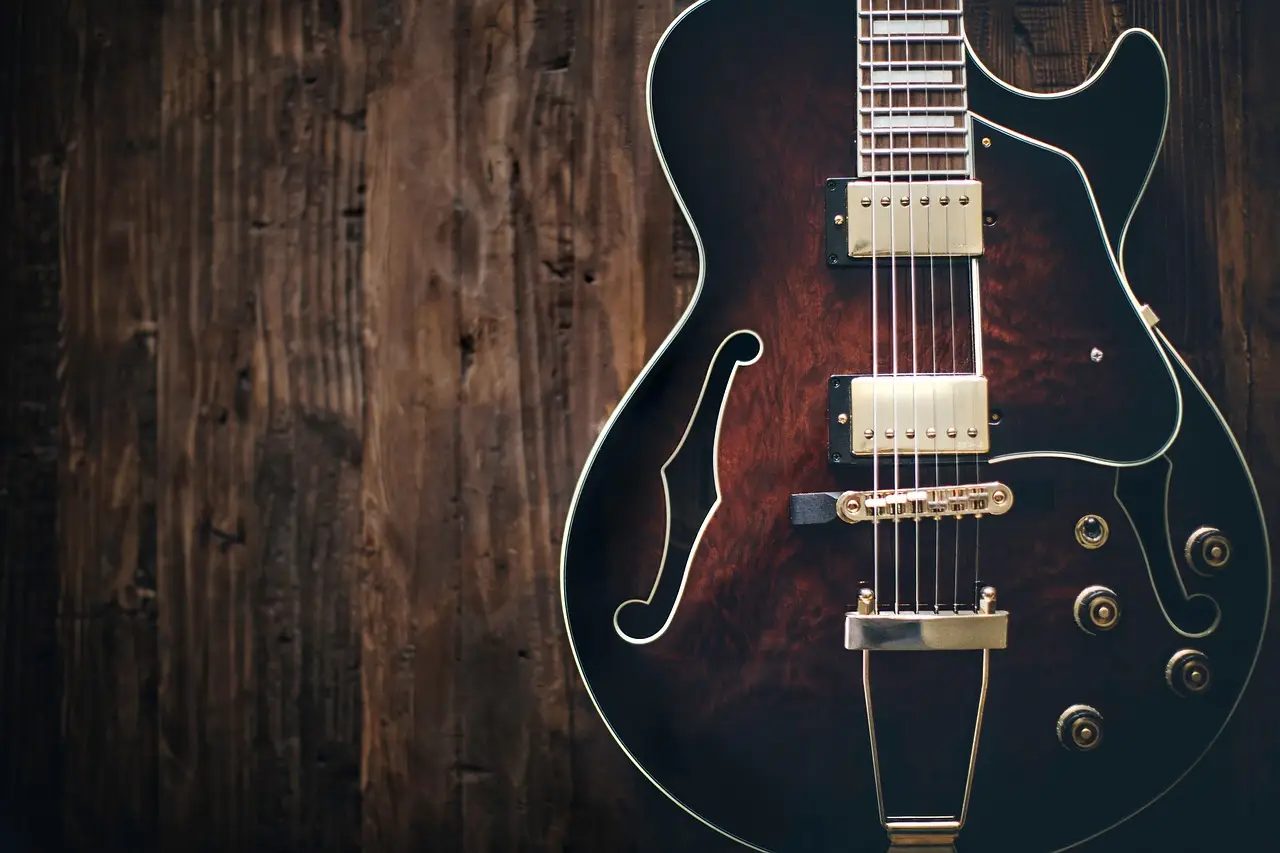
The guitar finished the identity. Eddy's 1957 Gretsch 6120, a hollow-body instrument associated with Chet Atkins, carried an orange finish, so a photograph of him read instantly.
Low strings, a water tank and an orange Gretsch 6120 produced the twang.
How large did the catalogue get?
- “Moovin' n' Groovin'” (1958) reached No. 72 on the Billboard Hot 100.
- “Have ‘Twangy’ Guitar Will Travel” peaked at No. 5 and stayed on the album chart for 82 weeks.
- “Because They're Young” (1960), the theme for the film of the same name, became his biggest American hit at No. 4.
- “Peter Gunn,” his reading of Henry Mancini's theme for the detective series, moved his guitar into television.
- “Cannonball,” “Ramrod,” “Forty Miles of Bad Road” and “Shazam!” turned titles into shorthand for speed, distance and danger.
The catalogue moved from the singles chart into albums, film themes and television scoring, and the sales totals put Eddy among the first instrumentalists to command an international audience.
One album held the American No. 5 slot for 82 weeks, and two singles reached No. 6 and No. 4.
Who carried the twang forward?
Instrumental guitar bands turned his sales into a business model. The Ventures built a career on records such as “Walk, Don't Run,” and in Britain Hank Marvin's Shadows turned “Apache” into a defining instrumental rock sound. George Harrison admired Eddy's playing; Dave Davies, John Fogerty, Bruce Springsteen and Creedence Clearwater Revival drew on the same low-string approach. Springsteen's case is the clearest. The guitar parts in “Born to Run” carry an open road and the urge to escape, and after Eddy's death in 2024 Springsteen paid tribute by playing the “Born to Run” riff on a Gretsch.
Eddy did more than inspire imitation; he proved a guitarist could be the central personality of a hit, which is the commercial door the Ventures, the Shadows and their successors walked through.
He opened a market that later instrumental groups filled and outgrew.
Did the sound survive new production?
In 1986 Eddy joined British electronic group Art of Noise on a new version of “Peter Gunn.” The record became an international hit and won a Grammy for Best Rock Instrumental Performance. Electronic drums and sampling rewrote the production around the guitar, but the guitar stayed immediately recognizable.
His 1987 self-titled album assembled a guest list of guitar and songwriting royalty:
- Paul McCartney and George Harrison
- Jeff Lynne and Ry Cooder
- John Fogerty
- James Burton and Steve Cropper
In 2011 he released “Road Trip,” produced by Richard Hawley, and returned to Britain for a Glastonbury Festival appearance. In 2024 he joined Mark Knopfler's charity recording of “Going Home (Theme from Local Hero),” performed in support of Teenage Cancer Trust and Teen Cancer America.
His guitar held its identity through orchestral, electronic and charity sessions.
What did he change beyond the record?
- 1961: Guild introduced Duane Eddy signature guitars, an early case of a named instrument.
- Later: Gretsch followed with its own Duane Eddy signature instruments.
- He entered the Rock and Roll Hall of Fame and the Musicians Hall of Fame, and won a Grammy.
- His recordings appeared in films, including “Forrest Gump.”
A playing style became a product line, with signature instruments sold under his name.
What does the guitar still owe Eddy?
Eddy's case was that a single low note, played with conviction and a little echo, could carry a record without a lyric. “Rebel-‘Rouser” opens with confidence and gathers speed as the arrangement fills out, and more than 65 years after its release it still plays like a soundtrack to a film nobody has made yet. His influence now sits in the instrument's vocabulary: surf rock, country-rock, film scores and indie textures all draw on the reverberating guitar he made standard. Guitarists building a new sound now have a precedent that needs no words and no singer, only a melody strong enough to carry a record on its own — a standard the instrument's next generation of players is still testing.
Source: thatericalper.com
More from Elena Vasquez
Show full bio
Senior reporter covering technology and product news in arts in the broadest sense at Arts & Voices.
1,606 articles