Elizabeth Holmes Lets the Cameras In — Again
Elizabeth Holmes let Fielder and Oppenheim film her before prison. The documentary asks whether what we see is her — or a strategy.
Programme
- Elizabeth Holmes was filmed at home in the weeks before her prison sentence for defrauding Theranos investors.
- The film You Can See Everything is directed by Nathan Fielder and Lance Oppenheim.
- Holmes and Billy Evans were working on 'Theranos 2.0' during filming.
- Holmes's on-camera reply to Fielder: 'I'm always being real'.
- Holmes follows Lance Armstrong, Imelda Marcos and Anthony Weiner as disgraced subjects of access documentaries.
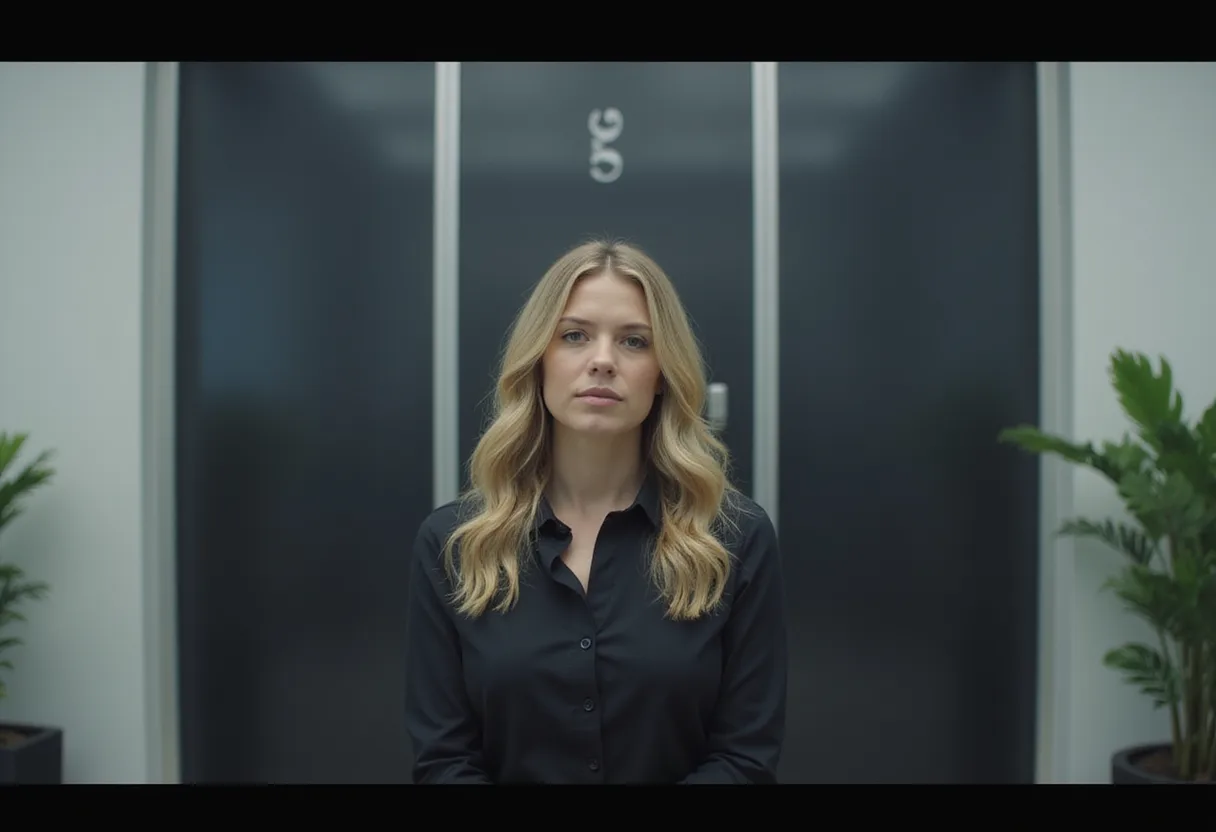
Convicted fraudster Elizabeth Holmes invited documentary makers Nathan Fielder and Lance Oppenheim into her home in the weeks before she began a prison sentence for defrauding Theranos investors. The result is You Can See Everything, a film framed by the couple as an act of what the source calls "radical transparency".
The access is unusually intimate. Holmes appears alongside her partner, Billy Evans, and their two young children. Evans states the case for participation plainly: "The best way for people to see who she is," he says, "is to give as much access as possible into our daily lives". That is his claim. The film itself does not fully endorse it.
What does the film actually show?
Three things, according to the source:
- Holmes, Evans and their two children filmed at home before the prison sentence begins.
- The couple working on "Theranos 2.0" during the shoot.
- A tense on-camera exchange in which Fielder, speaking for the audience, asks Holmes whether she is "being real" with him. Her reply: "I'm always being real".
That exchange carries the film's central tension. The documentary, the source notes, questions whether Holmes presents her authentic self or a manufactured persona. Evans's promise of total access and the simultaneous development of a Theranos successor sit uneasily together. Full access can be a marketing strategy as easily as a confession. He says the film shows who she is; the film keeps asking whether that is true.
Holmes is not the first disgraced public figure to try this route. She joins Lance Armstrong, Imelda Marcos and Anthony Weiner in allowing film-makers to document her life after scandal. The source poses the blunt question about this lineage: do they ever come out well? No answer is offered. The record of such films, the piece implies, argues for skepticism.
Why does this matter for documentary film-making?
The source identifies authenticity as the core problem of the genre. You Can See Everything is described as being as much about the ambiguous relationship between film-maker and subject as about Holmes herself. Each side, the source notes, wants different outcomes from the final film. There is, in the source's words, "often a power struggle over narrative control". A subject who grants access is also a subject who has chosen to be filmed, at a moment of her choosing, for reasons of her own.
That is the reader's practical question here: what does this change for how we watch such films? It changes the burden of proof. When a subject opens her door days before heading to jail, the film's real subject becomes the calculation behind the invitation. The source asks directly why Holmes would "invite the scrutiny of a film crew" at that moment. The film never fully resolves it, and neither does she.
Holmes's answer — "I'm always being real" — is quoted verbatim in the source, and its flat certainty is the point. A claim of constant authenticity from a person convicted of fraud is exactly the kind of statement a documentary exists to test. Fielder's question is the audience's question; her reply is the film's unresolved center.
What happens next is already visible in the pattern: as long as post-scandal subjects believe cameras can rehab an image, film-makers will keep getting invited in, and audiences will keep having to decide who is controlling the story.
Original: metrograph.com
More from Tom Whitfield
Show full bio
Market editor covering people, launches and day-to-day practice in arts in the broadest sense at Arts & Voices.
704 articles