Eric Amling's "Cruise Control": A Poem That Crashes Beautifully
Eric Amling publishes "Cruise Control," a new poem from his collection Wet Manual (Blush) — crash imagery, night vision and sadness you cannot moisturize.
Programme
- Eric Amling's poem "Cruise Control" is published as a new release from his collection Wet Manual.
- The collection Wet Manual by Eric Amling is available now from the press Blush.
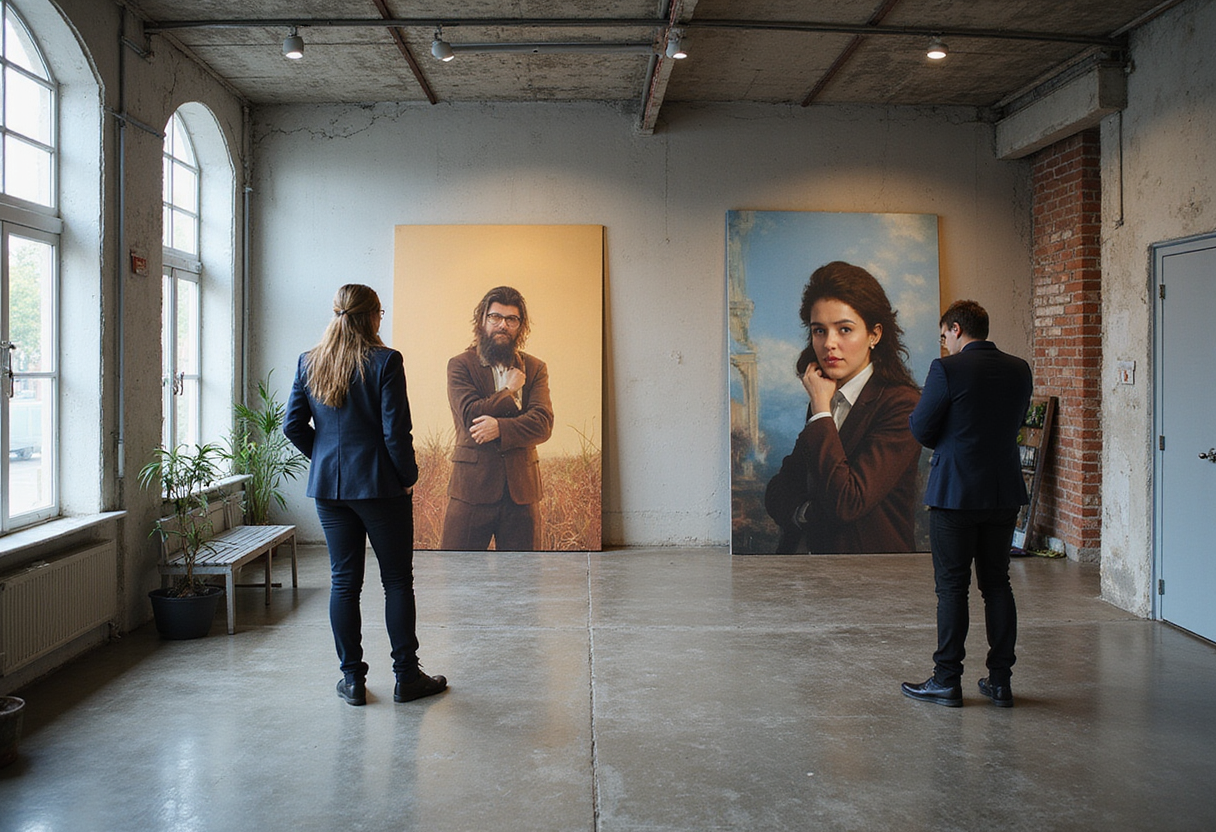
- The poem appears alongside an image titled "night vision."
- The poem's imagery centers on demolition derbies, war footage and night-vision optics.
- The final stanza names its arsenal: "Hands on hard bodies. Flashes of cold chrome. Checkered flags. Fuzzy dice."
Eric Amling has published a new poem, "Cruise Control," drawn from his collection Wet Manual, available now from the press Blush. The poem arrives with an image titled "night vision" and a voice that reads like a demolition derby narrated by a pathologist.
It opens on epiphanies and goes downhill, deliberately. "There are epiphanies. Posts of stern nonfictions," Amling writes, before cataloguing "strong love affairs with feedback" and "rooms ticking with taxidermy." That's the first stanza's work: it sets a mood of curated catastrophe, a world where even affection comes mediated by static.
What does the poem actually do?
"Cruise Control" builds its architecture from collision imagery. The speaker invokes "that kinetic afterglow of firebombed galleries," "demolition derbies," and "acne-colored smoke from the manifolds." Then comes the poem's sharpest line: "Drivers asked to remain engulfed until it's safe to exit."
It's a safety announcement rewritten as existential instruction. The line does what Amling does best — it takes bureaucratic language and lets it curdle into metaphor. You laugh. Then you check your own seatbelt.
The second stanza diagnoses rather than describes. "It was all crash and burn. Very gestapo. Very doomsday guru," the speaker reports, adding that life is "a wispy thing at times amplified by good hair days." The aesthetic, we're told, is "mostly fueled by serotonin stabilizers" and "inherited genetic makeups. A twisted ladder of DNA." Between chin and nose: "a tombstone of tongue." The body here is a wreck site, and the poem its incident report.
Where does the imagery go next?
The third stanza zooms out. We get "a satellite view of countries that look like prize fighter ears," "guano on historic rubble," and "the freezer burn palate of the salt flats." Then the register hardens: "war footage of lime-green blood splatter through night vision goggles. Black silhouette black silhouette black silhouette in viral loops."
That repetition isn't decoration. It mimics the loop itself — the way mediated violence replays until it becomes texture. The poem's night-vision frame, matching its accompanying image, turns spectatorship into optics (lens-based seeing that renders humans as heat signatures and silhouettes).
The final stanza turns intimate. "As if you can take a sadness and moisturize it," Amling writes, and later: "Feel an estrangement like a ventriloquist's hand in the dressing room after an intense set." The comparison lands precisely — the hand that animates a persona, still lodged inside you after the performance ends.
"These are the weapons we use," the speaker admits. "Hands on hard bodies. Flashes of cold chrome. Checkered flags. Fuzzy dice." The poem closes on dashboard kitsch, the trinkets of American motion. Crash and souvenir, in one breath.
Why it matters
Cruise Control reads as a field guide to feeling through damage — botulism of the id, tombstones of tongue, sadness you cannot moisturize. Readers can find the full poem and the collection Wet Manual at Blush, where Amling's particular talent for gorgeous rot is on full display. The checkered flag, one suspects, was always the point.
Original: blush-lit.com
More from Daniel Okafor
Show full bio
News editor covering companies, deals and strategy in arts in the broadest sense at Arts & Voices.
528 articles