Farah Ashraf takes Pink Rabbit from Edinburgh to Soho
Farah Ashraf’s solo play Pink Rabbit moves from Edinburgh to Soho, pairing Amna, her mother and the OnlyFans persona PersianBaby in a sharp study of desire and duty.
Programme
- One performer carries the roles of Amna, Ammi and the subscribers meeting PersianBaby.
- Farah Ashraf began work on Pink Rabbit during her final year at the Oxford School of Drama.
- The play ran at the Edinburgh fringe this summer and has a forthcoming Soho theatre run.
- Ashraf’s credits include Netflix’s The Witcher, Riz Ahmed’s Bait and the lead role in Santi & Naz.
- Urdu, Punjabi and English feature in the play.
Farah Ashraf said her solo play Pink Rabbit has a forthcoming Soho theatre run after its Edinburgh summer engagement. In Ashraf’s staging, she plays Amna, her mother Ammi and the subscribers who visit Amna’s OnlyFans persona, PersianBaby.
What happens when Amna’s mother opens the door?
Ashraf described Amna as “the modest and dutiful Muslim daughter of her parents’ dreams.” Online, Amna becomes PersianBaby, an exoticised version of herself with a fake accent, designed to draw paying men. Her mother, Ammi (Urdu for mother), unexpectedly arrives at the bedroom door during a scandalous online encounter. Ashraf plays both women. The setup works less like a conventional family drama than a webcam feed with a family dispute. That collision is the play.
“I loved this idea of push and pull, and two different worlds,” Ashraf said. She described the work as provocative and darkly funny, while also examining how cultural expectations shape the perception of private desire.
Ashraf began work during her final year at the Oxford School of Drama, after training with the National Youth Theatre. She explained: “At the time, I was really struggling and had an inner frustration with how I thought I was going to be perceived when I entered the industry and the roles that I might be limited to playing.”
Ashraf’s post-graduation credits include Netflix’s The Witcher, Riz Ahmed’s series Bait and the lead role in the coming-of-age play Santi & Naz.
Her first concept centred on a young woman who appeared comfortable with herself but seemed to be missing something. The breakthrough came when Ashraf imagined that woman in a bedroom during a scandalous online encounter, then brought her mother unexpectedly through the door.
The play is not autobiographical, Ashraf said, although its personal charge remains difficult to contain. “A lot of Amna’s soul is very much a mirror of me and my life,” she said. She also said the production has grown as she has grown.
What is the play trying to complicate?
According to Ashraf, Pink Rabbit challenges the limited representations of South Asian and Muslim women that have dominated cultural narratives. Instead of offering one uncomplicated identity, she allows Amna to remain contradictory, vulnerable and largely unpredictable. Ashraf also wanted to reach viewers who had not encountered that perspective before.
During the Edinburgh fringe this summer, Ashraf said she knew she would face a predominantly white audience. “There’s some people sitting in there, and this might be their first experience of hearing this kind of perspective from a brown woman,” she said.
She also recalled her concern about how older South Asian audience members might respond, particularly during Amna’s explicit interactions with customers and scenes featuring a prominent bright pink sex toy. “But overall, they were so open to the experience and the story,” she said.
By playing Amna and Ammi, Ashraf sharpens the conflict between generations without declaring either woman entirely right or wrong. Neither receives a clean verdict.
How does one performer carry the competing identities?
Ashraf said the play, directed by Alessandro Babalola, draws on her longstanding relationship with poetry and her experience of growing up between London and Pakistan. Urdu and Punjabi appear alongside English, giving the production a layered linguistic texture. The language adds further complexity to Amna’s divided identity.
Gradually introducing prose gave Ashraf new ways to trace Amna’s emotional journey. She said this approach preserved the rhythm and lyricism of poetry while allowing other moments more room to breathe. “There’s something beautiful about theatre and how it allows for that,” she said.
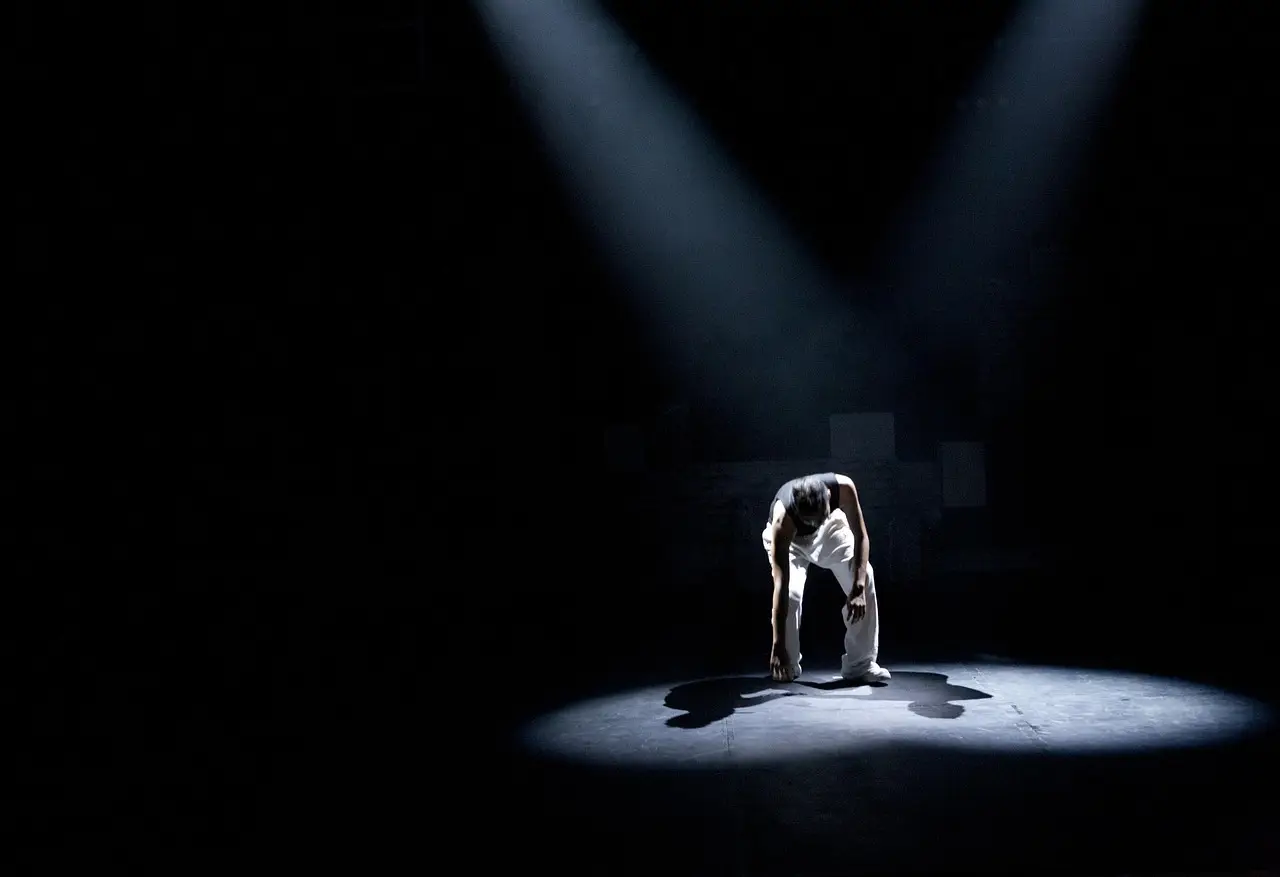
During the Edinburgh run, Ashraf performed in a small, tightly packed space. She said its proximity created real intensity as she moved between Amna, Ammi and PersianBaby’s subscribers. Her physicality brought both the online encounter and the bedroom story alive without props, complex lighting or rigorous sound design.
What will change before Soho?
For the forthcoming Soho run, Ashraf said she and her team want to experiment with lighting, silence and “how to take everything up a notch, and be even braver with our choices. I always love to grow as an artist and challenge myself. The story is not changing, but we wanted to know where in that story we could add layers, or even take away layers.”
Ashraf wants audiences to laugh, cry, question and perhaps recognise something of themselves in the characters. Her summary is blunt: “Brown women are not monoliths,” she said.
She hopes viewers with complicated relationships to family or wider communities will feel seen and heard, while others may leave with a new understanding of experiences beyond their own. “I want them to feel very much alive,” Ashraf said. “More than anything, I’d really love people to feel inspired to tell their own stories.”
Source: theguardian.com
More from Daniel Okafor
Show full bio
News editor covering companies, deals and strategy in arts in the broadest sense at Arts & Voices.
1,593 articles
Also on view
Sindhu Vee's Swanky review: identity gags shine, parenting routines drag
A Persian Noodle Soup Cooked Onstage Anchors 'My English Persian Kitchen' in DC
Ever Since I Knew Myself review: a daughter interrogates her past
Golshifteh Farahani Attacks Hollywood's 'Bullshit' Portrayal of the Middle East at Tallinn