Fifteen Years, Ten Species: Photographing Australia's Fairywrens in Every Plumage
Howard Loosemore spent 15 years photographing all 10 Australian fairywren species in every plumage stage; the results appear in his new book Fairywrens of Australia.
Programme
- Howard Loosemore spent 15 years photographing all 10 Australian fairywren species for Fairywrens of Australia.
- He captured the male blue-breasted fairywren in nuptial plumage on his 15th trip to Dryandra Woodland.
- Extra-pair paternity reaches 95% of superb fairywren broods but as low as 5% in purple-crowned fairywrens.
- Nine of 10 species moult into dull eclipse plumage; the lovely fairywren male keeps full colour year-round.
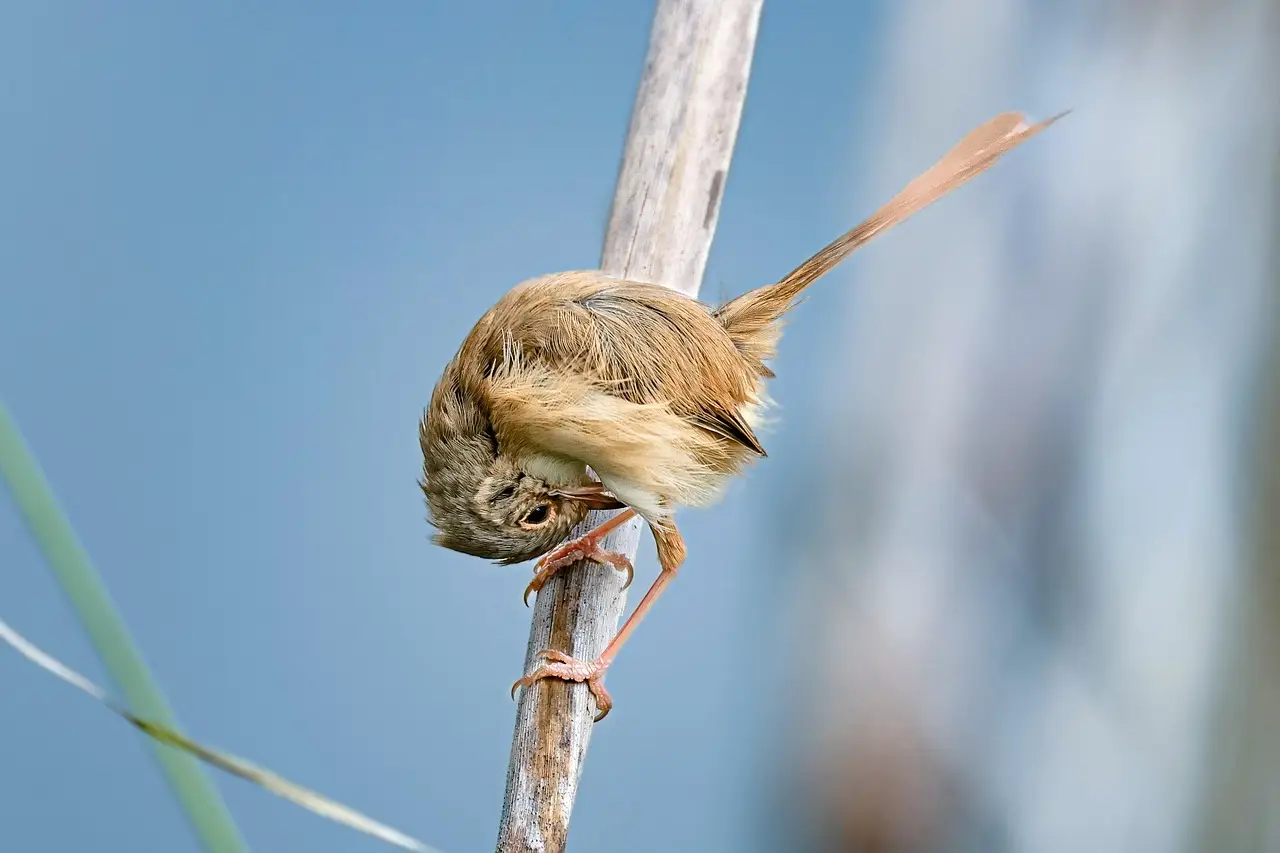
Photographer Howard Loosemore spent 15 years documenting every Australian fairywren species and plumage stage, work now published in a new book, Fairywrens of Australia, built with a few talented photographer friends.
The project demanded more than patience. To capture purple-crowned fairywrens near Fitzroy Crossing in late 2022, Loosemore dug a small waterhole in a dry creek bed and replenished it from a jerrycan. Then he waited.
"I then waited for hours beneath camouflage, lying on a bodyboard to protect myself from the scorching rocks and wearing an ice vest kept frozen in my car freezer," he said. Pre-wet season temperatures near the Kimberley site exceeded 40C.
What does a 15-year photographic project involve?
Loosemore set himself a hard brief: the book had to show each species at each stage of plumage development. That requirement stretched the work past a decade, because different plumages appear at different times of year.
The blue-breasted fairywren tested him hardest. He made many trips into the Western Australian wheatbelt. On his 15th visit to Dryandra Woodland, he finally captured the male in full nuptial plumage.
Why do male fairywrens change colour?
In nine of the 10 Australian species, sexually mature males swap dazzling nuptial plumage for a dull brown-grey eclipse plumage after breeding. The eclipse makes them far less conspicuous to predators.
The red-backed fairywren goes furthest. The male loses all breeding colour, including his tail feathers, shifting from red and black to brown, and even changes his bill from black to reddish or pale pink. In full eclipse he is hard to tell from females of his own species.
The lovely fairywren, endemic to Cape York peninsula, breaks the pattern. Its mature males keep brilliant nuptial colour all year.
How do the birds see each other?
Fairywrens feed mainly on insects and small invertebrates, gleaned from foliage, bark and the ground. They take small amounts of seeds and fruit when insects run scarce.
Their perception outdoes ours. Red-winged fairywrens and some relatives possess ultraviolet-sensitive vision and can see UV reflections invisible to humans. The red-winged male's blue plumage may appear even more brilliant to a female than it does to us.
The blue itself is structural. The cobalt plumage of the mainland male white-winged fairywren comes not from pigment but from microscopic feather structures that scatter light, with a melanin layer beneath intensifying the colour.
What about their social lives?
Fairywrens form long-term social partnerships and defend territories together, yet both sexes may also mate outside the pair. In superb fairywrens, extra-pair paternity has been recorded in up to 95% of broods.
Purple-crowned fairywrens are unusually faithful: extra-pair paternity rates as low as 5%.
Fairywrens are also cooperative breeders. Young birds may stay with their parents after maturity and act as helpers, feeding nestlings and fledglings and defending territory. Some helpers eventually replace a breeding bird when a vacancy arises.
Nest construction falls exclusively to the female in all species. In some, males gather or deliver material but never weave or build.
One species, dramatically different subspecies
Fairywren subspecies usually look alike. Female purple-backed fairywrens across Australia are grey, brown, tan and cream. But two subspecies, Malurus assimilis rogersi and Malurus assimilis dulcis, look entirely different — an unusually dramatic gap within a single species.
The white-winged fairywren holds the widest range of all.
Loosemore's three rules for bird photography
- Shoot the bird at eye height.
- Place yourself between the sun and the bird to avoid shadows.
- Shift your position to compose cleaner, less cluttered backgrounds.
What does this change for wildlife publishing? Loosemore's book sets a benchmark for completeness: every species, every plumage, documented in the field rather than compiled from archives.
Source: theguardian.com
More from Marcus Bennett
Show full bio
Staff writer covering people, launches and day-to-day practice in arts in the broadest sense at Arts & Voices.
1,114 articles