Filipino Singer Carmelle Wins First Eurovision Asia in Bangkok
Filipino singer Carmelle, 19, won the first Eurovision Asia Song Contest in Bangkok with "Sobra-Sobra," a song she called "a tribute to all Filipino women."
Programme
- Carmelle, 19, won the first Eurovision Asia Song Contest on Saturday in Bangkok with "Sobra-Sobra."
- She beat 10 other acts, chosen by national juries and worldwide viewer votes.
- Mang x Daou of Thailand placed second; Vietnam's Tóc Tiên placed third.
- Guest performer Dara of Bulgaria sang "Bangaranga," her winning entry from the 70th Eurovision in Vienna.
- Five European countries boycotted this year's European contest over Israel's participation.
Carmelle, a 19-year-old Filipino singer, won the first-ever Eurovision Asia Song Contest on Saturday in Bangkok, beating 10 other acts with her dance-pop track "Sobra-Sobra."
The winner was chosen through votes from national juries in participating countries combined with viewer votes from around the world, the contest's established format. After her victory, Carmelle said the song celebrated female empowerment and called it "a tribute to all Filipino women."
"I made history, since this was the first time," she told The Associated Press. "It's such a big responsibility for me, because this one is a global stage, so thank you everybody who voted for me."
One win, one sentence, one first. That is the arithmetic of a debut.
Who else placed?
Thai duo Mang x Daou finished second with an energetic performance of the romantic pop song "Aroma." Vietnam's Tóc Tiên took third with a lively, stylish rendition of "Em Tiên."
- Fourth: Malaysia's Aina Abdul, with the powerful ballad "Bluest Sky"
- Fifth: Thinla of Laos, with "Bae," a playful dance track that had the audience dancing whenever it was replayed during the show
Bhutan, South Korea, Mongolia, Nepal, Cambodia and Bangladesh also competed in the grand final.
What did the show look like?
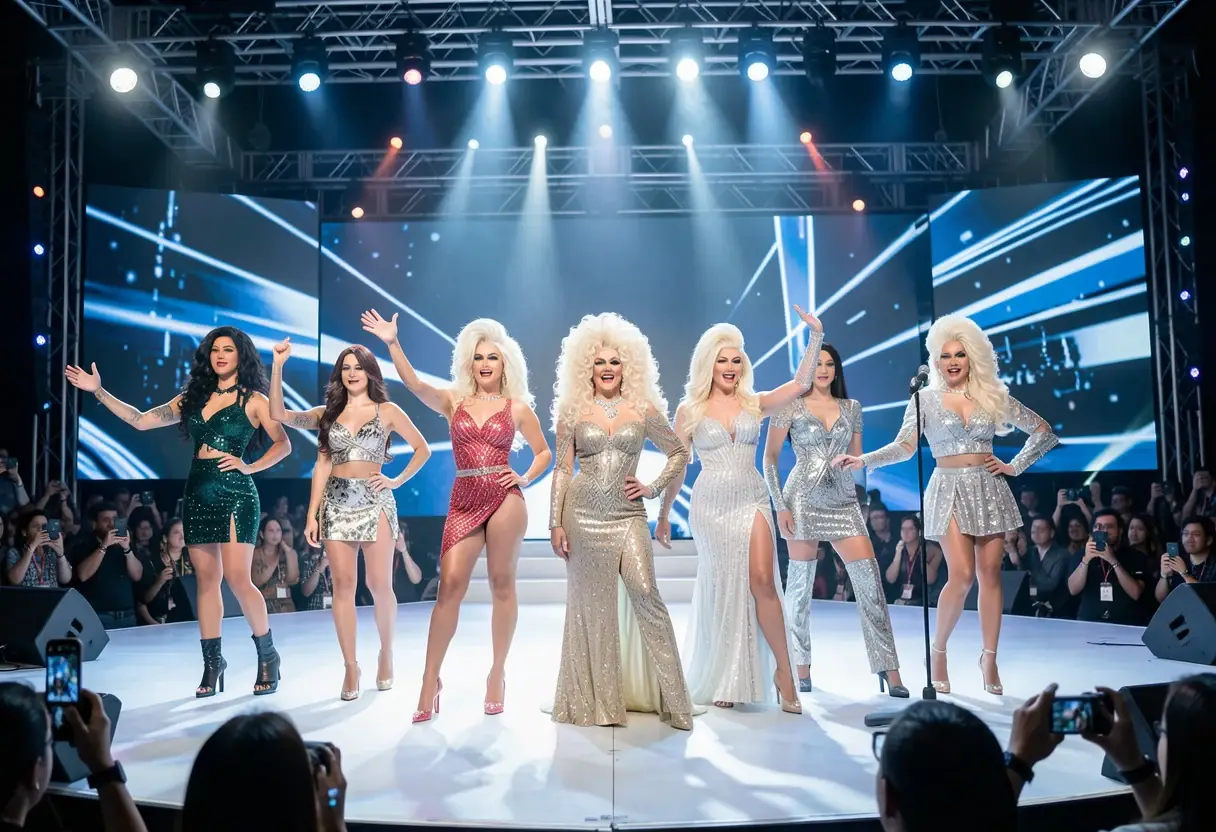
Contestants made their entrances aboard tuk-tuks — the motorized three-wheeled vehicles common in Bangkok's tourist districts — waving national flags as thousands of fans cheered inside the city-center venue. Regional flavour, applied literally.
Bulgarian singer Dara appeared as a special guest, performing "Bangaranga," the song with which she won the 70th Eurovision Song Contest in Vienna earlier this year.
Was politics in the room?
The European parent contest has rarely managed its stated goal of putting music before politics. Russia was expelled in 2022 following its full-scale invasion of Ukraine, and the Israel-Hamas war in Gaza has prompted protests outside contest venues and led organizers to restrict political flag-waving.
Five longtime participants — Spain, the Netherlands, Ireland, Iceland and Slovenia — boycotted this year's European competition over Israel's participation.
Eurovision Asia appeared less overshadowed by politics, said Eurovision historian Dean Vuletic, who attended the show in Bangkok. He noted that an analysis of voting patterns might reveal political tendencies among participating countries.
"But for now I can say it was a very beautiful atmosphere inside the venue and it was a great window into the musical cultures of Asia," Vuletic said.
Whether the Asian edition stays as serene as its debut will depend, as ever in Eurovision, on what the voting data says once someone bothers to count it.
Source: artsjournal.com
More from Daniel Okafor
Show full bio
News editor covering companies, deals and strategy in arts in the broadest sense at Arts & Voices.
1,456 articles