Fondation Louis Vuitton Revives Gustave Fayet, France's Forgotten Collector
Fondation Louis Vuitton gives its entire Gehry building to Gustave Fayet from October 9 to March 8, with Redon's Fontfroide murals on public view for the first time.

Programme
- "Gustave Fayet, Collector–Designer" runs October 9 to March 8 at the Fondation Louis Vuitton, occupying the entire Gehry building.
- Odilon Redon's murals Day, Night and Silence (c. 1908, Abbaye de Fontfroide library) go on public view for the first time.
- Fayet inherited the family estate in 1899 and began acquiring Renoirs and Gauguins.
- Works in the show include Van Gogh's Self-Portrait With Bandaged Ear, Cézanne's The Great Pine and Gauguin's Three Tahitians.
- Fayet developed his watercolor-on-blotting-paper technique in 1911; rugs from his Atelier de la Dauphine have been restored for display.
The Fondation Louis Vuitton will open "Gustave Fayet, Collector–Designer" on October 9, filling the entire Frank Gehry–designed building through March 8 with the work of a man who once owned enough Gauguins to turn his Paris home into a de facto museum of the artist. Fayet also organized one of the first French exhibitions of Pablo Picasso, who was then not yet 20 years old. Jeanne Lanvin commissioned him to design rugs for her apartment; Paul Poiret designed his daughter's wedding dress.
For all that, Fayet remains relatively unknown. The show, part of the foundation's Icons of Modern Art series, sets out to correct the record across his roles as patron, entrepreneur and artist.
Who was Gustave Fayet?
Born in 1865 into a wealthy family of landowners and wine merchants, Fayet learned to paint from his father and uncle, both amateur artists. He worked the art-fair circuit as a young man and took a curatorial post at the Musée de Béziers, where he collaborated with the sculptor Louis Paul, who had studied with Rodin. Together they made Japonisme-inspired ceramics shown at one of Paris's most important galleries.
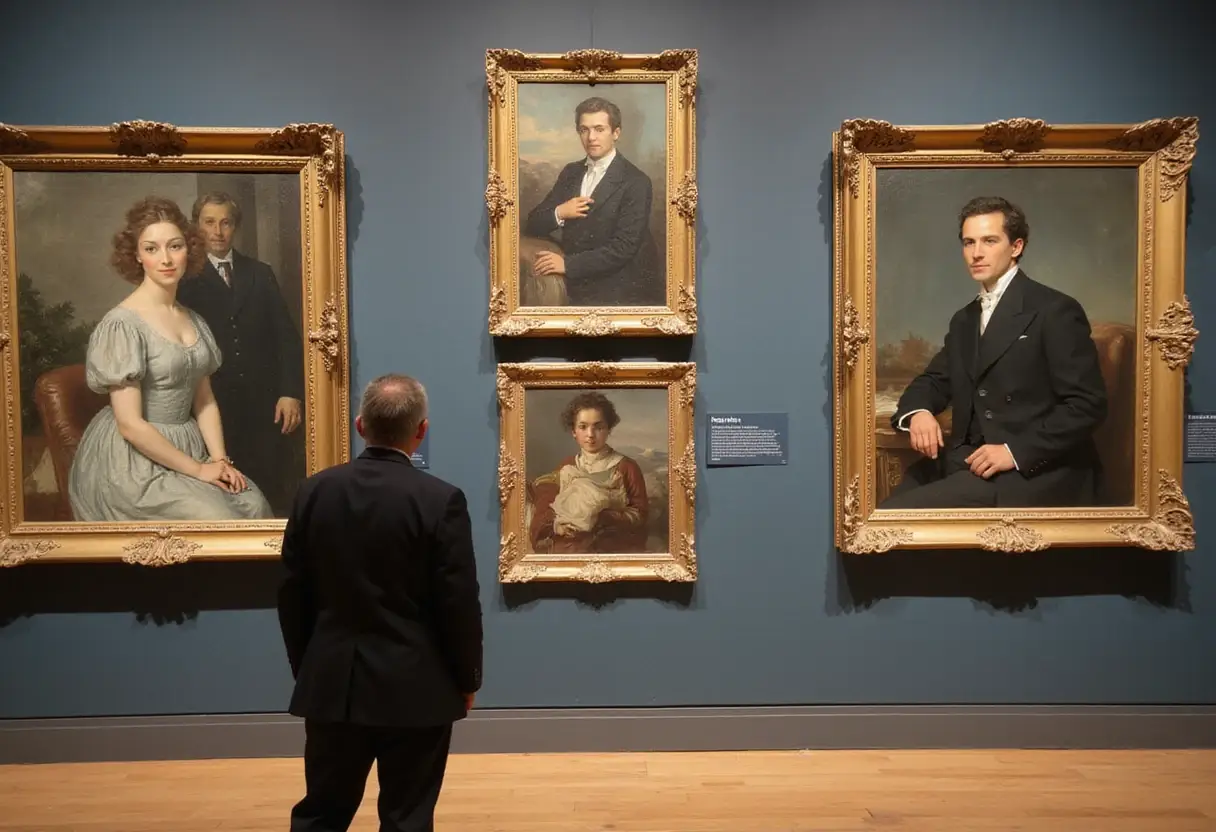
The pivotal year was 1899. Fayet inherited the family estate and began collecting in earnest, acquiring his first Renoirs and Gauguins. Works that passed through his collection — Van Gogh's "Self-Portrait With Bandaged Ear," Cézanne's "The Great Pine," Gauguin's "Three Tahitians" — will feature prominently in the exhibition. For a period he collected and curated so intensively that he abandoned his own creative practice.
What does Fontfroide change?
Around 1908, Fayet and his wife, Madeleine, bought the abandoned Abbaye de Fontfroide near Narbonne. Fayet conceived its restoration as a total work of art and gathered a circle of artists — his "Fontfroideans" — to realize it. Among them was Odilon Redon, who painted three murals for the abbey's library: "Day," "Night" and "Silence."
These Redon panels will be on public view for the first time in the Fondation Louis Vuitton exhibition. That alone is a genuine event; the murals have never before left the library for which they were made, and the show offers the only stated opportunity to see them outside Fontfroide.
The abbey also pushed Fayet back toward his own art. In 1911 he developed an idiosyncratic technique: watercolor on blotting paper, which he used to build a large body of floral works.
"The drawings demonstrate an almost childlike spontaneity at a time when Gustave Fayet was a mature man," Robert Carsen, the exhibition's artistic director, said.
From watercolor to wallpaper to rugs
The blotting-paper experiments did not stay on paper. The decorator Paul Dumas began reproducing the watercolors as fabric and wallpaper, and the two men founded the Atelier de la Dauphine to manufacture them as rugs. Prime examples have been restored and will hang alongside the original artworks — a display that lets visitors judge the distance between Fayet's hand and its industrial reproduction.
Late in life Fayet turned to illustration, illuminating works of poetry and even a book made for his grandchildren.
"He was truly exploring new territory," Carsen said, "venturing deeper and deeper into the new genre he was exploring with each new endeavor."
The claim of "new territory" deserves scrutiny; watercolor floral studies and decorative rugs sit closer to the artisanal mainstream of 1911 than Carsen's phrasing suggests. What is not in dispute is the range — collector, curator, ceramicist, designer, illustrator — and the caliber of the company Fayet kept, from Gauguin and Redon to Lanvin and Poiret.
What does this change for the visitor? The exhibition argues that a figure erased from standard histories of early-20th-century France was in fact one of its connective threads, and it backs the argument with loans that rarely travel. Whether the restoration of the Atelier de la Dauphine rugs and the first public showing of the Redon murals secure Fayet a permanent place in the canon will depend on what scholars and audiences take from the five months the building is given over to him.
Original: fondationlouisvuitton.fr
More from Tom Whitfield
Show full bio
Market editor covering people, launches and day-to-day practice in arts in the broadest sense at Arts & Voices.
689 articles